[ad_1]

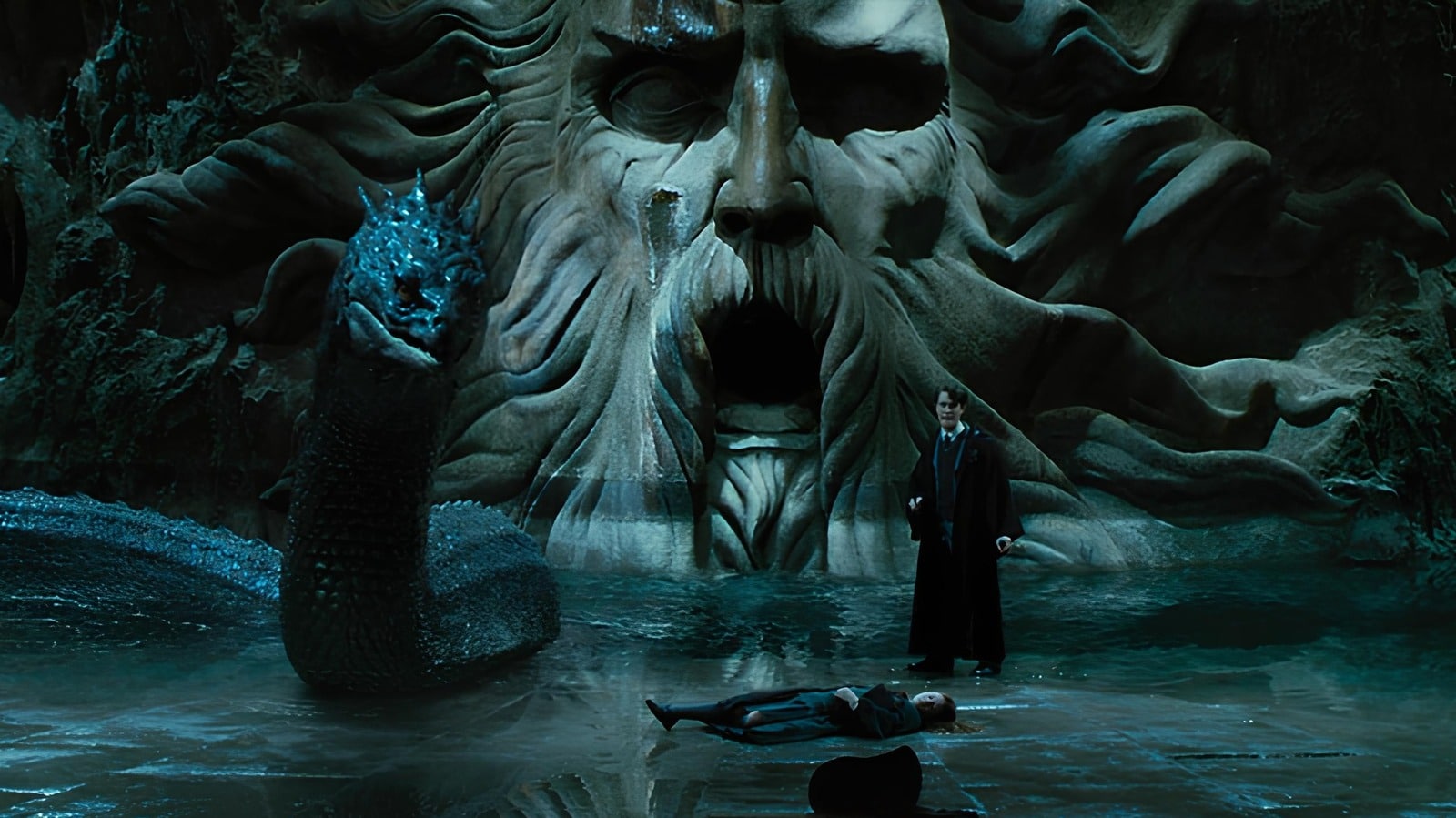
J. K. Rowling’s basilisk is terrifying and gargantuan and almost wholly unique to her fiction. Like most iterations of the mythical reptile, her basilisk features deadly eyes, poisonous fangs, and is born from a chicken’s egg incubated beneath a toad. That said, the wider understanding of basilisks allows for them to be bred beneath a serpent, as well. Speaking of serpents, a basilisk almost never looks like what Rowling created. Where her beast is a giant snake, most depictions of basilisks are far smaller and more iguana-like. Basilisks often feature a mixture of scales and feathery plumage, along with a varying number of legs or wings, depending on the region.
In Netflix’s live-action adaptation of Andrzej Sapkowski’s «The Witcher,» the basilisk that appears in Season 2, Episode 8, «Family,» is a raptor-like beast. In CD Projekt Red’s «The Witcher III: Wild Hunt,» basilisks are more dragon-like, both in size and shape, although they still feature notable visual elements that harken to their chicken egg origins. Leaving «The Witcher» behind, in the Naturalis Historia, the Roman version of the basilisk is the approximate size and shape of a regular garden snake.
Another aspect that Rowling invented from whole cloth is the basilisk’s fear of spiders. Certain iterations of the beast are notably afraid of the scent of weasels but nowhere else are spiders ever mentioned. We like to think that Rowling changed this particular factoid so that she could avoid writing a scene where Harry accidentally defeats the basilisk by wielding an unconscious Ginny like some high-level warding spell.
[ad_2]
Deja una respuesta