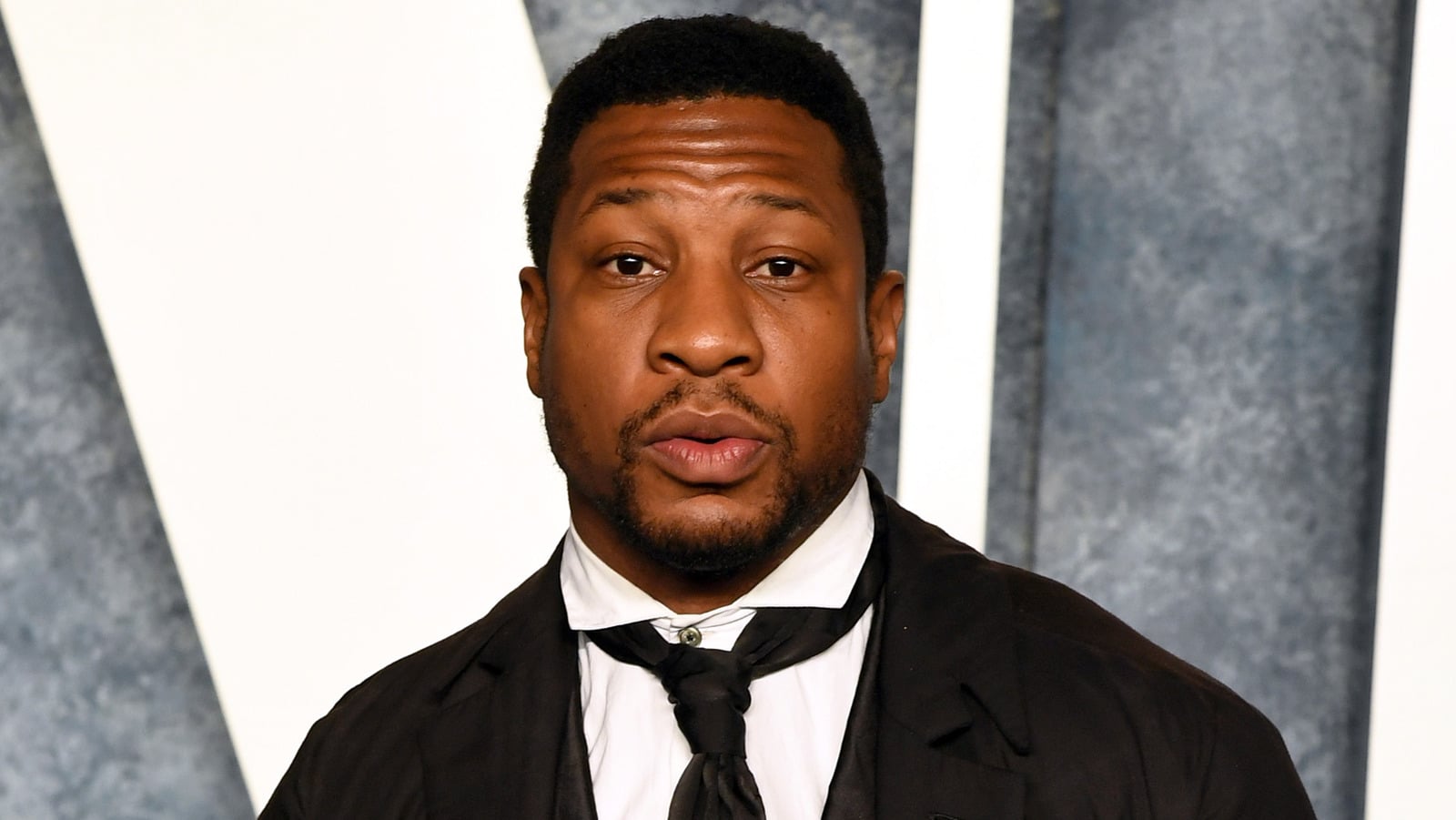
Let’s recap his role here in the MCU so far: Majors made his debut as a Kang variant, known as He Who Remains, on the Disney+ series «Loki.» He returned to the MCU in»Ant-Man and the Wasp: Quantumania,» portraying a more vicious version of Kang that rules the Quantum Realm. In the «Ant-Man» film’s storyline, he plays several other Kang variants, such as Rama-Tut and Immortus. Naturally, many have already begun to ask the big question, where does Marvel Studios go from here with the Kang character?
Throughout the MCU’s Phase Four and Phase Five, fans have gotten well-acquainted with the multiverse. Various forms of Kang have been depicted as masters of the multiverse, capable of traversing it, bending it to their will, and working together to take out anyone against them. This is why he and his variants have been positioned as the Thanos-level (Josh Brolin) threats of the Multiverse Saga, which encompasses Phases Four, Five, and Six.
Though the folks at Marvel Studios likely could find a way to write Kang out of the franchise in favor of another overarching villain, it wouldn’t be the right move. Fans know about the Jonathan Majors situation and remember how hard Kang was publicly pushed as the MCU’s next big bad. All of that information would loom large over an abruptly Kang-free MCU, likely to the detriment of the franchise. Since the character is so essential to the MCU’s immediate future, there’s only one viable way forward: recast Kang.
Moviegoers will proclaim endlessly on social media that they’re exhausted by the constant franchise fare that populates multiplexes. Audiences say that they desperately want original films, but the box office failure of «The Creator» confirms that ticket buyers won’t put their money where their mouth is.
A sci-fi epic that looks far more expensive than it is, Gareth Edwards’ «The Creator» grossed $40 million domestically, with a worldwide final posting of $98 million. Stellar visuals, a notable B-list cast, action-focused marketing, and decent word of mouth (it got a B+ from CinemaScore) couldn’t even push Edwards’ labor of love to $100 million. While blame can partially be shifted to the 2023 SAG-AFTRA strike, which left its charming cast unable to promote the flick, «The Creator» did receive adequate marketing from Disney.
Made for a modest $80 million, one can’t even blame the failure of «The Creator» on a bloated budget. While many might claim they yearn for originality, «The Creator» was widely rejected, debuting to $14 million on a weekend dominated by franchise offerings like «Saw X,» «Paw Patrol: The Mighty Movie,» and «The Nun II,» all of which grossed over $100 million worldwide.
Every few years, the movie industry tries to give viewers mid-scale, original blockbusters, and they continue to fail. With the disappointment of «The Creator,» cinephiles can say goodbye to new, daring, IP-less films entering theaters. But what can viewers expect from Hollywood in the next few years?
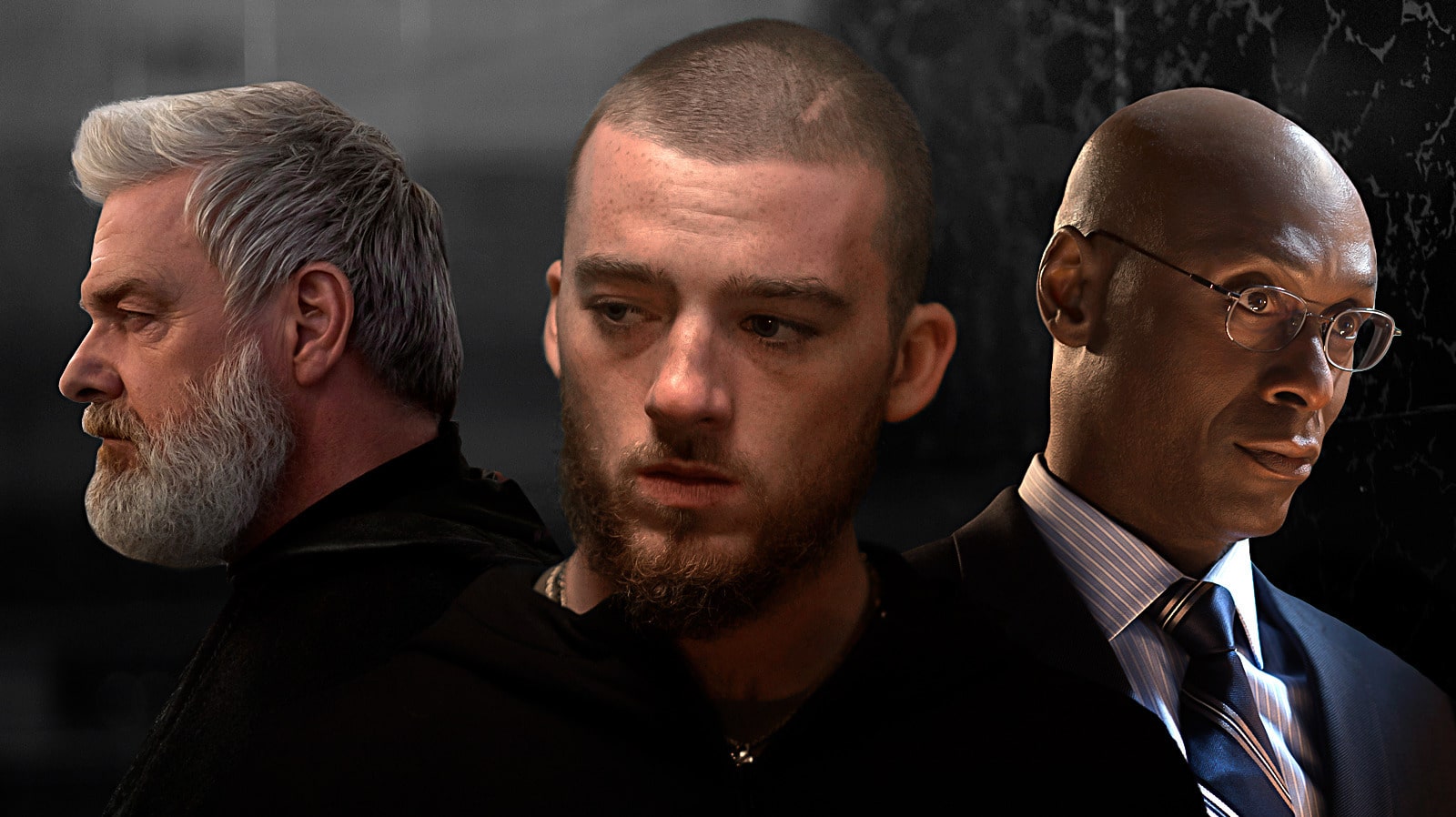
Film and television fans are definitely familiar with Lance Reddick — because he was just, frankly, in a million different projects. Whether people knew him from «Oz,» «Lost,» «The Wire,» «Fringe,» or even the cult comedy favorite «Corporate,» Reddick was an incredible character actor with an enormous number of credits to his name. Sadly, Reddick passed away from heart disease on March 17 at the age of 60 at his California home. Co-stars paid tribute to Reddick’s memory, including his «John Wick» co-stars Ian McShane and Keanu Reeves.
It’s appropriate that «John Wick: Chapter 4» was one of Reddick’s first posthumous roles (the actor passed away before its May premiere), as a spin-off movie set in the same universe will also feature a performance from him. Some of Reddick’s other posthumous releases this year include the remake of «White Men Can’t Jump,» «The Caine Mutiny Court-Martial,» «Bosch: Legacy,» and «Percy Jackson and the Olympians.» Audiences can see his final turn as Charon, the concierge of the New York City Continental Hotel when the John Wick spin-off film «Ballerina» hits theaters in 2024.
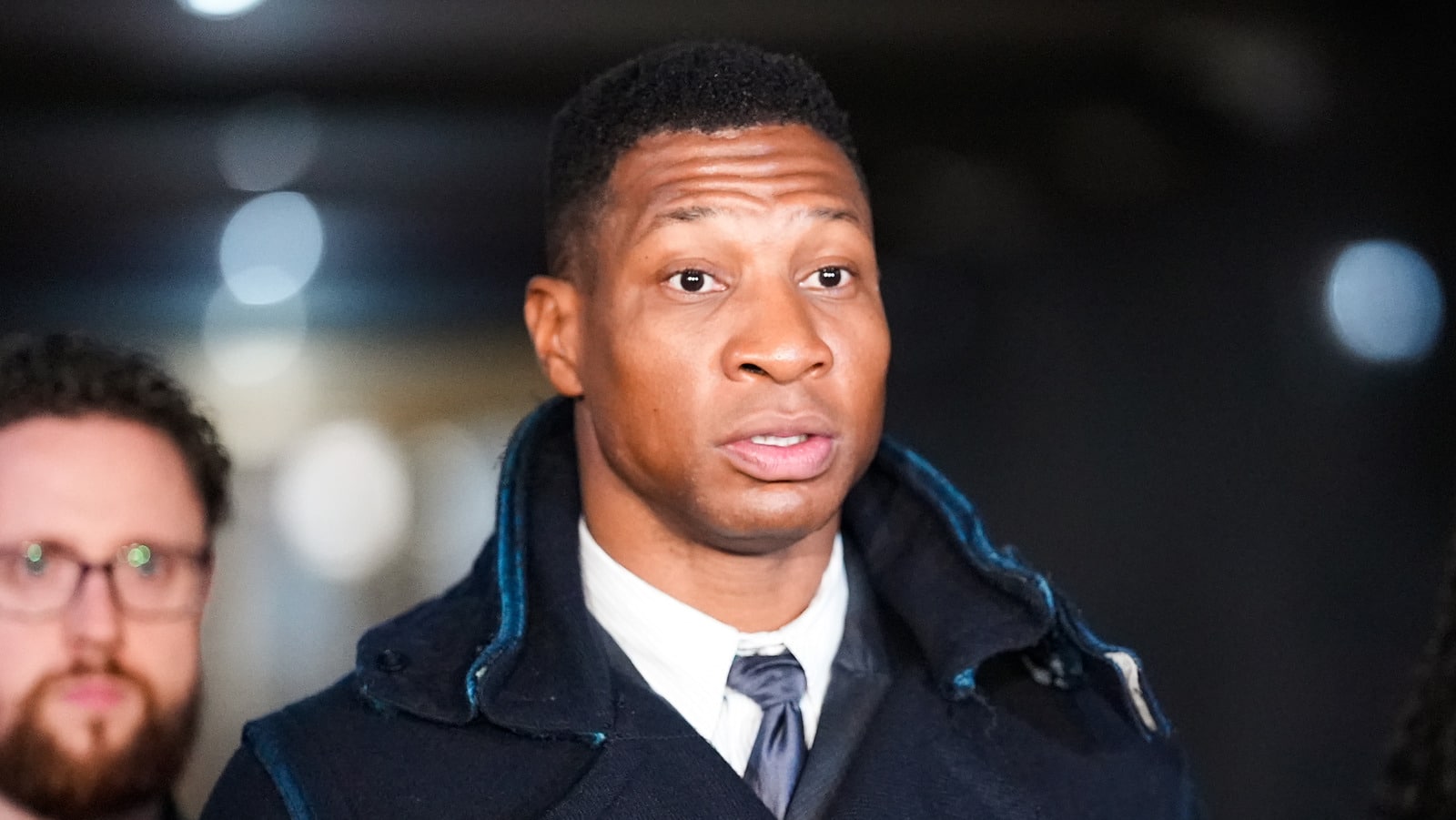
Lately, it’s been impossible to avoid the case leveled against Majors by Jabbari. Since March, he’s faced numerous professional consequences due to these allegations. Majors was in recruiting advertisements for the United States Army, but those commercials have since been pulled. The actor’s management company Entertainment 360, and his PR firm, Lede Company, dropped him as a client. Majors showed up in Season 2 of «Loki,» but his Disney movie «Magazine Dreams» was removed from his 2023 slate, and he was fired from «The Man in My Basement.»
These official charges are incredibly serious, ranging from verbal abuse (where he allegedly demanded that she behave more like Michelle Obama) to physical assault. Only time will tell as to Majors’ eventual sentencing, but the fact that he was found guilty on any of the counts with which he was charged is an enormous development. At the time of this writing, Marvel Studios has yet to discuss the future of Kang (or Majors) in the MCU — though, it’ll likely be known at or around the time of February’s sentencing.
If you or someone you know is dealing with domestic abuse, you can call the National Domestic Violence Hotline at 1−800−799−7233. You can also find more information, resources, and support attheir website.
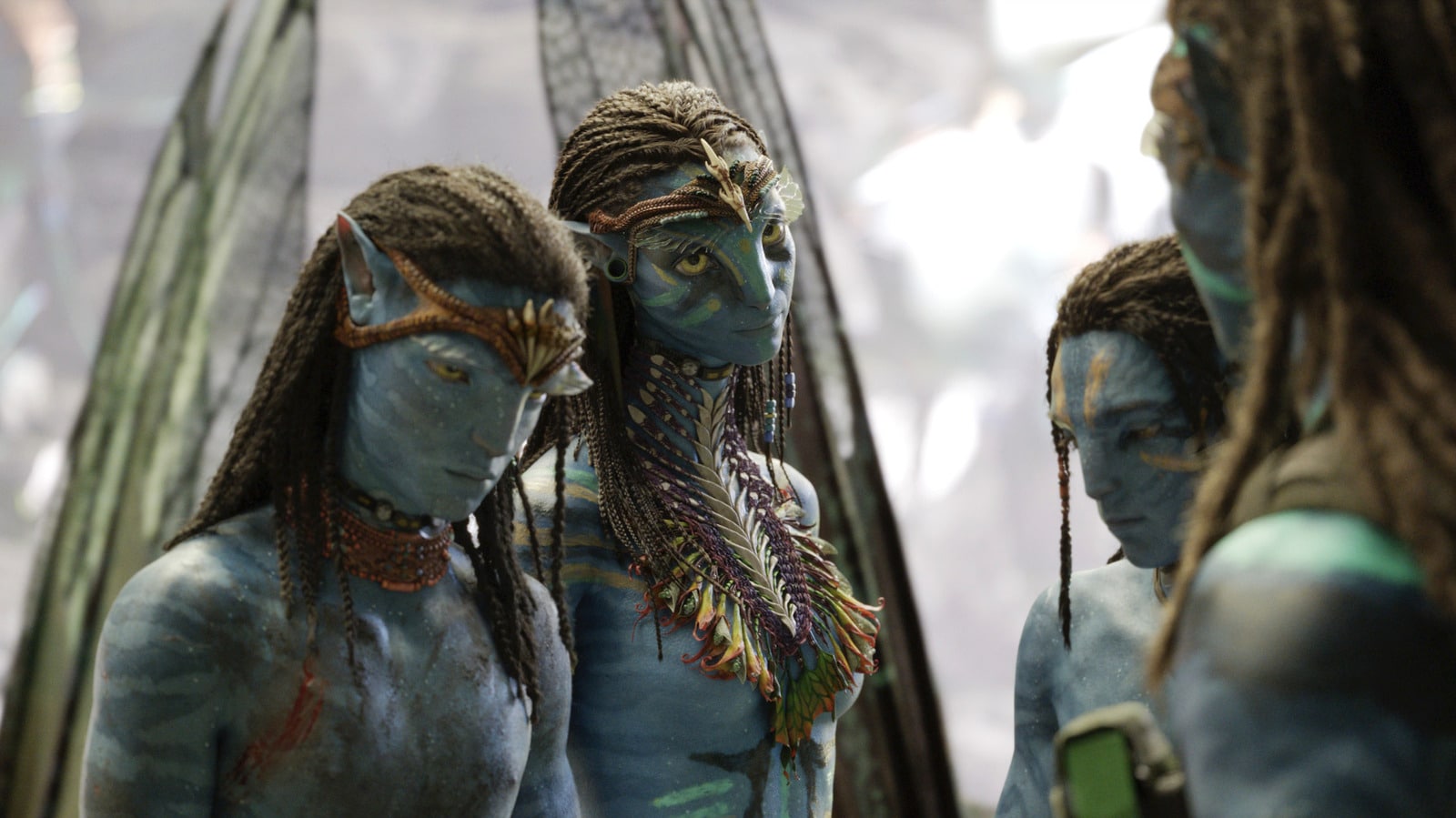
Plot details on «Avatar 4,» let alone «Avatar 3,» are slim. The last time we saw the Sully clan was in «The Way of Water,» when Jake and Neytiri lay their eldest child, Neteyam (Jamie Flatters), to rest. James Cameron has previously stated that the «Avatar» films will operate like a family saga, likening his sci-fi epics to the «Godfather» films, which follow multiple generations. In «The Way of Water,» Cameron puts considerable emphasis on the second generation of Sullys, setting up Lo’Ak (Britain Dalton), Kiri (Sigourney Weaver), and others as the future protagonists of the franchise.
Based on that, it makes sense that Cameron would want to eventually show the younger characters as adults. While it may seem out of left field for «Avatar 4» to have a significant time jump of six years, that’s far shorter than the gap between the first «Avatar» and «The Way of Water,» which is about 15 years. Seeing as Cameron says that «The Way of Water,» «Avatar 3,» and bits of «Avatar 4» were all sort of shot together, it’s likely that the upcoming threequel takes place directly after «The Way of Water.»
At this time, it’s anyone’s guess what «Avatar 4» will be about, as details are already minimal for the upcoming threequel. With a time jump confirmed, we obviously know that younger characters like Lo’Ak will (hopefully) be seen as adults, though it remains to be seen what exactly happens narratively to warrant a six-year gap.
— Joseph Williamsis returning to the Washington state Department of Commerce to lead information and communication technology (ICT) sector development, after serving as the Seattle director of the Pacific Northwest National Laboratory from 2019 to 2022.
Williams, a mainstay of the Seattle tech community, previously led ICT sector development for the department, from 2016 to 2019. His areas of focus in his return will include quantum computing, cybersecurity, and artificial intelligence, working with industry leaders and others to strengthen the state’s position, according to an announcement from the department.
Among other priorities, Williams will report to the Washington state Legislature on 2022’s Blockchain Work Group bill (SB5544); and help the state secure federal funding made possible by the $280 billion CHIPS and Science Act passed in 2022, the department said.
“We are delighted to have Joseph back on board and put his deep knowledge, expertise and relationships to work developing new partnerships and avenues to secure historic federal funding opportunities that will benefit communities throughout the state,” said Commerce Director Mike Fong, in a statement announcing Williams’ return to the role.
Bill Hankes, founder of Sqoop, at the 2015 GeekWire Summit.
— Longtime Seattle-area communications exec and startup founder Bill Hankes, a fixture in the Seattle tech community, is leaving his role as Forbes’ chief communications officer at the end of the year, he posted on LinkedIn, describing his experience there as “the honor of a lifetime.”
It was “the wildest ride of my career: a public offering via SPAC that was ultimately canceled, followed by nationally-publicized controversies surrounding two subsequent acquisition attempts, all while promoting our world-class journalism and events around the world.”
Hankes founded Sqoop, a startup that provided real-time data alerts to journalists, and served as director of PR for Microsoft’s Bing and a VP of communications at RealNetworks.
— Arka Majumdar, an associate professor in Electrical & Computer Engineering and Physics at the University of Washington, has been named a 2024 Optica Fellow. The fellowship recognizes his work in optics, particularly in low-power optical information science and imaging, enabled by low-dimensional materials, nanophotonics, and meta-optics, which consist of “millions of nanostructures that are smaller than the wavelength of light,” according to a UW article.
Majumdar is also co-founder and technical adviser at Tunoptix, a Seattle startup developing broadband meta-optics imaging to enable thin, lightweight computational vision systems.
— Former Amazon principal software engineer Andrew Hoffman is now chief technologist at Gather AI in Pittsburgh. Hoffman was a founding engineer at two robotics companies that Amazon acquired: Kiva Systems, which is now Amazon Robotics, and Canvas Technology.
— Sean Cassidy, Amazon Prime Air’s director of safety, flight operations and regulatory affairs, has left the company, according to an internal memo reported by CNBC. He was a key figure for Amazon’s drone delivery operations in its relations with the Federal Aviation Administration.
— Deako, a Seattle-based company that makes modular smart lighting systems, expanded its executive team with the hiring of Chris Miller as chief financial officer and David Cathey as chief revenue officer. The company says it has sold more than 15 million products to date, and posted a 55% increase in gross revenue year-over-year.
One thing «Deadpool» gets right besides Ryan Reynolds proving just how much of a perfect fit he is for the character is the simple inclusion of CGI eyes on the Merc with a Mouth’s mask without a mouth. Seeing it emote as much as it does makes Wade all the more watchable, and it set a standard that reappeared on both Peter Parker’s Spider-Man (Tom Holland) and Steven Grant and Marc Spector’s Moon Knight (Oscar Isaac) costumes.
If the same is repeated with Hugh Jackman’s Wolverine costume, it should surely get a trend turning elsewhere with other heroes. Batman could become even more intense and appear as he does in the comics in Andy Muschietti’s «The Brave and the Bold.» Hal Jordan could wear a comics-accurate domino mask on «Lanterns.» For now, we’ll just have to wait and see how things look for Wolverine when he returns in «Deadpool 3» on July 26, 2024.
One of the Beyonder’s defining features is his fascination with humanity. Not being one himself, he spends time studying humans and yearns to experience their world firsthand. This eventually leads him to create a human-like form so he can do so. In the context of the theory stating that Bruce Campbell is the MCU’s Beyonder, this is relevant because the actor has claimed that all of his previous Marvel roles — the ring announcer from «Spider-Man,» the usher from «Spider-Man 2,» the French maître d’ from «Spider-Man 3,» and the Pizza Poppa from «Doctor Strange in the Multiverse of Madness» – are all the same individual. Whoever this person is could be a major player, too.
«I’m not a pizza vendor, OK? That would be a massive mistake to think I’m just a pizza vendor, or an usher, or a ring announcer, or a maître d’. It’s called the multiverse, my friend. So, yes, he is the same character, but we don’t know who he really is,» Campbell explained during a chat with ComicBook.com, revealing he has kept in contact with the folks at Marvel Studios about his character. While it’s entirely possible that this is nothing more than a jokey exaggeration, there’s always a chance that he’s telling the truth. Perhaps these seemingly innocuous characters are examples of Campbell’s Beyonder experiencing the Multiverse from a human perspective.
Hopefully, MCU fans can expect some clarification regarding Bruce Campbell’s comments, his true role in the franchise, and the status of the Beyonder as the Multiverse Saga continues to unfold.
In the wake of the news that James McCaffrey passed away, friends and fans took to social media to pay tribute. «James McCaffrey we were lucky to have known you,» «Entourage» star Kevin Dillon wrote on Instagram alongside a picture of him with the late «Max Payne» actor, adding, «my best friend you will be missed.»
On X, the platform formerly known as Twitter, fans of McCaffrey’s voice-acting work rallied to celebrate his contributions to the medium. X user @BGarcN2 wrote, «rest in peace to james mccaffrey. your incredible performances will always be the best part of these games and the unforgettable characters you played. may you live on forever in these stories [sic].» McCaffrey’s work and influence will undoubtedly live on, his impact felt on virtually every medium an actor can touch these days. User @DerekBrocks echoed the sentiment, writing, «RIP to the legend, James McCaffrey, gone too soon but leaving us with one of the most iconic characters in not just video games but crime fiction in general.»
Actors rarely face legal consequences for appearing nude on screen. Film sets are, as a rule, not public spaces, the scenes may have been filmed months or even years before being exhibited publicly, and law enforcement is more likely to target filmmakers and distributors than the actors themselves (see «Cannibal Holocaust» below). But actors performing nude on stage are more exposed, so to speak. Take the 1969 Off-Off-Broadway production of «Che!» — an absurdist political drama by the late Trinidadian writer Lennox Raphael. Depicting the final days of the life of Che Guevara, the play used nudity and simulated sex scenes to symbolize the United States’ imperial activities in Latin America. The NYPD shut it down within a week of it opening, arresting Raphael, producer Ed Wode, the five-person acting ensemble, and the play’s lighting operator on charges of obscenity, sodomy, and conspiracy.
The trial of the so-called «‘Che!’ Eight» stretched on for nearly a year. The question at hand was not whether the cast had performed nude in sexually provocative positions — they clearly had — but rather if the play itself had enough «redeeming social value» to justify the explicitness. New York Times theatre critic Clive Barnes testified for the defense, along with playwright Israel Horowitz and cartoonist Jules Feiffer. In the end, though, all eight defendants were convicted of obscenity (the sodomy and conspiracy charges were dropped). Raphael, Wode, and lead actor Larry J. Bercowitz were given 60 days in jail, while the remaining five were discharged without further penalty.
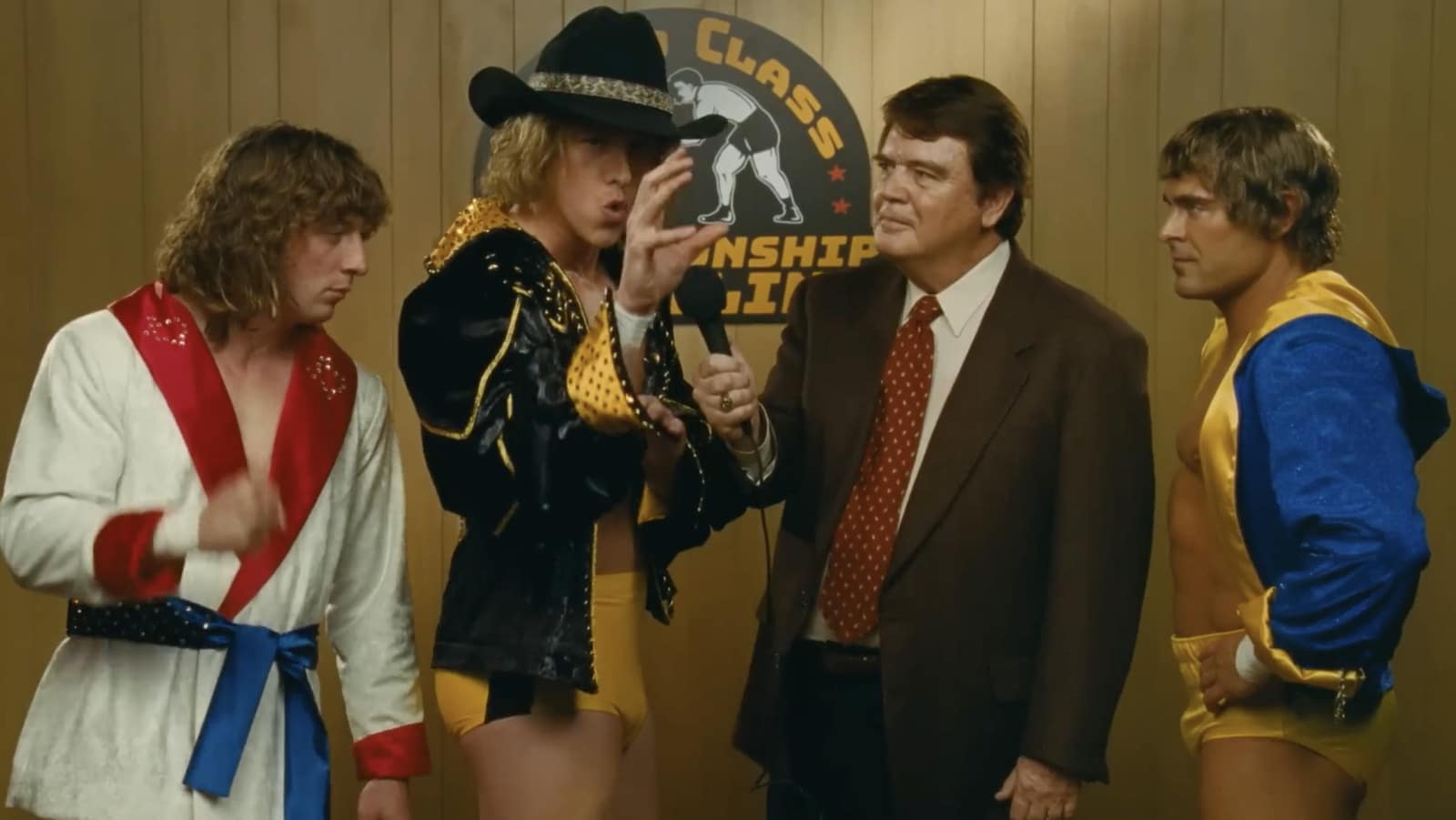
Director/writer Sean Durkin isn’t the only member of the crew of «The Iron Claw» who has expressed sympathy for Chris and Mike Von Erich, both of whom had to endure a lot as sons mired in the Von Erich legacy. Stanley Simons, who plays Mike, told Entertainment Weekly that he felt bad for both Mike and Chris Von Erich. «He and his younger brother Chris were both the younger brothers of these three huge, larger-than-life characters,» Simons explained, adding that both men were pushed into the ring in the wake of David Von Erich’s death by their father, Fritz.
While Mike wanted to make movies and Chris passionately supported the family business, both found themselves wrestling in order to keep World Class Wrestling alive in its waning days. Mike dealt with toxic shock syndrome due to botched shoulder surgery and could not keep up with the demands Fritz Von Erich allegedly kept piling on his shoulders; a subsequent car accident made performing even more difficult. Chris was asthmatic and the least athletic member of the family, his in-ring career hampered by his smaller size, and the fact that the drugs he took to control his asthma left his bones brittle. He never got to do more than wrestle manager Percy Pringle — WWF/WWE’s future Paul Bearer.
Mike died by suicide on April 12, 1987, and Chris on September 12, 1991. While only one of these emotional bodyslams ultimately made it into «The Iron Claw,» you can expect to be deeply moved when the film hits theaters on December 22.
If you or someone you know is struggling or in crisis, help is available. Call or text 988 or chat988lifeline.org
Editor’s note: William Canestaro is managing director at Seattle venture capital firm WRF Capital and leads the biotechnology investment team.
Seagen’s sale to Pfizer would have seemed unthinkable a few years ago. The former CEO was rumored to be opposed to the idea of an acquisition. He worked to grow the Bothell, Wash.-based company to a size that was thought to be too big to acquire and grew Seagen via acquisition himself, acquiring Cascadian Therapeutics in 2018.
Seagen has a huge pipeline for early programs and is undisputedly the anchor tenant in Pacific Northwest biotech. It is one of the very few Seattle biotechs that grew to global scale while remaining independent.
As we look to the pending acquisition, set to clear this week after regulatory approval, I will be keeping my eyes on a few key points.
What Pfizer keeps in the PNW
With every acquisition there’s a push to find efficiency. What have we gotten so good at here in Seattle that can’t be moved or consolidated? Many believe that our resident expertise in antibody drug conjugates (ADCs) makes it unlikely that Pfizer can pull Seagen and its expertise back to the East Coast. This is especially given Pfizer’s previous stumblings to develop their own ADCs; it seems most likely that they’ll trust Seagen to continue doing what it has shown it can do.
COVID also fundamentally changed how much of biotech works: Seagen already employs people across the U.S. with two main offices in Bothell and South San Francisco. This company already functions well across time zones. I’d expect that Pfizer will want to take a cautious approach to any major changes to the current Seagen workflow, and would be surprised if there were immediate mandates to move employees.
As Pfizer CEO Albert Bourla said about the acquisition “We are not buying the golden eggs. We are acquiring the goose that is laying the golden eggs.”
Positive signs for the market
With a historically tough market, a $43 billion acquisition is a great reminder to investors that biotech can be a great place to invest if the fundamentals of the business are strong. People have been hypothesizing for the past few years that pharma would be making acquisitions due to strong cash balances and many products coming off patent. I am hopeful that this is just the first of many acquisitions.
More early stage investors
Seagen is famous for how long it keeps employees. There are hundreds of employees with over a decade at the company. This means that there are likely many folks who will do quite well from this acquisition. Many in the community are hopeful that some of them will become active angel investors and support the next generation of great companies here in the Pacific Northwest. If you’re reading this and in this category, please reach out. I’ve got some ideas for you!
Pfizer might help streamline Seagen’s growth
Seagen grew to be a mid-sized biotech rapidly. With so many emerging programs and stakeholders in such a short timespan, scaling infrastructure to match can be difficult. It will be interesting to see if Pfizer can provide some “big company structure” to Seagen without crushing the dynamic and nimble approach that made Seagen so special in the first place.
Widely regarded as the magnum opus of filmmaker Cameron Crowe, «Almost Famous» is a comedy-drama film that centers around a teenage journalist named William Miller (Patrick Fugit), who finds himself embroiled in the chaos of the ’70s rock scene while writing for Rolling Stone.
Because «Almost Famous» is semi-autobiographical (being loosely based on Crowe’s experience as a teenage rock journalist), the film features several real-life journalists and historical figures. These include the music journalist Lester Bangs (Philip Seymour Hoffman), well-known socialite and philanthropist Penny Lane (Kate Hudson), and the «Legendary Red Dog,» played by Zack Ward. The real «Legendary Red Dog» was a longtime roadie for the Allman Brothers Band, whose real name was Joseph L. Campbell.
Campbell was a well-known figure in the world of ’70s Rock and Roll, and he eventually compiled all of his stories from that time into a book called «The Legendary Red Dog: A Book of Tails.» Ward certainly did more than enough to bring this legendary roadie to life on the big screen, and many fans of the movie will undoubtedly remember his iconic and absurd line, «You can taste the color with your mind, brother.»
I’ve read recently how you feel Christopher Nolan’s «Oppenheimer» is your favorite film of the year, and Chris has certainly been complimentary of his work with you on «Man of Steel.» I’m wondering how influential has Chris been since that point. Was there anything that you implemented in «Rebel Moon» that was born of your work with Chris?
Chris’ main influence on me in his singularity, his singular vision, [his] uncompromising, straight-ahead approach to filmmaking … He feels it’s very singular, very of one voice, which I love in movies. I love it when a director … I think of people like David Fincher and Chris, for example, who are very like, «We live in a great age of really gifted and amazing auteurs that can transport you to another point of view.» In the end, movies are being transported to another point of view, and I happen to think his is pretty cool.
Well, Zack, great talking with you again. I have to put you on the spot quickly: Leonidas [Gerard Butler] from «300» versus Kora in «Rebel Moon.» They’re both ass-kickers. When you throw them in the ring, who wins?
Oh, geez. That’s a pretty tough one. It depends. No weapons?
No weapons.
Yeah, that’s a tough one. Kora might stand a chance because of her … She has a much more modern warrior aesthetic, so she might have some techniques that Leonidas just doesn’t have. He’s more of a brawler.
Also starring Charlie Hunnam, Djimon Hounsou, Doona Bae,Michiel Huisman,Ray Fisher, Cleopatra Coleman, Staz Nair, and E. Duffy, «Rebel Moon – Part One: A Child of Fire» is playing in theaters in limited release and debuts exclusively on Netflix the evening of December 21.
After getting Tarak, Kai takes Kora and Gunnar to recruit the swordswoman Nemesis (Bae Doona), General Titus, and eventually, the Bloodaxes. Like with Tarak, we get some fun, stylish little vignettes to introduce each member of the squad, though they don’t really get to interact with each other at any point. (Maybe they’re waiting for the director’s cut?) But either way, the bigger problem here is just how easy this whole scheme is. The longer the recruitment drive goes on, the more suspicious it starts to feel.
Quite simply, it should not be this easy to build an elite fighting force to stand against the Motherworld. We learn later that Kai is only doing this to assemble a more substantial bounty. But he’s the one who knows where everybody is. Kora doesn’t even want to go and get Tarak or Nemesis. She only cares about Titus and the Bloodaxes. So if Kai is the one who knows where those other people are, why doesn’t he just tell the Motherworld and collect a reward in secret? Why go to all this trouble to recruit them?
You could say that he needs Kora to trust him, but she already does with zero prompting. You could say that the rebels need to be caught in the action of revolution, but that’s not true either, as we’ve seen that the Motherworld is fine with killing innocent people. Noble even knows where the Bloodaxes are because of the rebel Kai turned in at the beginning of the movie. So if it’s so easy to find all these people, then what’s the point of the long con?
"American Fiction" is an insightful dramedy about the entertainment industry's habit of perpetuating Black stereotypes. Here's what the ending really means.
Natalie Portman plays Queen-turned-Senator Padmé Amidala in all three Star Wars prequel films, which also include 2002’s «Star Wars: Episode II – Attack of the Clones» and 2005’s «Star Wars: Episode III – Revenge of the Sith.» Sadly, the character dies at the end of «Revenge of the Sith,» just after naming her newborn twins Luke and Leia.
Of course, with various characters re-emerging thanks to the bevy of Star Wars shows on Disney+, it’s possible that Portman could turn up somewhere in the ever-growing space opera once again. During her appearance on «Watch What Happens Live,» fans asked the actress whether she would be up to reprise Padmé. «No one has asked me, but I’m open to it,» she said.
Asked by Andy Cohen how she looks back on her time working on the Star Wars films, Portman answered, «It was amazing. It was the first time I worked digitally. Like, I don’t think anyone was shooting that way then. It was my first time working with a green screen. It was a whole new set of skills to pick up and a whole new world to enter, and obviously [it included] all the Star Wars mythology that everyone lives in, in this country. To get to be a part of that was awesome.»
Prenuvo, the celebrity-endorsed company offering $2,500 full-body MRI scans designed to detect cancer and other diseases early, is planning to open one of its clinics in Seattle in 2024.
Silicon Valley-based Prenuvo currently has eight locations in the U.S. and one in Vancouver, B.C. It has plans to open 11 more in the coming months, including in the third or fourth quarter of next year in Seattle.
The company has been generating buzz thanks to some of its high-profile clientele, including Kim Kardashian, who told her 3.6 million Instagram followers about the “life-saving machine” in an August post.
The company’s backers include model Cindy Crawford; 23andMe co-founder Anne Wojcicki; Nest Labs founder Tony Fadell; and Felicis Ventures, investors in Shopify, Fitbit, Ring and more.
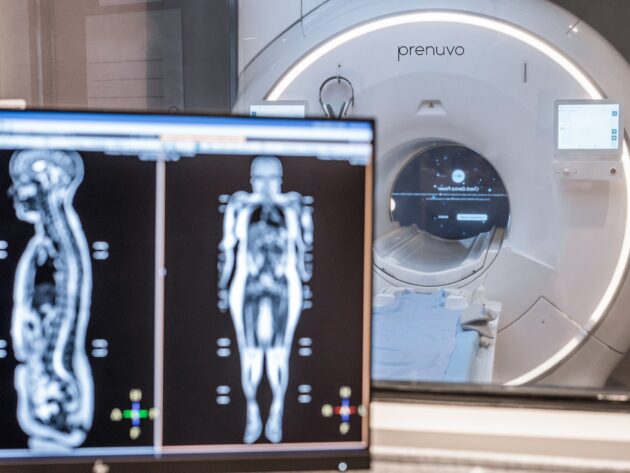
Prenuvo conducts a full-body scan in under an hour. (Prenuvo Photo)
Founded in 2018 by CEO Andrew Lacy and founding radiologist Dr. Raj Attariwala, Prenuvo says its mission is to “shift healthcare from reactive to proactive” and “empower people to determine their own health roadmap.”
Prenuvo says it can conduct a whole-body MRI — magnetic resonance imaging — scan in under one hour and identify conditions not easily found in other proactive scans, without contrast or radiation. These conditions include:
solid tumors as small as 1.5cm in the organs of the chest, abdomen, and pelvis.
cancer from benign conditions such as cysts, hematoma, hemangiomas, and abscesses.
disc herniation, spinal cord abnormalities, and spinal degeneration
prostate, cervical, uterine, and ovarian cancers in the pelvis.
brain aneurysms, small vessel ischemia (stroke risk factor), previous strokes, and sinus issues.
The company explains what sets its scans apart from other MRIs and CT scans here.
Prenuvo’s machine is called an open bore MRI scanner, which permits the head to be outside of the magnet for portions of the scans. After a scan, images are reviewed by one of the company’s 30 licensed radiologists. Patient results are typically ready in about 10-to-15 days.
Every report includes both patient-friendly explanations and insights into the risk level and actions recommended, as well as a physician-focused, shareable PDF report, according to Prenuvo.
A Prenuvo clinic in New York. (Prenuvo Photo)
The pricey procedure is not covered by insurance, which makes for a steep out-of-pocket expense. The New York Times wrote in September that while Prenuvo does not pay anyone to promote its products, it has sought a high-profile and “glamorous” crowd to use its machine — and then post about it on social media.
TV personality Maria Menounos told People magazine in May that a Prenuvo scan alerted her to a mass that turned out to be Stage 2 pancreatic cancer.
But experts who spoke to The New York Times cautioned that healthy people undergoing such scans can do more harm than good, as nonspecific findings could require extensive, expensive follow-up.
Regardless, Prenuvo’s waitlists are long, CNBC reported last month. Lacy said the business has spiked as awareness in the past 12 months has grown “incredibly.”
The locations section on Prenuvo’s website offers the ability the join a waitlist for the future Seattle location.
Cere Junda’s Jedi background is nothing to take lightly. She was trained by Eno Cordova (Tony Amendola), takes Trilla Suduri (Elizabeth Grullón) as her student, and, like a few other major Jedi, survives the execution of Order 66. During the early days of the Empire, she avoids being captured or killed by the Imperial Inquisitors. Cere briefly cuts off her connection to the Force but eventually reestablishes it and makes it her goal to restore the Jedi Order. Her burning desire to bring the Jedi back and her Force and lightsaber skills make her a formidable foe for Darth Vader. Still, some aren’t convinced she’s the sole reason the Sith Lord is pushed to his limit.
Over on Reddit, some «Star Wars Jedi: Survivor» players feel Vader is his own worst enemy during the duel. «Vader doesn’t take Cere seriously at the start of the fight. He basically toys with her in the first half of the fight (as seen by him only using one-handed attacks),» commented u/Early-Gap9293, noting that only during the second half does Vader become more aggressive. User u/tombunz added that while Vader is at his peak during the fight, he’s far from the best decision-maker. He may initially underestimate Cere, leading her to gain the upper hand early on.
Regardless of the minutiae of her fight with Darth Vader, the fact remains that Cere Junda was a powerful Jedi who very nearly rid the galaxy of one of its most terrifying and oppressive figures.