In «Very Good Girls,» Dakota Fanning plays Lilly Berger, a young woman who falls in love with the same man as her best friend, Gerri Fields (Elizabeth Olsen). The film delves into issues of sexuality and does so with various instances of nudity, with one scene standing out without actually showing anything, through the use of careful camera placement and editing. It involves Lilly and Gerri running naked on the beach into the water.
Looking at the scene, it’s not unusual, nor is there any indication the actors weren’t actually naked. In truth, they wore bathing suits, which were edited out during post-production. Still, because it wasn’t clearly digitally altered, the press pounced on the young actor, as it was her first nude scene. She discussed it with MTV News at the Sundance Film Festival, saying, «I’ve never done that before, and I’m very newly allowed to do that. I was newly 18, so yeah, it’s kind of a sensitive thing, but it’s a part of life.»
Fanning spoke to Vulture about the scene, explaining, «It’s, like, complicated. It’s kind of mine,» referring to her exposed rear end. Director Naomi Foner expanded on Fanning’s comments, saying, «They weren’t actually naked,» explaining how they wore bathing suits. «They painted the bathing suit out — it’s CGI.» Fanning’s co-star, Olsen, also admitted to working with a body double for shots of her butt and explained that CGI took care of anything happening under the water.
While Benny Safdie may have denied a rift between himself and Josh Safdie, it’s always possible they’re not on speaking terms in their personal lives and don’t want their issues to surface publicly. Nevertheless, the only official word on the matter comes from Benny Safdie, who calls the split mutual.
He began describing their split as amicable in July 2023 after he departed the untitled Adam Sandler film. «It just felt like, okay, there’s things that I want to explore that don’t necessarily align right now with Josh,» he told GQ. «He wants to tell this story, he can go and do that. I’m going to go and do a couple of other things. It seems like a natural progression for how things have happened.»
At that point, Benny Safdie was clear he and Josh Safdie still ran Elara Pictures together. Now, the state of their working relationship seems murkier. Notably, Benny Safdie confirmed that the Sandler movie is on hiatus and told Variety he’s unsure whether or not he’ll direct alongside his brother again. Elara is also absent from the production credits of Benny Safdie’s upcoming collaboration with Dwayne Johnson. So, while there may not be any ill will behind their split, it appears the Safdies will remain separate entities for the foreseeable future.
Most of the superpowered events happening in the MCU have historically been monitored by Nick Fury (Samuel L. Jackson) and Maria Hill (Cobie Smulders). Of course, with SHIELD in tatters and Fury’s second-in-command dead, it would make sense for a brand-new partnership to take over this responsibility, and there’s every chance the contessa and her assistant might be it. Between her role on «The Falcon and the Winter Soldier» and her appearance at the end of «Black Widow,» Fontaine is giving off the same vibe as our favorite spy, so Erin could just as quickly be her Hill-like backup when things go sour.
On the other hand, given that Fontaine’s methods are so shady she puts even Fury to shame, it’s a safe bet that she draws a similar crowd of people who are just as untrustworthy. With that in mind, is there a chance that Erin could double-cross her at some point in «Thunderbolts»? Taking on a talent like Ayo Edebiri for the role suggests that, hopefully, Erin isn’t just some lackey for Fontaine to order around during her daily to-do list of hatching schemes and blackmailing powerful figures. It’d be nice to see her grow into a prominent player in the MCU’s shadier areas, even if she has to stab Fontaine in the back to do so.
Steven Yeun is no stranger to comic book adaptations — he currently voices Mark Grayson on «Invincible,» a series that’s arguably much edgier than anything the MCU has produced since its inception. Creator Robert Kirkman has teased more seasons of «Invincible» too, so fans can potentially look forward to Yeun having his own superhero project for years to come.
Elsewhere, Yeun is set to star in Bong Joon Ho’s «Mickey 17» alongside Robert Pattinson, Mark Ruffalo, and Toni Collette. This one is an adaptation of Edward Ashton’s sci-fi novel «Mickey7,» which is set in a future in which the members of a space colonization expedition who are deemed «expendable» get sent on dangerous missions and are cloned whenever they die.
Finally, Yeun will star in Sam and Andy Zuchero’s «Love Me» alongside Kristen Stewart. This story is set in a postapocalyptic world and chronicles the unlikely romance between a buoy and a satellite following the collapse of human civilization. It would seem that the actor is drawn toward sci-fi and dystopian projects, which explains why he’d be keen to get another chance with Marvel.
Despite the emotion surrounding Yaddle’s death, some «Star Wars» fans can’t help but feel she brought her downfall on herself. One such fan is u/Kevy96 on Reddit, who made a thread about how her and Dooku’s duel and her demise were avoidable. «She legitimately made the 1 billion IQ move to start fighting Dooku and Sidious, instead of running back to her ship for a minute, and getting every single Jedi master in the galaxy for backup in like 5 minutes,» they wrote, positing that she could’ve easily gotten reinforcements, saved her life, and potentially stopped the two Sith.
In the comments, several folks agreed with u/Kevy96, writing that Yaddle made a huge mistake in handling the situation the way she did. At the same time, some felt they could understand why Yaddle didn’t make the right call. For instance, a now-deleted Redditor posited, «Perhaps her relationship with Dooku blinded her. She thought she could bring him back from the dark side and turn on Sidious.» Meanwhile, u/Backpack78 also brought up the point that like so many other Jedi, Yaddle likely underestimated Sidious and the pull of the dark side, much to her detriment.
Regardless of the circumstances surrounding her death, the fact remains that Yaddle’s time in the «Star Wars» spotlight was cut short by Count Dooku, whose killing of her took him from a disillusioned Jedi to a full-on Sith.
While «Batman Returns» features several villains from the comics, Daniel Waters admitted that he and Tim Burton never strived to make the film faithful to the source material. He said they weren’t entrenched in the lore and didn’t fully grasp the concept of comic books. «It was a weird assignment in that I didn’t need to please anyone but Tim Burton,» Waters told IndieWire. «Before the internet, you didn’t have to go before a tribunal and say what you were doing — it was just two guys in a room riffing. We didn’t know s*** about Batman villains. We didn’t really understand the whole comic book thing. I just found out DC Comics stands for Detective Comics.»
The comments might seem surprising at first glance. Still, considering Burton’s story choices in the first two «Batman» films, it’s pretty clear the talented director didn’t believe following the comics was needed in most cases. In the first film, The Joker was given the real name Jack Napier, and in the second, Burton and Waters introduced an original villain in Max Shreck (Christopher Walken) who doesn’t appear in the comics. However, it’s clear that Burton tried to maintain the comic book aesthetic, even if his plot deviated from the source material, especially when embracing its sillier origins.
Despite the lack of meta-commentary on «Batman» and all those deviations from the comics, it’s hard to argue with the results of «Batman Returns» on the big screen. Indeed, Keaton made the right call in asking for the satire to be cut, as the film’s opening turned out just fine.
Of course, the most notable time Godzilla’s atomic breath turned red was in the final installment of the Heisei Era, «Godzilla vs. Destoroyah.» Meant to conclude the seven «Godzilla» productions released between 1984 and 1995, «Godzilla vs. Destoroyah» took the red atomic heat ray another step further. Instead of just recoloring Godzilla’s atomic breath and adding an electrical spiral, this time, Godzilla melts down. In the Heisei films, Godzilla’s heart doubles as a nuclear reactor, hence his atomic breath in the first place, but what happens when a kaiju melts down from the inside? Burning Godzilla is the answer.
Along with the red-orange glow of his atomic breath, this Godzilla glows from the inside out as his body breaks down. After absorbing too much energy from uranium deposits, Burning Godzilla is born, and his fiery appearance lies in stark contrast to the King of the Monster’s usual look. Eventually, Burning Godzilla defeats Destoroyah, but at the cost of his own life. Each time Godzilla uses his atomic heat ray while in meltdown, it negatively contributes to the process, ultimately leaving him in radioactive ashes. Though, Godzilla Junior is reborn just after his father’s death, so at least there’s that.
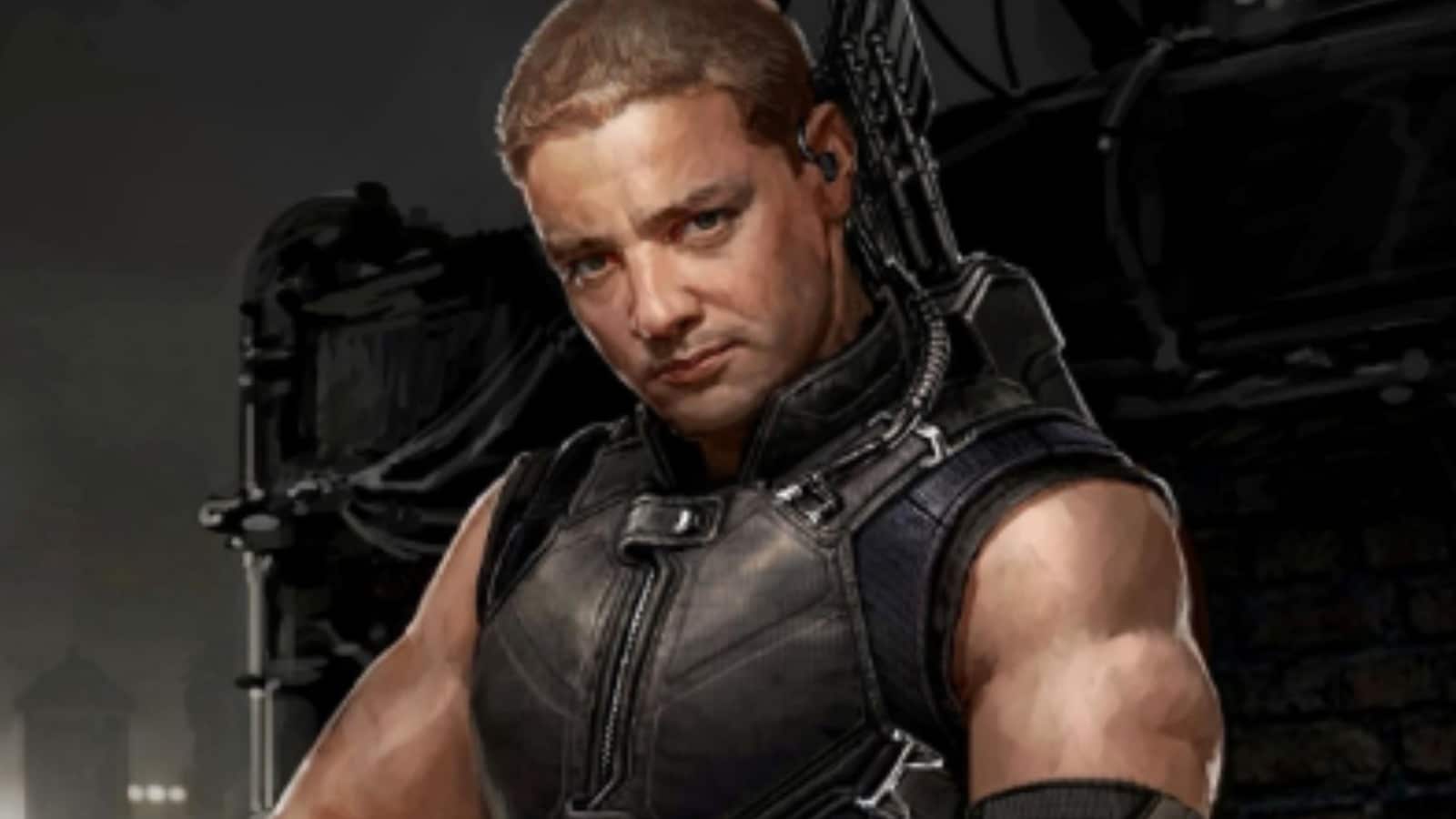
At the time «The Avengers» released, keeping comic book costumes accurate for their adaptation into live-action wasn’t a priority. Thus, fans saw such sights as the traditionally colorfully-clad X-Men running around in black leather. While the likes of Iron Man and Captain America weren’t too adversely affected by this trend, Hawkeye certainly was. In the pages of Marvel Comics, Clint Barton is known for his vibrant purple and blue suit with an over-the-top purple helmet. In Ryan Meinerding’s artwork, there isn’t even a hint of his classic attire, with neither a helmet nor a dash of color to be seen.
To somewhat honor the source material, Hawkeye’s final «Avengers» suit at least has a dash of dark purple to it, which isn’t much, but it’s better than giving him a generic all-black military look. Thankfully, it seems that Marvel Studios has finally come around on giving Clint a good, comic-inspired costume. On the Disney+ series «Hawkeye,» his protégé, Kate Bishop (Hailee Steinfeld), whips the two of them up some matching purple and black outfits. In fact, their new duds look like they were pulled straight from Matt Fraction and David Aja’s «Hawkeye: My Life as a Weapon» story.
From concept art to his self-titled Disney+ series, Hawkeye has come a long way in the MCU, not only in terms of his arc but his costuming, too. All we can hope for now is that we’ll see some form of his gaudy yet iconic mask down the road.
Arrancamos el año con algunos de los eventos tecnológicos más importantes, siendo Unpacked uno de los más esperados. Es la oportunidad de Samsung de mostrarnos lo que tienen en su arsenal, y las sorpresas parecen estar orientadas en gran medida a la inclusión de inteligencia artificial. Por otro lado, la llegada del Samsung Galaxy S24 es un potente generador de incertidumbre, y aunque ya ha habido un par de filtraciones, solo es cuestión de días para conocer lo que la compañía surcoreana prepara.
La fecha definida para el Samsung Unpacked 2024 es el 17 de enero, y se ha confirmado oficialmente que el nuevo buque insignia de la marca será presentado ese día. Como en años anteriores, Samsung demuestra una tendencia a utilizar esta ocasión para revelar sus dispositivos más importantes. Así pues, conoceremos las características de la gama alta que promete llevar la batuta durante este 2024. Ante la llegada del sucesor del Galaxy S23, el mercado se ha mantenido a la expectativa, ya que las innovaciones pueden estar orientadas a mejor calidad en el procesamiento, optimización de pagos y la posibilidad de plegarse.
Los móviles con inteligencia artificial son una tendencia que puede cobrar fuerza para Samsung en este año, lo que representaría una importante evolución para los Smartphones. Por ejemplo, se ha hablado de Galaxy AI, una tecnología que nos presenta la empresa y de la que poco se sabe. Sin embargo, algunos datos revelados indican que al menos el uso del Zoom en las cámaras podría estar vinculado con un análisis mucho mas provechoso y potente por parte de esta tecnología captar imágenes más impresionantes.
Samsung no solo planea lanzar un nuevo teléfono, según los informes, sino que espera ingresar en el mercado un dispositivo que transformará completamente la manera en que interactuamos con ellos. Solo queda esperar al 17 de enero para conocer lo que nos depara el futuro de Samsung a través de su línea Galaxy S.
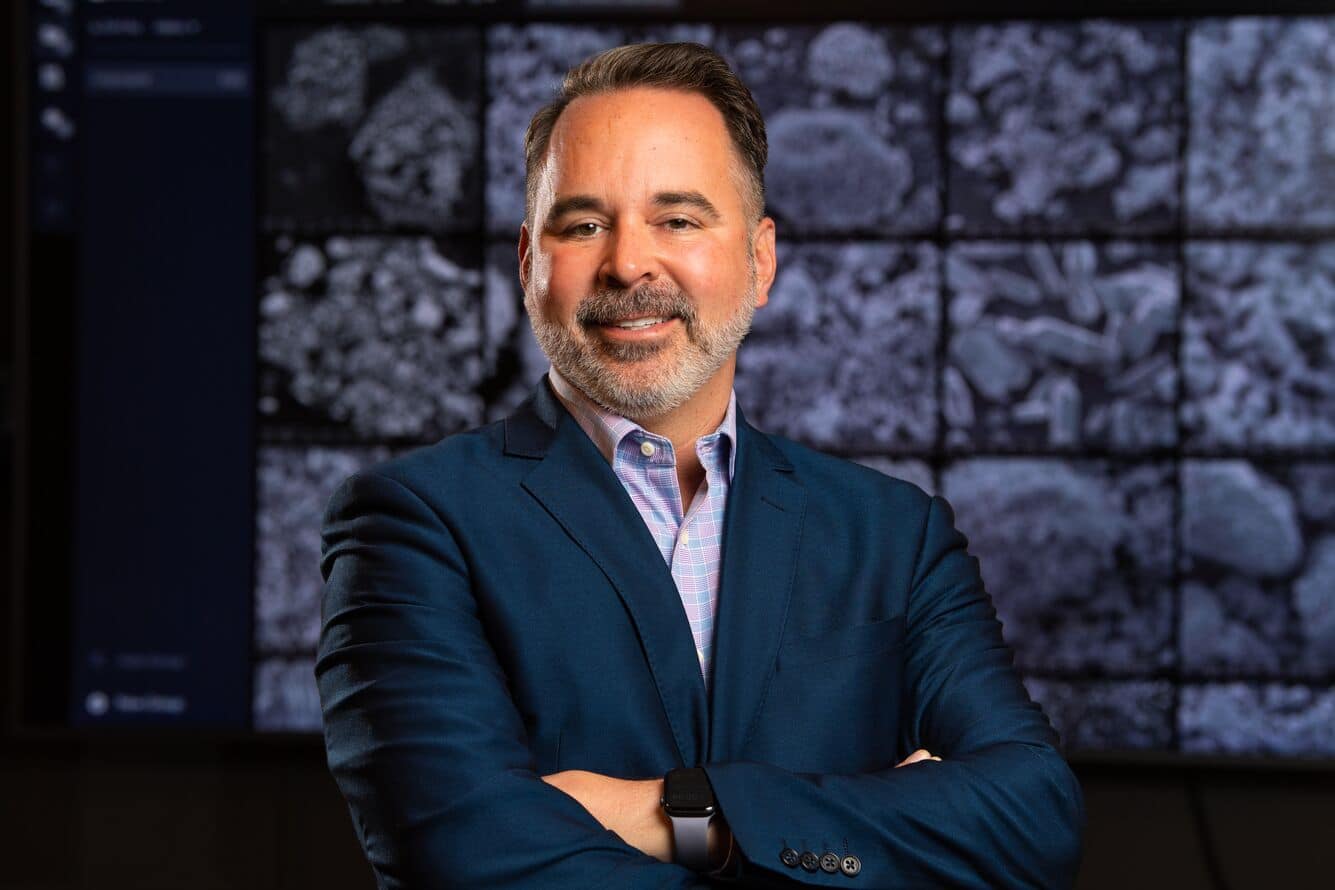
Court Corley leads the Center for AI @PNNL. (Pacific Northwest National Laboratory Photo / Andrea Starr)
Bringing artificial intelligence to bear on issues relating to nuclear weapons might sound like the stuff of a scary sci-fi movie — but at the Department of Energy’s Pacific Northwest National Laboratory, it’s just one of the items on the to-do list.
One of PNNL’s research priorities is to identify and combat complex threats to national security, and AI can help meet that priority by detecting attempts to acquire nuclear weapons or associated technology.
Nuclear proliferation detection is one of the potential applications that could get an assist from the Center for AI @PNNL, a newly announced effort to coordinate research that makes use of AI tools — including the generative AI tools that have captured the attention of the tech world over the past year or two.
“For decades we’ve been doing artificial intelligence,” center director Court Corley, PNNL’s chief scientist for AI, told GeekWire in a recent interview. “What we’re seeing now, though, is an exceptional phase shift in where AI is being used and how it’s being used.”
Historically, PNNL’s researchers have made use of data analytics in specific domains to provide deeper insights into special types of challenges, “But in the past 10 years since we started using modern AI, which includes deep learning and now generative AI and deep reinforcement learning, the number of our scientists and engineers that are using it in their day-to-day work has just continued to grow,” Corley said.
Corley said one-fifth of PNNL’s thousands of scientists and engineers are using AI. “These are power systems engineers working on electricity grid resilience, and scientists working to decode the biomolecular universe and understand biological function, and so many domains in between — where previously, the application of AI was challenged because either it wasn’t robust or it wasn’t resilient, but now it’s really beginning to work well,” he said.
The Center for AI @PNNL is meant to optimize how AI tools are employed at the national laboratory, which is based in Richland, Wash., but also has researchers working in Seattle and Sequim in Washington state, plus Portland, Ore., and even College Park, Md. Corley and his staff have the job of coordinating AI projects and championing technological innovations across the organization.
Among the AI-centric projects PNNL’s researchers have been working on are initiatives to speed up materials development for energy storage systems; to engineer microbes to produce next-generation biofuels; and to make use of a technique called autonomous experimentation to create new types of alloys.
“There are pockets of AI research and AI engineering all across the laboratory, and we’re at a point now to be able to aggregate our collective expertise and really champion our work,” he said. “It makes sense to bring everybody together in a virtual research hub. That way, we can have an entity that’s greater than the sum of its parts. We can better prioritize infrastructure, prioritize resources, prioritize tooling, upskilling, training and so forth.”
Corley is well-suited for his new role as the center’s director: He received his Ph.D. in computer science and engineering from the University of North Texas in 2009 and has been focusing on data analytics and AI research at PNNL ever since. Here’s a selections of quotes from our interview, edited for brevity and clarity.
On efforts to ensure the safe and secure use of AI for national security applications: “There’s a huge call-out in the executive order about AI that was issued by the president recently. It delves into how we as a nation can protect against revealing dangerous information — for example, recognizing the ability to extract dangerous information from these systems as to how they’re used, and building a response to that. Right now, the government is on a very short timetable to respond to those concerns. It’s a whole-of-government effort with many organizations involved, not just national labs like PNNL. We need to answer those specific questions: What are the safeguards? What are the mechanisms by which we’ll protect our infrastructure and high-consequence systems?”
On working with tech partners to make AI safer: “Tech companies are going to develop their own roadmap. But the folks from the tech companies are very clear. They say, ‘We shouldn’t be the one only ones developing safe and secure methods for these systems. We really need the government support.’ And you see that in Washington now. They’re having conversations with many organizations about partnerships to make sure these systems are developed in a safe, secure manner.”
On how generative AI being used at PNNL: “We’re in an exploratory phase right now. We’re trying to see where generative AI will have the most impact in the missions that we support. We have a new effort, using some of the tools provided by our hyperscalers, like Microsoft or Amazon, to see whether those tools are sufficient to do both computational chemistry and AI workloads. We have other efforts that we are just starting with the Department of Energy — for example, to accelerate permitting processes. The process for getting environmental permits for different types of electricity use is a very paper-heavy process. And so we have an exploratory project right now to see if can we accelerate that process, to remove some of the barriers to accessing government resources.”
On using AI for research in Earth science and biological sciences: “There are two applications there. One is speeding up the complexity of our climate models and our atmospheric models to get a better understanding of how climate change is affecting the United States. In the biological sciences, we’re thinking about how we can understand biological function in a way that we’ve never been able to before, by having an ‘-omics’ view that goes beyond genomics — by looking at the proteomics, metabolomics and all these other -omics, and integrating them in a way that hasn’t been possible before because of the sheer complexity. This is another area where we’re trying to bring AI into the fold.”
On areas of research where AI and quantum computing can work together: “One of the areas is in materials. If we can design better materials that can operate in the regimes that are needed for quantum computing, I think that’ll be game-changing. And we’re seeing that machine learning can be used in quantum chemistry. So, I would say the No. 1 area where AI is probably going to have an impact is in that materials chemistry space — which is where quantum computing is, because of the temperatures at which it needs to run and the types of materials it needs for its design.”
On the ways in which PNNL is improving how AI is done: “One example that we have worked on is in an area called scientific machine learning. It’s where we incorporate physics into deep learning itself, so you can constrain it or provide it with explainability and interpretability by saying, ‘Here are known governing laws about the physical universe.’ By constraining our models based on that, we add a layer of reducing the cost of training and computation time and data. We’re also increasing how interpretable AI is for the end users, because now it’s not an unbounded system, but it’s bounded by the laws of physics.”
On whether autonomous experimentation will ever replace human researchers: “The only thing that AI is going to do is accelerate the process. We still absolutely have to have human ingenuity in the loop for a lot of the designs and experiments. To have a deep theoretical understanding of the domain in addition to the ability to partner or use a co-pilot of some sort, I think is really going to be the game-changer for this autonomous experimentation.
“The only ones who will be left behind are those who don’t adopt the use of AI in some way. We’re still exploring where it should be used. But there are many applications that go beyond automation, where you’re just getting a repetitive process that’s done, maybe not in an intelligent way, and then you add some intelligence on top of it that says, ‘OK, now you could perform this next experiment based on the hypothesis that you just tested.’”
On the AI applications from PNNL that could be the first to change daily life: “In the next five to 10 years, we’re going to see a complete transformation in energy generation because of the ability to bring on new types of resources. The only way to do that in a reliable manner is through the use of AI, because now we’re talking about generation sources that are variable. They’re not consistent. They’re not dispatched easily. There’s a lot of operational control that needs to happen. AI is probably one of the solutions that will be used to help us get there.”
With @21xfour’s mock-up providing a convincing look at Alan Ritchson as Shazam, some fans might be wondering if there’s any chance the «Reacher» star could actually make his way into the DC Universe as a new version of the character. Unfortunately, it seems that the odds of it happening are pretty slim for the moment.
Ritchson was indeed once rumored to be replacing Zachary Levi as Shazam after news of James Gunn’s plans to reboot the DC film continuity first began spreading online. However, Gunn himself shot down speculation on this front when he took to X (formerly known as Twitter) and shared a post explicitly debunking the rumor. Nonetheless, with no concrete projects involving Shazam announced, it remains unclear whether Gunn intends to retain Levi or recast the role in the future.
While the rumors may not be true for now, it seems that Ritchson is at least open to the idea of playing Shazam. The actor has, on occasion, teased the idea of him taking on the role via social media. Before the release of «Shazam!,» he even went as far as to falsely confirm (in a now-deleted tweet preserved by ScreenGeek) that he would be playing the DCEU iteration of the character. He’s no stranger to the DCU either, having portrayed Aquaman on «Smallville» and Hawk on «Titans.»
La lucha por desarrollar el mejor chat de Inteligencia artificial continúa en su máximo apogeo, y esta vez, Microsoft es la empresa protagonista. Luego de saltar a este mercado con “Bing Chat” la empresa tecnológica ha decidido cambiar el nombre de esta herramienta a Microsoft “Copilot”, un chat al que se le puede preguntar casi cualquier cosa y obtener respuestas de gran precisión.
Se trata de una tecnología que nos resulta bastante familiar, ya que empresas como OpenAI se han dado a la tarea de posicionar este recurso como uno de los que mayor interés ha despertado en 2023. Lo interesante es que Microsoft no entra como un competidor, sino como un colaborador en esta carrera por la creación de un chatbot potente, puesto que se ha asociado con OpenAI para la creación de Copilot.
Pero antes que nada, es importante comprender el alcance y potencial de este software de inteligencia artificial, que no es más que un modelo conversacional. Es un modelo de lenguaje similar al que se emplea en ChatGPT, donde se incluyen recursos de GPT-4. Por ende, si quieres aprovechar parte del potencial que ofrece esta tecnología de manera gratuita, Copilot sin duda ofrece un desempeño bastante significativo en comparación con otros similares.
Para su funcionamiento, Copilot está conectado constantemente a la red, lo que evita que se comparta información desactualizada. Como resultado, Microsoft ha logrado crear una herramienta capaz de ofrecer datos actualizados en función a las referencias obtenidas en la internet.
Otro punto importante que hay que mencionar es el hecho de que Microsoft ha integrado en Copilot la herramienta DALL-E 3, a través de la cual se pueden generar imágenes. Es un punto favorable que solo requiere de texto para crear imágenes completamente originales. Con este arsenal de funciones, Copilot se perfila como una de las herramientas que dará mucho de que hablar en este año 2024.
With Disney’s purchase of Lucasfilm in 2012, the «Star Wars» Legends banner was created. Everything outside of a few select projects, such as the main «Star Wars» films and the «Star Wars: The Clone Wars» animated series, was deemed non-canon and placed under this label. The events of the «Force Unleashed» games were put into this category, along with Starkiller himself. As the new «Star Wars» canon has expanded, Legends elements have made their way into it, and Starkiller nearly made the leap himself.
According to the man behind Starkiller, Sam Witwer, «Star Wars» creative Dave Filoni once toyed with the idea of making the character canon. «I know that Dave, at one point, when he was doing ‘Star Wars Rebels,’ thought about including him as an Inquisitor,» Witwer shared in a Cameo video (via Colonel Useless on YouTube). Sadly, for one reason or another, Filoni decided against bringing the character into the new canon on the animated series as a Jedi-hunting Imperial agent. Thus, fans are left to speculate on how he could hypothetically fit within the current «Star Wars» framework if he’s to be introduced.
Starkiller may be an overpowered video game protagonist with an edgy attitude, but to so many «Star Wars» fans, he’s one of the franchise’s greatest creations. Time will tell if he’ll ever return to the forefront of the galaxy far, far away and what his canon story will entail.
Those eager to watch «Sound of Freedom» at home have the option to stream the movie completely free of charge — at least, they will eventually. Angel Studios, the film’s distributor, has made the thriller available as part of the content line-up on its app and website. At the time of this article’s publishing, the film is in an «early access» period, meaning that only paid subscribers can view it. However, once that period ends, «Sound of Freedom» will join the rest of the platform’s lineup of free content, making it far and away the most economical option for watching the movie.
On the other side of the spectrum, «Sound of Freedom» is currently available to stream with a basic Prime Video plan, so those who are already subscribed to the service can also watch the movie at no additional cost. Prime Video is also one of the various digital platforms that offer the option to rent or purchase the digital version of the film, along with storefronts like the iTunes store, the Google Play store, the Microsoft store, Vudu, and Redbox. High-definition and standard-definition versions are available.
Finally, viewers can also watch «Sound of Freedom» at home by purchasing a physical copy of the movie. The movie was released on both DVD and Blu-ray, with copies available through the Angel Studios website and major retailers like Amazon, Walmart, and Target. All editions of the Blu-ray release include both the Blu-ray version and the DVD version, while certain editions also include a redeemable code for a digital copy of the film.
Stephiney Foley, founder and CEO of Yuzi, with her husband Harper Foley, who is also a Yuzi co-founder and chief technology officer, and their children. (Yuzi Photo)
Yuzi founder Stephiney Foley graduated from West Point and worked for the U.S. Army for more than seven years, serving as a platoon leader in Afghanistan and Hawaii and a supply chain and operations officer in California.
When it comes to war, Foley said, the expectation is that it’s going to be tough and you need to brace yourself. That’s not the message for new parents.
“With motherhood, the media, movies, everything out there says it’s a rosy, beautiful thing — which it is — but our society doesn’t talk about the messiness of motherhood and parenthood,” Foley said.
Seattle-based Yuzi is a wellness startup aiming to support families during the exhausting, challenging days that follow childbirth. Yuzi launched in September and the team is bootstrapping the effort while starting fundraising. The target customers include some of the parents of the more than 3.6 million babies born in America annually.
Foley is also working at Amazon as president of Asians@Amazon, the tech giant’s largest employee resource group, and was previously head of product for subscription services. She has been with the company since 2018. Foley began thinking about the need for better postpartum care following the birth of her second child. She and her husband were working full time, taking care of a toddler, and their families lived across the country in Texas and Florida.
“With motherhood, the media, movies, everything out there says it’s a rosy, beautiful thing — which it is — but our society doesn’t talk about the messiness of motherhood and parenthood.”
– Stephiney Foley, founder and CEO of Yuzi
“I was really at my wits’ end,” Foley recalled.
The U.S. medical system emphasizes healthcare for expectant mothers and well-baby visits for infants, but does little for women following delivery. America’s maternal death rates are 10-times higher than some other wealthy nations and have increased dramatically in recent years. After delivering a baby, mothers can experience postpartum depression, struggles with nursing, anxiety, sleep deprivation, and damage to their pelvic floor, among other issues.
Yuzi is preparing to release its first product, which is a post-delivery retreat where mothers receive meals, support from specialists in taking care of new babies, and an opportunity to heal. Foley said they’re working to finalize a hotel partner in the Seattle area to host families, and the retreats should launch in May. The experience will include an app to coordinate resources during and after the retreat.
The ultimate goal for Yuzi is to create a platform that will be a clearinghouse for reliable, trusted information on the postpartum experience and create a community for new parents.
The startup is named after “zuo yuezi” — a Chinese practice that translates to “sitting the month,” which is a period of 30-40 days after childbirth when a mother isolates, rests and bonds with her baby.
There are other businesses offering luxury postpartum retreats at hotels in Asian cities and New York City, as well as night nurses who provide care to mothers and their newborns.
The support is expensive across the board. The Yuzi retreat costs from $899 to $1,199 per night depending on the length of stay, with a five-night minimum. It includes a luxury hotel room, three meals per day for mothers, 24-hour care, lactation support, and newborn care educational programming. Partners are also able to attend.
Foley, who worked briefly at Tesla, said her approach is akin to the electric car manufacturer, initially targeting affluent consumers and eventually expanding her product base to reach a wider audience. She hopes that Yuzi can ultimately establish postpartum retreat programs around the country and provide more resources in general to families of newborns.
To reach all new moms in America, “it requires legislation changes in our state and our country as well as employer support,” Foley said, which she would like to advocate for.
In addition to her bachelor’s degree from West Point, Foley has an MBA from the Tuck School of Business at Dartmouth College and a master’s degree from Norwich University in diplomacy and commerce.
Multiple programs supporting startups have selected Yuzi to participate in their cohorts. That includes the Washington Technology Industry Association (WTIA), which has a program providing seed-stage founders with coaching on new company basics as well as $10,000 worth of Amazon Web Services credits. Yuzi is also part of the Dartmouth consumer incubator and Bunker Labs, a program benefiting military veterans.
Foley was the co-founder of a gaming-related NFT consulting company that operated until August, and is a board member of Athena Angels, which supports women entrepreneurs from West Point.
The Yuzi team includes Foley’s husband, Harper Foley, who is a co-founder and chief technology officer; co-founder and Chief Operating Officer Michelle Homan; and Chief Wellness Officer Dr. Tiffany Chen.
Editor’s note: This story was updated to correct that Stephiney Foley is still with Amazon.
Out of the many issues that fans and critics alike had with 1998’s «Godzilla,» the look and characterization of the titular monster received the worst backlash. In place of the indestructible, city-destroying behemoth that captured the hearts and minds of audiences all over the world was a creation that resembled an iguana and was easily bested by military forces.
Viewers in Japan were especially distressed by the new look. After camping outside the theater in great anticipation for the film, then-16-year-old fan Masato Mukohata told the Los Angeles Times, «We’ve been building up our expectations since rumors first surfaced of an American Godzilla in 1994. My dreams were crushed.» Similar sentiments were carried by those who worked on Toho’s long-running series of Godzilla films. Suit actors Hauro Nakajima and Kenpachiro Satsuma expressed dismay at the monster’s new look, with Satsuma saying in a 1998 G-Con interview, «Honestly speaking, I am a bit disappointed.»
With TriStar’s planned «Godzilla» trilogy in the can, Toho took action once the American studio’s license expired. Producer Shōgo Tomiyama rebranded the monster as «Zilla,» claiming that Hollywood took the God-like qualities out of the character. Zilla would join the extensive monster roster of 2004’s «Godzilla: Final Wars» where the creature goes on a rampage throughout Sydney, Australia. It eventually faces the real Godzilla, who dispatches the inferior creation in only a few seconds using his atomic breath. Perhaps if more time was put into making Zilla scary and not sexy, he might have had a shot.
Gary Oldman’s distaste for the quality of his performance on the «Harry Potter» franchise — although J.K. Rowling herself praised his work in a 2012 interview with Charlie Rose – should not be mistaken for distaste of the franchise itself. If anything, the actor cherishes the series. During a 2023 interview on «The Drew Barrymore Show,» Oldman expressed a deep gratitude for not only «Harry Potter» but for Christopher Nolan’s «Dark Knight» trilogy as well. According to Oldman, the pair of projects offered him a chance to revive his career while also maintaining an appropriate work/life balance.
«At 42 years old, I woke up divorced and I had custody of [my] boys … that was hard because there was a shift in the industry where a lot of productions were being [filmed in] Hungary, Budapest, Prague, Australia, you know, all of these places,» said Oldman. «So I turned down a lot of work. Thank God for ‘Harry Potter’ … I tell you, the two — ‘Batman’ and ‘Harry Potter’ — really, they saved me, because it meant that I could do the least amount of work for the most amount of money and then be home with the kids.»
In the years since «Batman Returns,» different live-action versions of Catwoman have appeared in Batman-centric productions. Anne Hathaway portrayed the character in 2012’s «The Dark Knight Rises,» and Zoë Kravitz recently put her own spin on the role for 2022’s «The Batman,» for instance. Unfortunately, even as the character has remained culturally relevant and Michael Keaton’s Batman has received a reprisal, Michelle Pfeiffer’s Catwoman hasn’t returned to live-action. Still, that doesn’t mean her character’s universe doesn’t include a Catwoman solo adventure.
Twelve years after «Batman Returns» came and went from theaters, moviegoers were offered «Catwoman,» starring Halle Berry in the title role. The film was written off by DC fans and casual audience members alike in short order, predominantly for failing to do anything memorable with the lead character and the comic book universe it’s said to be based on. What some might not realize though is that this film actually ties back to Burton’s «Batman» franchise. It’s explained that Patience Phillips (Berry) has been given cat powers by the Egyptian goddess, Bast, to become a catwoman. In one scene, she looks at images of those who came before her, with one of them being Selina Kyle from «Batman Returns.»
This is more than likely just an Easter egg meant to highlight Catwoman’s cinematic history up to that point. Then again, if one wanted to, they could interpret this as proof that «Catwoman» is indeed a «Batman Returns» spin-off set in the same world.
Desafortunadamente, un Airbus A350-900 de Japan Airlines se accidentó y se incendió en la pista del aeropuerto de Haneda, en Tokio, después de colisionar con un Dash 8 turbohélice de la guardia costera que transportaba ayuda humanitaria para los afectados por el terremoto que sacudió la costa occidental del país en el inicio del nuevo año.
Cinco de los seis tripulantes del pequeño avión de la autoridad de protección marítima de Japón murieron. Por su parte, las 379 personas que iban a bordo de la aeronave comercial salieron con vida del terrible accidente. Esto último ha sido calificado como “milagroso” por expertos de seguridad aérea, según Reuters. La prensa internacional también recalca los avances en tecnología y seguridad que se implementan en las aeronaves modernas, cuyo estándar debe ser de 90 segundos para una evacuación total.
Airbus A350, un avión que abrazó la innovación
Las causas del accidente producido este martes por la noche (horario local) todavía no están claras, aunque en este momento las autoridades están llevando a cabo una investigación exhaustiva. Uno de los ejes de la misma tiene que ver con la comunicación entre la torre de tráfico aéreo y los aviones.
Se sabe, además, que Airbus ha enviado un equipo de especialistas para colaborar mientras se desarrolle la investigación. Cabe señalar que, como suele ocurrir en estos casos, las conclusiones preliminares del accidente no llegarán en lo inmediato, por lo que tendremos que tener paciencia para saber más sobre lo sucedido.
No obstante, podemos enfocarnos en la información que sí tenemos a nuestro alcance, como las características del Airbus A-350-900 de Japan Airlines. Es que se trata de uno de los aviones más modernos y avanzados que operan en la actualidad. Veamos qué hay detrás de esta familia de aviones que empezó a volar en 2015.
Cuando hablamos del Airbus A350 hacemos referencia a un avión relativamente nuevo. Si bien el fabricante europeo tenía en sus planes desarrollar un avión de estas características desde hace tiempo, el proyecto recibió su impulso definitivo en 2006. Después de mucho tiempo de trabajo, el primer prototipo despegó de Toulouse, Francia, en 2013.
Un año más tarde llegaron las certificaciones de la Agencia Europea de Seguridad Aérea (EASA) y de la Administración Federal de Aviación (FAA), elementos clave para empezar a operar. Esta nueva familia de Airbus debutó en enero de 2015 de la mano de Qatar Airways que puso en el aire un Airbus A350-900, una variante capaz de transportar hasta 350 pasajeros.
Fue la misma aerolínea la que en 2018 también desplegó un Airbus A350-1000, una variante un poco más ambiciosa diseñada para transportar hasta 410 pasajeros y alcanzar un alcance máximo de 16.000 kilómetros frente a los 15.000 kilómetros de la versión anterior. Desde ese entonces, ambas variantes han sido incorporadas por diferentes aerolíneas.
Airbus cuenta en la página de producto del A350 que tanto pilotos como aerolíneas participaron de la etapa de desarrollo de la aeronave. Esta estrecha colaboración dio como resultado un producto mejor orientado para los futuros propietarios. En la cabina destacan seis grandes pantallas táctiles ideadas para mejorar la operatividad de los pilotos.
El Airbus A350 es el primer avión comercial en llegar con un sistema de Descenso Automático de Emergencia (AED, por su siglas en inglés). En un caso de despresurización donde la tripulación deja de responder al quedar inconsciente, el sistema se encarga de descender automáticamente la aeronave a una altitud segura.
Se trata también del primer avión de Airbus construido mayormente con materiales compuestos. Esta apuesta, según el fabricante, presenta muchas ventajas. Por un lado, el avión es más liviano, lo que se traduce en menor consumo de combustible y mayor autonomía, y por otro lado también es más resistente a la fatiga y la corrosión. Como podemos ver en la imagen inferior, todo el fuselaje y los revestimientos de las alas están compuestos por fibra de carbono.
Airbus afirma que esta técnica innovadora también llega acompañada de beneficios a nivel de seguridad. “Los materiales compuestos también proporcionan algunos beneficios adicionales en términos de comportamiento al fuego: polímeros con fibra de carbono (CFRP) es autoextinguible y más resistente a las quemaduras que el aluminio”, señala el fabricante.
Es preciso señalar que la utilización de materiales compuestos no es completamente nueva dentro de Airbus. La firma con sede en Blagnac lleva desarrollando este enfoque desde 1983, con el A310-200, que tenía el spoiler y el timón de CFRP. Otros modelos como los A310 y A320 también ha utilizado materiales compuestos, aunque el A350 lo lleva al siguiente nivel.
Si hablamos del sistema propulsor, el Airbus A350 se mueve gracias a un conjunto de motores Rolls-Royce Trent XWB diseñados específicamente para este modelo. Prometen ofrecer un 25% menos de consumo de combustible. Según sus diseñadores, es el “motor aeronáutico grande más eficiente del mundo en servicio”.
No podemos cerrar este artículo sin mencionar las comodidades que estas aeronaves, específicamente las configuradas por Japan Airlines, ofrecen a los pasajeros. Cada asiento cuenta con puertos USB y tomas de corriente para cargar ordenadores portátiles y otros dispositivos. Además, las ventanas tienen unos generosos 42 cm de alto por 27 cm de ancho.
Los compartimentos de almacenamiento superiores son más espaciosos que los convencionales. Los asientos tienen unas fundas que utilizan una combinación de dos tipos de tela diferentes para dar una sensación visual de amplitud. Los espacios de clase superior están rodeados de unas carcasas grandes y reposabrazos que buscan ofrece espacios privados.