The fan-made concept video for Quentin Tarantino’s «Star Wars» is an intriguing idea, filled with references and nods to the writer-director’s unique storytelling quirks. The «Star Wars» pitch ends with Samuel L. Jackson’s narrator discussing how all three «timelines» or chapters would collide by the end, leaving it up to the viewer to imagine what the film’s third act would look like.
What makes the video particularly intriguing is how it reinterprets the «Star Wars: A New Hope» template in a way that only the Oscar winner could pull off. From turning the meek Luke Skywalker into a vengeful, kung-fu-proficient Jedi, to making Emperor Palpatine a film buff obsessed with watching «Tatooine Westerns on 35MM,» the video does an excellent job of channeling Tarantino’s vibe. Take note of the visuals too — the AI-created video is filled with unique takes on familiar «Star Wars» aesthetics. For example, the anxious C-3PO is depicted as a bad-ass droid with a gun.
Unfortunately, it’s all but unlikely that Tarantino will direct a «Star Wars» film, as he has his eyes set on «The Movie Critic,» which is reportedly set to be his tenth and final film. While concrete plot details regarding the film are minimal, it’s definitely not going to be a sci-fi flick, which is no doubt a disappointment to «Star Wars» fans. And per the comments, it’s clear that fans of the creative want to see him tackle the billion-dollar-grossing sci-fi franchise. «Somebody please make this happen and pay Quentin Tarantino, whatever his prices to do it!!!» wrote YouTube user @TheRTM.
Every few years, the internet remembers just how delightfully bonkers the Japanese «Spider-Man» television series is. Yes, it’s an adaptation of Marvel’s most popular superhero, but only in name. During the show’s 41-episode run, the hero mans towering mechs — an arachnid-themed humanoid robot named Leopardon, no seriously — and battles literal Kaiju, just like Reddit mentioned. If that doesn’t sound like a major deviation, know that Takuya Yamashiro gets his spider powers from the last surviving member of an intelligent species from Planet Spider and that his super suit is contained within a fancy bangle. Stan Lee adored Toei Company’s version of Spider-Man, by the way.
Before Sony released «Spider-Man: Into the Spider-Verse» and brought the concept of Spider-Man variants to the forefront of public consciousness, Japanese Spider-Man might have felt more bizarre, more out of place, but Spider-Ham (John Mulaney) and Spiders-Man (google at your own risk) are commonplace names among movie-going Marvel fans, now. The idea of a Spider-Man who acts like a Power Ranger isn’t that abnormal. But the idea of a Spider-Man who just watches when a person willingly plummets to their death? That’s still weird, that’s still questionable, and that’s still worthy of some light internet bullying as a treat.
A Seattle home developed by Green Canopy NODE. (Green Canopy NODE Photo)
Three former executives of the climate friendly housing technology company Green Canopy NODE have left to create Cambia Capital, a sustainability-focused real estate investment firm.
Aaron Fairchild, Andy Wolverton and Susan Fairchild are now managing members of the firm, which will invest in residential developments in the Pacific Northwest and nationally, with a focus on mass timber projects. The Cambia Capital is launching with a $20 million investment dubbed the Douglas Fir Fund that it plans to grow significantly.
As part of Green Canopy NODE, the trio previously raised four funds totaling more than $100 million in corporate and project-related debt and equity that they invested in sustainable housing developments.
One of the biggest constraints to constructing climate friendly housing has been a lack of capital, said Susan Fairchild. Few real estate firms are specifically targeting these projects, she said, which could make Cambia Capital an attractive option for investors who are concerned about the planet.
“People don’t just want a return,” she said, “they want to make sure what they’re doing is adding to some positivity.”
The managing members of Cambia Capital from left: Aaron Fairchild, Andy Wolverton and Susan Fairchild. (Photos via LinkedIn)
Washington is a leader in its sustainable building requirements. The state’s Building Code Council last month approved rules mandating strict energy performance standards for new residential and commercial construction. The regulations don’t include the controversial requirement of installing highly efficient heat pumps — but developers and builders still need to reach that level of performance even if they’re using gas or oil powered devices. The city of Seattle this month signed into law energy rules for existing buildings over 20,000 square feet.
The Cambia Capital team, which is based in Seattle and Portland, expects to work with Green Canopy NODE for future projects, but also wants to partner with other housing companies.
In 2021, Green Canopy CEO Aaron Fairchild and NODE CEO Bec Wilder merged their businesses. The new partnership raised $10 million in seed funding to kick off the merger. Up until now, Fairchild and Wilder served as joint CEOs.
Wilder will continue leading Green Canopy NODE as sole CEO and board director, and Aaron Fairchild will keep his seat on the company’s board. Fellow executive Chief Development Officer Sam Lai will stay in his role with the company as well.
Related: Fire resistant, quake safe, climate friendly: Mass timber is on the rise as a construction alternative
It’s no secret that Austin Butler is on top of the world following his Oscar nomination for «Elvis.» In the wake of the film’s release, Butler was showered in praise, singled out by critics for his daring and definitive turn as the musical sensation. Looper critic Audrey Fox praised the YSL ambassador’s performance, writing, «Austin Butler is able to create a vision of Elvis that captures not just his seductive charisma, but his more vulnerable side as well […]» With praise like that, it’s no surprise that Butler landed an Oscar nod, joining esteemed company like Brendan Fraser («The Whale») and Colin Farrell («The Banshees of Inisherin»).
While Butler lost, he’s no doubt cemented himself as one of his generation’s most interesting actors. For his performance, the actor received considerable praise from many industry giants, including Angela Bassett, who is eager to see what Butler does next. «Although his name wasn’t called, Austin is no less a winner,» Bassett wrote about the actor’s Oscar loss for Time’s 100 Most Influential People column on Butler. «The time had come for Austin to say goodbye to Elvis as he began to embrace an infinite universe of possibilities as an actor,» Bassett penned. «I can’t wait to see what he brings us next.»
Now, Butler is riding a high with interesting projects in the works. The actor will next be seen in Denis Villeneuve’s highly-anticipated «Dune: Part Two» as the nefarious Feyd-Rautha. Beyond his upcoming sci-fi outing, Butler will also be seen in a headlining role in Jeff Nichols’ «The Bikeriders.» Originally set to debut in 2023, the gritty biker drama is now set to hit multiplexes in 2024.
In the aforementioned Reddit thread, MCU fans came together to not only agree and disagree with the original post, but to also offer ideas on how the Blip could’ve been better handled.
«They could have had a whole set of stories contained to immediate post blip, and a set for after that period, whereby the characters stories converge for an Avengers themed event. But alas we have the mess we have now,» commented u/Drop_Release, pitching a more Blip-oriented direction for the MCU after «Avengers: Endgame» rather than the messy Multiverse-centric one we’ve gotten. Another fan, u/jadedflux, concurred and expressed the belief that post-Blip stories should’ve been more grounded and emotional rather than typical action-packed, universe-expanding blockbusters largely devoid of actual stakes.
As for u/optimus2861, they think the Blip itself shouldn’t have happened at all, writing, «I believed that the resolution to the Snap should have been that the Avengers prevented it from ever happening via time travel.» This way, there’s still a strong, high-stakes story for audiences to invest in, but the minds at Marvel Studios don’t have to write around the Blip in the aftermath. Meanwhile, another Redditor believes the Blip could’ve at least set up the MCU introduction of mutants and, therefore, the X-Men.
At the end of the day, the fact remains that the Blip is woven into the fabric of the MCU. Hopefully, those behind the franchise can figure out how to work with it and utilize it to its fullest potential — or at least use it better than it has been since «Avengers: Endgame.»
Most people associate Marvel’s Thing with Ben Grimm, who’s canonically Jewish, which would explain why Marvel is looking for Jewish actors to play the part, as reported by @MyTimeToShineHello. This could mean we’ll see a gender-swapped Ben Grimm that Mila Kunis, or another actor, could theoretically play. On the other hand, Marvel may be going in a different direction entirely and bringing a new character into the on-screen Fantastic Four mix.
As is the case with many well-known superheroes, a mantle can get passed from one person to the next, and there have been different versions of Thing over the years. First, there’s Darla Deering, who takes on the moniker of Miss Thing. She is a celebrity who’s romantically linked with Johnny Storm for a time and eventually finds her way onto the team. She wears an exoskeleton of the Thing that Reed Richards built after Ben lost his abilities, one which allows the user to take on Thing’s power set.
Additionally, there’s She-Thing, also known as Sharon Ventura. A wrestler who is exposed to radiation much like Ben Grimm, she becomes another Thing with enhanced strength, durability, and reflexes.
There have been two iterations of the Fantastic Four on the big screen already, with the same team each time (played by different actors, of course). There’s a chance Marvel wants to make the MCU version of the Fantastic Four different from what audiences are familiar with, and this could include a more gender-balanced outing with Thing being played by a woman who’s not even necessarily Ben.
One thing is clear from all this — a random lunch can lead to the internet losing its mind.
Of course, actually casting Denzel Washington as Kang seems like a long shot. The Academy Award winner has never starred in a superhero flick, but he might be open to it. In a 2018 interview with JOE.ie, Washington declared, «Never say never» when it came to working with Marvel or DC. Plus, audiences have seen him play a terrifying villain in «Training Day,» so he certainly has the chops to portray Kang.
If Washington is going to join the MCU, it’s probably not going to be Kang. It’s been reported that Marvel is no longer referring to the next Avengers movie as «The Kang Dynasty.» Instead, it’s being referred to at this time as «Avengers 5.» Dropping the Kang subtitle certainly suggests that Marvel is moving on from the character entirely and pursuing some other storyline. There’s likely some other antagonist, such as Doctor Doom, that can lead up to «Avengers: Secret Wars,» or perhaps the studio will simply divide that movie into two parts.
There’s no shortage of significant parts Denzel Washington could feasibly play in the MCU. There was even a rumor Marvel offered the role of Galactus in the new «Fantastic Four» movie to Washington, but he turned it down. Whether that’s true or not is up in the air, but perhaps there’s another part in the franchise Washington would be interested in, either as a good guy or a villain. An actor of his caliber deserves something spectacular, so if or when he joins the MCU, it better be something outstanding.
The iconic nature of Hugh Jackman’s portrayal of Wolverine aside, the X-Men team staple is a tough role to cast. If one is seeking comic accuracy, the actor they need should be short, stocky, and able to play the role stoic, rageful, and, in instances where he’s mentoring up-and-coming X-Men, stern yet fatherly. Jeremy Allen White has proven throughout his acting tenure that he embodies most of these physical and emotional qualifications. The thing is, he doesn’t have much desire to pursue MCU flicks at this point, especially after trying out for a Marvel-like production previously.
Speaking to GQ, White shared that he once went into an audition for an MCU-like production in the wrong way. «I had a meeting for a kind of Marvel-y movie, and I had an attitude,» he explained. «I think I played it all wrong … ‘Tell me about why should I do your movie’ … They were like, ‘F*** you,’» the actor recalled. He went on to explain that he’d much rather work on a «$25 million drama that I think most actors want to make» than enter a sprawling blockbuster superhero universe. Thus, it seems unwise for fans to hold their breath if you’re waiting on the announcement that he’s the MCU’s new Wolverine.
Perhaps someday, Jeremy Allen White will take a crack at the MCU, potentially even as Wolverine. For now, though, he’s doing just fine elsewhere in Hollywood, sharpening his acting skills rather than adamantium claws.
Strike Graph, a Seattle startup and Madrona Venture Labs spinout that helps companies with their security-related compliance and certification, raised $1.5 million in additional funding.
The new cash adds to the $7 million it raised in May, in a Series A round led by Bamcap. Total funding to date is $20.4 million.
The company’s software helps streamline compliance processes for HIPAA, SOC 2, and other security programs. Revenue has grown by 4X over the past two years.
Strike Graph, founded in 2020, is led by CEO Justin Beals, a veteran of NextStep, Koru, Roundbox Global, and other startups. He co-founded Strike Graph with Brian Bero, who co-founded Seattle tech stalwart Apptio and sold security startup Greytwist to SmartRIA. Bero left Strike Graph last month.
Other backers in the latest round include Madrona Venture Group; Information Venture Partners; and Rise of the Rest. The 45-person company added BAMCAP partner Jim Sheward to its board.
«Spider-Man 2» is often referred to as one of the best Spider-Man movies ever, so it really would’ve been a feather in Peyton List’s cap to have a role in it at a young age, no matter how small. But it set her on the right path, and she quickly landed successful gigs on TV shows like «All My Children» and other films like «27 Dresses.» And while her role in «Spider-Man 2» ended up on the cutting room floor, it wouldn’t be the last time she had a chance to star in a Spidey project.
10 years after «Spider-Man 2» came out, List had a voiceover role in the animated series «Ultimate Spider-Man» where she plays Emma Ross in the Season 3 episode, «Halloween Night at the Museum» – yes, the same Emma Ross List also played in the Disney Channel series, «Jessie,» where she made a name for herself. The animated episode is a crossover between «Ultimate Spider-Man» and the live-action show where Spidey (Drake Bell) needs the «Jessie» characters’ help in defeating Morgan Le Fey (Grey Griffin).
List also has experience on the DC side of things, as in 2019, she voiced Batgirl in the animated movie «Batman: Hush.» Still, she’s due for another shot at appearing in a live-action superhero movie. List got absolutely ripped for «Cobra Kai,» so she already has the physique and a good deal of training for the fight scenes required of such films, and she would make a pretty good live-action Gwen Stacy if the movies ever go down that route.
Lex Luthor’s bare scalp has been a key part of the character almost since his earliest appearance. He appears as a stocky red-headed man in his 1940 debut in «Action Comics» #23 (by Jerry Siegel and Joe Schuster), but after he was accidentally drawn bald in a comic strip in 1941, it turned into a defining trait of the villain.
In 1960’s «Adventure Comics» #271 (by Jerry Siegel and Al Plastino), DC first gave Luthor’s baldness an origin. In the comic, a young Lex, a massive fan of Superboy before he becomes Superman, captures the hero’s attention, leading him to build a lab to figure out a cure for kryptonite poisoning. However, after Luthor causes a fire, Superboy uses his super-breath to stop it from spreading, inadvertedly knocking a bottle of acid on Lex. As a result, Lex’s long brown hair falls off, and his grudge against the future Man of Steel begins.
In the post-«Crisis» era, Luthor’s baldness was explained in a much simpler manner: it was simply a result of his aging and losing his hair. In flashbacks, such as the ones in 2007’s «Countdown to Final Crisis,» a younger Luthor can be seen with red hair and a receding hairline, showing that from an early age, he started to lose his hair naturally. Yes, Luthor had hair at one point in his life, but the character’s baldness is just as important a characteristic to him as Superman having a cape. Thankfully, James Gunn is sticking with Luthor’s most iconic look for «Superman: Legacy.»
Get caught up on the latest technology and startup news from the past week. Here are the most popular stories on GeekWire for the week of Dec. 10, 2023.
Sign up to receive these updates every Sunday in your inbox by subscribing to our GeekWire Weekly email newsletter.
Most popular stories on GeekWire
Employees at Renton, Wash.-based gaming giant Wizards of the Coast were affected by a new round of layoffs at its parent company, Hasbro. … Read More
Zulily employees received notice last week that they’d lose their jobs in February. … Read More
A new round of layoffs at Hasbro has impacted its subsidiary Wizards of the Coast, despite Wizards’ strong recent performance and its status as a linchpin for Hasbro’s overall revenue stream. … Read More
Glowforge, the Seattle-based maker of 3D laser engravers, has laid off 30 employees, co-founder and CEO Dan Shapiro confirmed to GeekWire on Friday. … Read More
When Kelly Campbell bought a metallic gray Tesla last year, the Seattle resident was delighted. … Read More
Editor’s note: William Canestaro is managing director at Seattle venture capital firm WRF Capital and leads the biotechnology investment team. Seagen’s sale to Pfizer would have seemed unthinkable a few years ago. … Read More
Neuroscientists have unveiled their most comprehensive and detailed map of cell types across the entire mouse brain, delivering the latest results of a six-year-long scientific effort in which Seattle’s Allen Institute has played a leading role. … Read More
Updated with Amazon statement. Less than a week after cutting hundreds of jobs and signaling its intent to go out of business, online retailer Zulily filed suit against Amazon on Monday — alleging that the e-commerce giant’s tactics made it impossible to compete on price without jeopardizing its relationships with key suppliers. … Read More
[Editor’s Note: We’re excited this week to welcome a guest host to the GeekWire Podcast, Ross Reynolds, whose voice is well-known in the Seattle region from his 34 years at KUOW, the public radio station from which he retired in 2021. … Read More
Jeff Bezos sat down for an extensive and wide-ranging discussion with Lex Fridman about his life, work, the future of humanity and what’s next for technology on an episode of the computer scientist’s popular podcast, published today. … Read More
Throughout Fox’s «X-Men» franchise, only a small handful of main antagonists rise to take on the titular team. Magneto (Sir Ian McKellen, Michael Fassbender) is the most prolific one, with the likes of William Stryker (Brian Cox, Danny Huston, Josh Helman) and Apocalypse (Oscar Isaac) also appearing with evil schemes of their own. That’s to say that for roughly two decades’ worth of films, Fox didn’t offer much variety when it comes to main X-Men villains. Thus, seeing as he’s never been brought to the movies before, Mister Sinister is an excellent choice to battle the X-Men in the MCU.
The character’s fascination with evolution and mutation, which leads him to do some pretty horrendous things, could lead to brand new cinematic storytelling avenues for the X-Men while giving previous villains — chiefly Magneto — a rest for a bit. That’s not to say that he can’t or shouldn’t join the X-Men’s corner of the MCU early on, especially considering his importance to the team’s lore. Still, giving a previously unadapted villain like Sinister a larger spotlight for a time could be refreshing. Besides, considering how popular Fassbender and McKellen’s takes on Magneto are, giving fans time to soften on the idea of a recast could prove beneficial.
All in all, it’s unknown just how true reports of Mister Sinister’s MCU arrival are, so we’ll just have to wait and see if he’ll be the one fighting the X-Men when they finally make their proper franchise introduction.
Like so many underdeveloped original «Star Wars» trilogy minor characters, Lobot gets plenty to do in the non-canon «Star Wars» Legends continuity. In the wake of the Empire’s initial occupation of Cloud City, he stays behind and serves under the Imperial Hugo Treece, though he doesn’t hold this job long. Ugnaughts overtake Cloud City and damage Lobot’s motivational programming capsule, which Lando Calrissian has to fix when he returns to his old home. With that, Lobot joins Lando and his Rebel friends in battling back against the Empire and temporarily liberating Bespin.
He later heads to Tatooine to hunt down the droid EV-9D9 (Mark Hamill), who previously attempted to destroy Cloud City, but Lobot fails to capture him. Following this escapade, Lobot returns to Cloud City, serving under Zorba the Hutt and maintaining his duties once the Empire retakes the planet under Grand Admiral Thrawn’s (Lars Mikkelsen) command. Once the Empire is again removed from Bespin, he eventually becomes the Baron Administrator of Cloud City, continues to help Lando and the New Republic on various missions, and witnesses the fabled Yuuzhan Vong War.
Despite being a side character with no dialogue and little to do narratively, Lobot has gotten a lot of mileage throughout the canon and non-canon «Star Wars» universes.
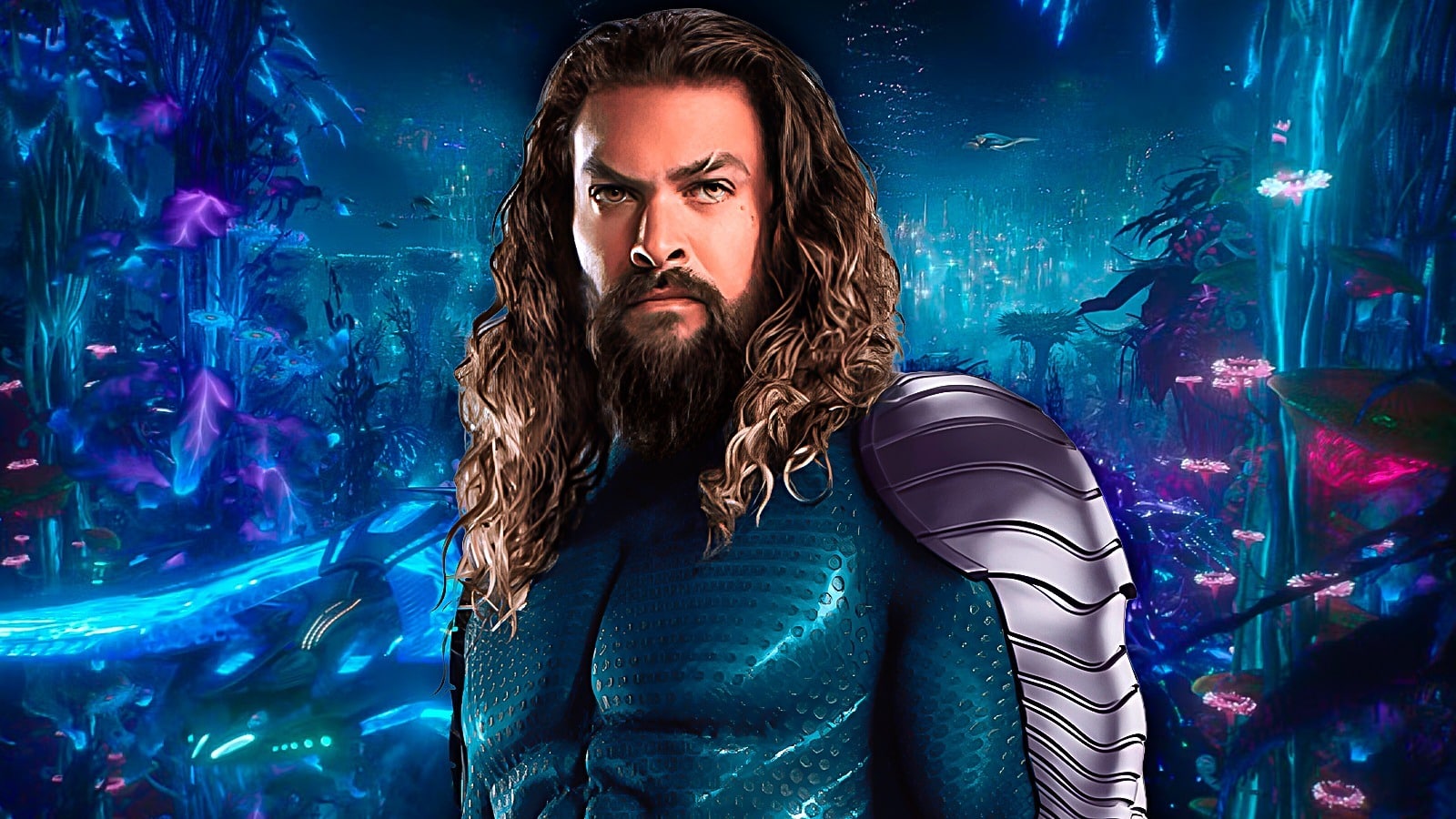
After Arthur breaks Orm out of prison, Orm takes Arthur to the Kingfish (Martin Short), the leader of the Sunken Citadel, which serves as a sanctuary for pirates and black marketeers of the underwater underworld. Kingfish has had dealings with both Black Manta and Orm in the past, leading Orm to believe the underwater crime lord might have some information as to Black Manta’s whereabouts.
Orm poses as Arthur’s captor, taking Arthur by surprise as he tells him that everyone in the Citadel, including Kingfish, abhors Arthur because of his title as the King of Atlantis. However, Arthur seems to have no knowledge about the Sunken Citadel or its status as a black market haven, which itself is an eyebrow-raising plot point. How is it that, despite having been the King of Atlantis for four years, Arthur has never heard anything about the large underworld lurking within the aquatic territories that he rules over?
Surely someone from the Atlantean council or the civilization’s intelligence wing (if it has one) would have informed Arthur of the Citadel and its criminal elements, considering how their existence poses a threat to Atlantis and its civilians. Being a futuristic civilization of its kind, Atlantis would not only possess advanced weaponry and armies, but also adequate information and intel about the array of potential adversaries within the underwater realm, in addition to having a «Most Wanted» list of their own, which would invariably include Kingfish.
As fans will recall, Simba flees the Pride Lands following the death of his father, Mufasa (James Earl Jones), at Scar’s hands … err, paws. However, years later, when they are both grown, Nala seeks out Simba and enlists him to overthrow Scar’s tyrannical rule. Though the film marks this as something of a chance encounter, the deleted scene helps to explain how this development might have come to be.
After all, had the scene been left in, viewers might deduce that Nala was deliberately seeking someone to challenge Scar after being disgusted by his advances. It also helps to explain why she may have fled Pride Rock in «The Lion King,» allowing her to forage for food in a safer, more distant environment far away from Scar.
While the scene and the original version of Scar’s song were cut from the animated picture, they appear in the stage musical version, where a different song by Scar, titled «The Madness of King Scar,» includes this development. Though it may not be as catchy as «Be Prepared» or the other songs included in the original film, the scene and the song do offer a further window into Scar’s evil heart in «The Lion King.»
Even if «Kung Fu Panda 4» doesn’t have the most prominent roles for all of its returning cast, that doesn’t mean the film will be devoid of likable personalities. Tagging along with Po on his newest adventure will be a new array of characters that will shake up the typical «Kung Fu Panda» format.
Perhaps the most significant new addition is Zhen voiced by Awkwafina, a fox and thief who joins Po’s journey. Director Mike Mitchell believes that her involvement gives a unique twist to past relationships within the franchise, as he explains to NBC. «It’s usually Shifu who is being frustrated by Po,» he stated. «And it’s kind of interesting to have Po frustrated by someone who doesn’t play by the rules.»
Along with Zhen is the film’s shape-shifting antagonist, and the franchise’s first female villain, Chameleon. While not the most physically imposing «Kung Fu Panda» adversary out there, Mitchell teases that the Viola Davis-voiced character’s calculating wit will be more than a match for the Dragon Warrior. Other new characters include Han, a Pangolin who leads a band of criminals voiced by Ke Huy Quan, and Granny Boar, a fighter who removes her tusks to do battle.
With these new additions, the team hopes that «Kung Fu Panda 4» will make room for follow-ups and spin-off stories focused on these new personalities. However, Mitchell admits that it won’t be an easy feat, telling NBC, «I feel sorry for the next filmmaker team that has to do this because we have done everything we possibly can. It is going to be hard to top this one.»
Kristi Coulter spent 12 years at Amazon and writes about the experience in her latest book, Exit Interview.
[Editor’s Note: We’re excited this week to welcome a guest host to the GeekWire Podcast, Ross Reynolds, whose voice is well-known in the Seattle region from his 34 years at KUOW, the public radio station from which he retired in 2021. He’s joined by a special guest for a look behind the scenes at work and life inside Amazon.]
Kristi Coulter’s latest book is Exit Interview: The Life and Death of My Ambitious Career. It’s a memoir about what she learned in her 12 years at Amazon about work, gender bias, and herself. Exit Interview is Coulter’s second book. Her first, Nothing Good Can Come From This, is a collection of essays about quitting drinking. As you’ll learn from this podcast conversation, it intersects with her Amazon career.
Listen below, or subscribe to GeekWire in Apple Podcasts, Google Podcasts, Spotify or wherever you listen.Continue reading for excerpts from the conversation, edited for length and clarity.
Ross Reynolds: I really enjoyed the book tremendously. I realized I didn’t know anyone from Amazon at the high level that you were, so I’ve never been able to have this conversation even though I’ve lived in Seattle for 30 years.
Kristi Coulter: Right. People don’t talk, either.
Ross Reynolds: OK. It’s not my fault.
Kristi Coulter: No, it’s certainly not entirely your fault, but people from Amazon have been very closed-mouthed about the place.
Ross Reynolds: Why?
Kristi Coulter: I think part of it is just general discretion. You don’t want to spill, tell how the algorithms work or something, but also I think there’s a certain amount of fear. It’s actually been interesting to me in the past three or four years to see things start to leak out of Amazon pretty routinely. I don’t remember ever hearing about a document leaking to the press in my 12 years there. It probably happened at some point, but now it seems to happen routinely, video footage, documents, all kinds of stuff. ….
Ross Reynolds: The impact of Amazon is what drew you to want to work there, but you had a career before that. What got you to Amazon?
Kristi Coulter: I had a really nifty job at an early internet company called the All Music Guide, which was basically a database of every record on Earth. … I was living in Ann Arbor, Michigan. I had run out of runway in my career. It was just too small a place for me to go any further. And I was really tired of the winters. Weather has often been a motivating force for me. And I thought, “I’m going to have to leave here to go further in my career” because Ann Arbor, it’s a university town. There’s just not the kind of stuff I was looking for.
And so I applied to Amazon on a whim because my husband has family out here, and I thought, “Well, I’ll get my resume polished. This won’t go anywhere.” They called me within two hours. I was here interviewing a few days later, less than a week later, and I recognized it as my chance to make a big change in my life. I was 35 or about to turn 36. Felt like I was stuck and life might be over, which seems hilarious now to think that at 35, but I was like, “This is my chance. Let’s do it.” …
Ross Reynolds: What were you hired to do at Amazon, and what were your first impressions when you came here [in 2006] and walked in the door for those first days?
Kristi Coulter: I was hired to run merchandising, so basically onsite marketing for the books and media stores, so for five different storefronts, and especially hired to make it a better job. They had an incredibly outdated tool set. I mean, the tools were almost non-functional. They broke all the time. People were really miserable. They had been hired as editors, and the job had then shifted to something where their opinions and their knowledge didn’t matter. It was more about just scheduling content. So that was my job. And when I walked in, my first impression was just the chaos. I expected Amazon to be a well-oiled machine, and it was just so chaotic.
Ross Reynolds: What were the signatures of the chaos?
Kristi Coulter: Just people barely able to take five seconds to say hello to me. Really, no ramp up. I interviewed someone the day I arrived. They put me on an interview loop.
Ross Reynolds: To hire someone else?
Kristi Coulter: To hire someone else. I was like, “Don’t do that.” And I was like, “Okay, I’ll go along with it.” My first boss, who was a very nice guy, had basically no time for me. I mean, I probably had, I don’t know, five or six one-on-ones with him and my first six months. So it was just like, “Just figure it out.” And just basically, they give you a list of names of people to talk to and you just do it. So I was on shuttle buses, shuttling all over downtown Seattle, trying to basically put together a jigsaw puzzle.
Ross Reynolds: But you were successful. I mean, you were there for a dozen years. You moved up the ranks.
Kristi Coulter: Well, technically I never moved up. I was never promoted, which became a big sticking point for me. I came in as a level seven. Amazon has twelve levels or something, and I stayed a level seven, but I did get bigger and bigger jobs. And I think it happened first because it was a small enough company that people could see, including people very high up, that I came in and just started to get it together. They could dump me in there, and I was like, “Well, I’ll figure out how to survive here,” because failing was not something I considered an option. And I think I just developed that reputation as someone who could just figure stuff out and delivered some results and people would kind of tap me on the shoulder for various jobs. It also really helped that I came from a liberal arts background.
Ross Reynolds: Really? Why is that?
Kristi Coulter: Because Amazon needed someone who understood language and writing and voice. And they were never really going to hire for that because they, certainly at the time, didn’t want to believe they needed it, but they did. And once I was there, it became apparent that I could help. I could help the site to have a voice again. I could help the merchandisers to actually write better. And so there were a few very smart executives there who were like, “Well, while she’s here, let’s use this.”
Ross Reynolds: So what was the most difficult thing about working at Amazon? What was the biggest challenge for you? And was it the same challenge for everyone there, do you think, or was it particular to you?
Kristi Coulter: Yeah, it’s just a really punitive environment. It’s a culture where there’s not really much of a thank you. You are basically always focused on what you could have done better to the exclusion of what went well. The culture kind of runs on fear. Everyone I knew at Amazon was some level of afraid, from paralyzingly afraid to just a little bit low-level, I’ve learned to live with this afraid, but it’s brutal in that way.
Ross Reynolds: Is that a good thing in some ways, to be a little bit on edge?
Kristi Coulter: I think to be a little bit on edge is fine. And feel like you’re taking risks and things. … In one of the articles on Amazon, someone said, “It’s where overachievers go to feel bad about themselves,” which I was like, yes, indeed. And I think that it gets to a point where you’re just grinding people down. And I don’t actually know that people do their best work when they’re feeling really afraid. You know what I mean? You’re just thinking about survival then.
Ross Reynolds: Well, you write about stacked ranking, and that’s something that would make you really afraid. For people not familiar with it, they basically rank everybody in the department, and the bottom 10% get fired. That’s end of story. I understand Amazon has denied doing this. But in your book, you say they totally did this, right?
Kristi Coulter: Oh, yeah. A couple of years ago, I was reading an article and they denied ever having done stack ranking, and I was just stunned because I participated in that exercise three or four times in my career there. And yeah, you get in and you rank everyone, and that bottom 10%, they’re not fired right then, but they get a very strong message, as we would put it back then, that they needed to improve. And some of those people really did. There were people where you were like, oh yeah, this person’s probably got to go, but there were also people who ended up in that 10% just because they were solid, but more limited in what they could go on to do. And at some point, throwing those people out is just really self-defeating because not everybody needs to be the quarterback. Not everybody needs to be a rock star. You also need people who are not trying to take over the world, but who are really good at their jobs.
Ross Reynolds: You talk about lack of appreciation, but you also talk about some incidents where people said things to you in meetings that were devastating to you. Could you talk a little bit about those experiences?
Kristi Coulter: I think the worst experience I had in a meeting was, I had sold a pretty ambitious plan to transform the merchandising role to the VPs and Senior VP Jeff Wilke in North America. They were very enthusiastic about it. And I went to the International VP [a different executive] to get his buy-in. And he read the doc — the famous thing where people sit in a room and read the doc — really fast. He read it too fast. And I thought, ‘Ooh, this is either really good or really bad.’ And I said, “So, any feedback?” And he said, “Yes, it’s stupid.” Just full stop. And I was like, “OK … can you tell me something more specific about that?” And [he said], “It’s just stupid.”
Ross Reynolds: Where do you go with that?
Kristi Coulter: Yeah. What do you do with that? One of an executive’s biggest roles is to teach. … That’s not how you teach someone. And eventually, he actually denied that the other VPs could have possibly read it. He basically said, Jeff Wilke, junior only to Jeff Bezos, “Oh, he didn’t read it. He just said he did. Because if he’d read it, he would think it was stupid, too.” …
He said this whole room full of alpha males, who are not exactly used to coddling anyone, they all must have been lying. And then he said I was stupid. … I was like, do I throw down, or do I cry? What do I do? And I just tried to just get out of the room without crying, basically. Just very difficult. But yeah, that was probably the worst. It was a direct attack on me. And even worse, it was this grown man with immense power and knowledge just throwing a tantrum.
Ross Reynolds: I’m a big fan of this podcast called Battle Tactics For Your Sexist Workplace. And as I was reading your book, I was thinking about that. Would that executive have said that to a man?
Kristi Coulter: Probably, honestly. Maybe worse. Most people I worked with at Amazon were, at least on the surface, respectful, but there were a few folks … It’s funny, I had a conversation with a friend, an ex-Amazon friend yesterday who said this same guy once yelled at her on a conference call for two hours. I haven’t heard the same stories about him treating men that way, but men got treated pretty badly at Amazon, too.
Ross Reynolds: Was that ever an issue where you thought, I need to raise this gender bias issue?
Kristi Coulter: Who would you have told? … Part of it is that Amazon is so intent, or the system is so intent on having you blame yourself for all of your problems, that I thought, oh, it’s just me. If I were a different kind of woman, I could handle this better. I’d rise above. Also, as a Gen X-er, that’s how I was raised. Nothing can stop you but yourself, which is not really true, it turns out. But also, there was such a denial of any gender bias at Amazon. People were not even willing to entertain the idea. It would’ve been kind of suicidal to make a big deal out of it.
Ross Reynolds: There’s just been a class action suit against Amazon for gender issues. What’s your comment on that, since your book delves into that quite a bit?
Kristi Coulter: Yeah, it’s been interesting. The suit is about huge pay gaps between women in one part of the organization and a man who was at their level, but making [150%] more a year for the same job. Amazon’s comp, like a lot of tech companies’ comp, is really complicated, no pun intended. When you started really affects your base and the stock. I suspect that it could turn out that there’s a non-sexist explanation for the pure comp issues, not that that makes it right, but the women were classified as marketing project managers, and the man was classified as a research scientist, despite the fact that they all were research scientists. And I think that’s really interesting. That drove a lot of the pay difference. And the most interesting thing about the suit is that there was direct retaliation when the women reported it. They went to HR looking for explanations. And one woman who was up for promotion was told that because she had complained, they didn’t feel she was ready for promotion anymore. That’s the big thing for me.
[Editor’s Note: Read the full text of the lawsuit here. Amazon has denied the allegations in the suit, and said it doesn’t tolerate workplace discrimination.]
Ross Reynolds: Did you experience that? Was your job description different than men’s job descriptions who were giving paid more than you?
Kristi Coulter: It’s always hard to know because you’re not supposed to talk about comp, but I did have a time when a man who reported to me was making $60,000 more than I was, despite being a level lower than I was. And I was like, well, this is odd. And I went to HR and just said, “What’s going on?” And nobody was ever able to give me an explanation. And they were like, “Well, it could be a lot of things.” And they also made me feel a little bit gauche for asking. There’s this sense of, “Well, I mean if you want to keep trying to find out, you can, but … “
Ross Reynolds: Can you be a party to the class action suit even though you don’t work there anymore?
Kristi Coulter: No. It’s just three women right now, but they wanted to cover all women from 2016 to ’20 or something in certain jobs. I don’t think I would be a party to it, but I think it could be a nice forcing function to bring some of this stuff out in the light. There was also some data in it about the man who managed all these women taking women’s names off of documents he was presenting, even though they had written the documents or co-written them. Just some really bad stuff.
Ross Reynolds: If approached by an attorney, would you join a lawsuit like this? Do you think you have the goods?
Kristi Coulter: I would certainly talk to the attorney. I’ve never felt like anything that happened to me at Amazon rose to “call a lawyer” level, but if there was a class action and I could benefit from it, I’d have to take that phone call, right?
Ross Reynolds: You were in meetings with Jeff Bezos. What was that like?
Kristi Coulter: Scary. Jeff, in my experience one-on-one, was really cool. I actually really liked him. He’s funny. He’s very engaged. Almost in every meeting he’d say something that would make me go like, “Oh my God,” something revelatory that I would remember. But it’s frightening because he’s so powerful. To be in the room with somebody who’s the wealthiest man in the world. Or he was second or third at the time, was really, really terrifying to me, and I could never quite get past that. It was very hard to just see him as a person, even though he’s actually quite personable.
Ross Reynolds: Notwithstanding Amazon’s manifest success as a business, from the inside, did you ever think, they could be doing some of these personnel things better? Or does its very success say, “No, they’re obviously doing it right”?
Kristi Coulter: In some ways, I thought the success said they were doing it right. Even at its best, it would not be a place for everyone. You need to be super-comfortable with change and things moving fast and ambiguity, and it’s really exhilarating. I got to work on things I never would have at more sane companies or companies with less money, but yeah, I mean, you would have to look around and think, these people are so good, so brilliant. My coworkers were so talented. What if they weren’t also fried and exhausted and desperate? They could probably be even better, and it just didn’t seem sustainable.
Ross Reynolds: But how do you do both, I guess?
Kristi Coulter: Yeah. I don’t know that you do. I think that it’s interesting seeing the struggles Amazon’s having now. Part of me thinks, have they hit some wall? I got to a point where women locally especially would tell me, “Yeah, I just won’t take their phone call. I won’t interview at Amazon.” The reputation was so bad it was pushing talent away. And that’s anecdotal, of course. I’m sure lots of people would be happy to work there, but I remember thinking, that’s not good when your rep is so bad that talented people just are writing you off because there’s a lot of interesting things about working there.
Ross Reynolds: You write that success at Amazon wasn’t necessarily having these core skills. It was figuring out how to work the Amazon system, how to get the programmers to do what you needed them to do.
Kristi Coulter: Yes. One reason I was able to move around a lot and actually have, really, a few different careers at Amazon was because people would openly say, “Well, I’m not so worried that you don’t know how the publishing business works. You know how Amazon works and you could figure out the publishing business.” And it’s true, it was true. And when I talk to young people now, I always say, “Don’t underestimate your transferable skills. Knowing how to meet people and ask questions and think critically, they’re really valuable.” But yeah, it would take someone else six months to figure out how Amazon works. It took me at least six months, and so we always wanted to hire from within. People would get frightened about hiring from outside because the ramp-up time would always be longer than we thought we could afford, because that’s just how humans work.
Ross Reynolds: Amazon is so massive, and that really came through to me in a section in the book where you read news accounts, these famous accounts, of workers at an Amazon Fulfillment Center being taken out in ambulances because the temperatures were over 100 degrees. And part of your reaction was, “Oh yeah, that’s the company I work for.”
Kristi Coulter: Yeah. That was [reporter] Spencer Soper. He’s here in Seattle now, but he wrote that in Pennsylvania. Yeah. I was like, “Oh, right. We have warehouses.” Because I moved away from the retail business fairly early on. … And it was shocking to realize how quickly something like that could just fall out of my view. But it did and then it did again.
Ross Reynolds: You went there because you were ambitious to do something big. By the time you left, did you accomplish what you set out to do?
Kristi Coulter: I worked on things I never would’ve dreamed of. I think in some ways I did accomplish what I set out to do, but I was the kind of person who got promoted like clockwork my entire life. I was just that kind of girl, I’m going to do the extra credit, I’m going to get promoted, and I never got the big promotion that was dangled in front of me for 12 years. I think I had seven or eight conversations with different bosses that were like, “You’re a year away.” And so by that one external metric of success, I left feeling like a failure. I was like, “Twelve years. These people, no one could manage to get me promoted.” And it honestly still kind of bugs me.
Ross Reynolds: So you internalized that. You thought to yourself, “That must be my fault that I didn’t get the promotion.”
Kristi Coulter: I definitely thought so for a while, and then at some point I was like, “These people don’t have their act together.” Nobody could give me the same story. I had one VP tell me — I had a whole document with what I thought I needed to do to get promoted, and I wanted his feedback and he said, “Just change the world. Just change the world and you’ll get promoted.”
Ross Reynolds: Just change the world.
Kristi Coulter: Yeah. I was like, “Oh, thanks, dude. That’s great.” And it was like he wasn’t even trying to have a serious conversation with me. And so I got to a point where I was like, “These people don’t understand what they’re doing, what they’re talking about.” I stopped blaming myself a bit then.
Ross Reynolds: I’m sure people ask you, “Should I go to work at Amazon?” What do you tell them?
Kristi Coulter: I usually tell them, “It depends.” I don’t tell people, “No. Just run screaming.” But I think you want to be very specific and clear about what you want out of the experience. You want to probably go in with an exit strategy. Maybe if you’re young in your career, you go in and you say, “I’m going to stay for three years and I’m going to do X, Y, and Z, and then I’m going to go.” And you have to remember that it’s going to be rough and that no one is really going to care about you. Your coworkers and your boss, lots of wonderful people work there, but the system of Amazon really doesn’t care if you are a well person or not, and it will absolutely spit you out.
Ross Reynolds: Since you started, Amazon has all these brand new buildings in downtown Seattle. So has the catering improved? Have those elements that were so starkly not there when you arrived, did they change over the years?
Kristi Coulter: A little bit. There are cafeterias now. I was in Columbia Tower with that weird food court, but there’s no gym, the basic corporate amenities. We had bike cages and eventually we had some locker rooms. There weren’t rooms for nursing mothers when I got there. There was a bathroom.
Ross Reynolds: Were there by the time you left?
Kristi Coulter: Yeah, yeah. … But I was at a coffee shop somewhere and I heard a guy running a startup talking to an employee, and he was trying to give her a pep talk, and he was like, “This isn’t Amazon. I’m not going to be able to give you the free meals and the free haircuts and the massages and … but it’s going to be fine.” And I was thinking, wait, he’s got the wrong idea about Amazon. It’s not Google. So the main perk for employees was you could get $100 off the website per year if you went into the HR tool and found this code in January. Nobody would email you to remind you. They wouldn’t send it to you. It was basically, if you remembered you could get that $100 off.
Ross Reynolds: Was that a conversation among employees there? “Boy, they’re kind of cheap!”
Kristi Coulter: Yeah. We had a leadership principle of frugality, which is that you want to be frugal with money, which makes sense. But at some point, someone made a Wikipedia page called “frupidity,” for the merger of “frugal” and “stupid.” There were things like people being expected to fly to India multiple times a year in coach and go straight to the office when they got off the plane. I had a computer that was taking seven minutes to boot up and they didn’t want to give me a new one because it wasn’t quite at the end of its four-year life cycle. Things got really stupid.
Ross Reynolds: Your first book: Nothing Good Can Come From This: Essays About Quitting Drinking. Your second book, Exit Interview, The Life and Death of my Ambitious Career. Are those two things related, the drinking issues and working at Amazon?
Kristi Coulter: Yeah, absolutely. I mean, Amazon did not make me an alcoholic. I was probably destined to be an alcoholic from a very early age, but I certainly was drinking more and more to just cope with the stress of the day. It was the only way I could forget every mistake I had made that day or every perceived mistake, and it really, really ramped up. And I actually ended up doing an A/B test because I quit drinking halfway through my Amazon career, and I wasn’t sure I’d be able to stay, and stay sober, but I did. I stayed another five or six years. It’s doable, but I really had to put up boundaries and develop a spine in a way that I had not had to as a drinker, when I could just go home and drink it away. So I had to change as a person, and not everybody liked Kristi with a backbone.
Ross Reynolds: That shows enormous strength, not only to be able to overcome this difficult workplace, but to overcome alcoholism, which is a disease.
Kristi Coulter: I didn’t want to die. I was either going to die young or I was just going to not — My life was getting smaller and smaller. It was just Amazon and then drinking to get over Amazon, and I had enough, I don’t know, vision to see that there had to be a better way.
Ross Reynolds: So have you gotten any comments from former colleagues at Amazon about Exit Interview?
Kristi Coulter: A flood. A flood of them. I have heard from so many people in Amazon offices around the world, women especially, saying, “Thank you for telling my story.” But a lot of men too, which surprised me, because the book has such a gender inflection. Men saying either, except for the gender part, you were telling my story. … Or, there’s a lot in the book about the sexism as a lot of unconscious bias. It’s not a place where men are just like, “Well, women are dumb.” They don’t know that they’re sexist.
Ross Reynolds: Could you give an example of that? What is something that was, obviously, they’re just clueless?
Kristi Coulter: The leadership at that level. So at my level, it was 20% women and 80% men. Amazon at entry level is about 50/50 split, and then women just vanish. And you get into management, women are gone. For most of the time I was there, there was no woman reporting directly to Jeff on the S Team.
Ross Reynolds: The S team is? For those who don’t know.
Kristi Coulter: Oh, yes. The S team is basically Jeff’s direct reports. It’s the very top level of leadership. But whenever this would come up, men would just be like, “Well, I guess women, they just don’t want these jobs really.” Or, “Women have different priorities.” … I was like, really? It’s 80% male as you go up the ranks? And a lot of it would come around to, well, women have children. But I was like, but I don’t have… In fact, a lot of women I knew at Amazon did not have children because if you wanted to rise, it was much easier not to have children.
But I think that men were falling victim to this thing that men do sometimes and that I see white people fall victim to also, which is thinking it was their personal fault if an environment had structural sexism.
So they weren’t able to step back and be like, “This is weird.” Amazon had no company daycare, and that was something women talked about a lot, and I rarely heard men talk about it, and if men had talked about it, maybe something would’ve changed because they had the power. But it was just like, well, women don’t want these jobs. I heard many times, “Oh, women are too smart to want these jobs.” Like, oh yeah, we’re just passing on the power and the money and the leverage. Sure. We’re just too smart for that.
And so it’s frustrating because when you can’t name a problem, you can’t talk about it at all. So a lot of men wrote to me saying, “Thank you for showing me what I just… absolutely, it was not seeing. I was just convinced that this is just the way that nature made it. Clearly, it’s supposed to be mostly men for a reason,” and that was great to see men be like, “Oh, right, this is not normal.”
I’ve also had women tell me that physical copies of the book are being passed around Amazon from woman to woman, and they’re writing notes and inscriptions to each other, and that sent chills down my spine. It’s like a new little whisper network for women, like a yearbook or something.
Ross Reynolds: Have you got to do any readings here in Seattle and have those people show you those books with the annotations?
Kristi Coulter: I’ve seen a couple photos of one of those. But yeah, I have women come up to me at events in Seattle and within a minute they’re crying. They just walk up and just start sobbing. And it’s heartbreaking. I mean, it’s wonderful because they’re crying because they feel like the book showed them themselves, but I feel like there’s a lot of people in pain out there in tech.
Ross Reynolds: Your book is called Exit Interview. Is this instead of a real exit interview? Did you get a real exit interview at Amazon? Did you get to say any of this?
Kristi Coulter: No, I did not. Amazon, it’s a huge company. A lot of people just get this form to fill out, but some people do get in-person exit interviews. And as someone who’d been there for 12 years, I was in the 98th percentile for tenure and one of few women at my level. I thought, well, someone’s going to want to talk to me. I was leaving on good terms. I got the form instead, and I was kind of stunned, but I thought, okay, I’ll do this. And we had a tech glitch when I was submitting the form, which I had taken two hours to fill out, and it was lost to the ether, and I laughed because it was perfect. I was like, of course, now I’m going to leave, and still, my voice will not be heard. I could be glib and say, I wrote this book because I did not get an exit interview. But there was something to that. I was like, I have things to say about my experience here, and I am going to say them somehow.
Ross Reynolds: Just a personal question, because you worked at Amazon for 12 years, do you never have to work again?
Kristi Coulter: Oh my God, I wish. No.
Ross Reynolds: Not that good?
Kristi Coulter: Yeah. I was very well paid at Amazon. The pay was great, and I was there at a time when the stock was going insane. No. It bought me some ramp. Amazon paid for me to write this book, essentially. But no, I do need to work, sadly. But I like to work, also.
Exit Interview: The Life and Death of My Ambitious Career, by Kristi Coulter, is published by MCD, an imprint of Farrar, Straus & Giroux. It’s available wherever books are sold (yes, including Amazon).
Production assistance on this episode from Curt Milton.
Listen above, or subscribe to GeekWire in Apple Podcasts, Google Podcasts, Spotify or wherever you listen.
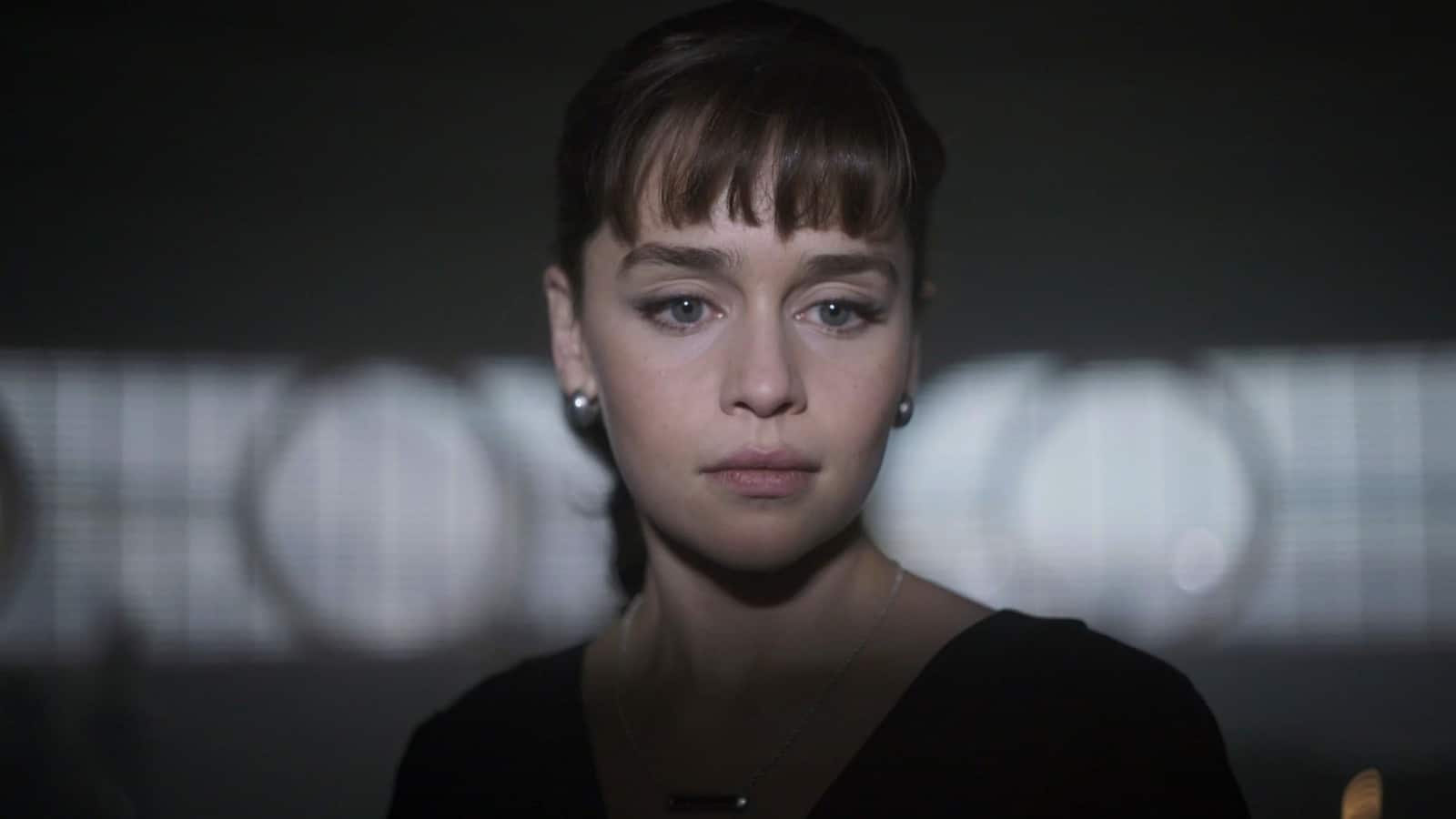
Beyond «Solo: A Star Wars Story,» Qi’ra’s story is told through comics. One of the more notable tales to come out of her time in print stems from the «War of the Bounty Hunters» comic series by Charles Soule. Set between «Star Wars: Episode V – The Empire Strikes Back» and «Star Wars: Episode VI – Return of the Jedi,» she puts her power as the leader of Crimson Dawn on full display in a big way. She sends her agents to attack the bounty hunter Boba Fett to acquire the prize of all prizes: Han Solo frozen in carbonite.
Yes, Qi’ra and Han do indeed reunite, only the latter has no idea it happens. She organizes an auction for her ex, which leads various criminal parties to attend in hopes of scoring the notorious Corellian smuggler. Unfortunately for her, things go awry when Darth Vader arrives, leading Qi’ra to duel him while Rebel agents and Fett duke it out over Han. In the end, Fett escapes with the carbonite block, Qi’ra narrowly survives her clash with Vader, and the Rebellion is left without one of its most crucial members. To top it all off, the whole ordeal leads to a meeting between her and Han’s new love interest, Princess Leia Organa.
To say that Qi’ra and Han’s reunion doesn’t go as fans might’ve hoped it would is an understatement. Then again, that’s par for the course in the «Star Wars» galaxy, where romance more often goes wrong than right.