El growshop es un concepto que ha estado experimentando un crecimiento muy rápido, tanto así que hoy existen en el mercado numerosas opciones sumamente interesantes para adquirir una innovadora gama de productos de calidad. En una industria como esta, que crece día, a día, las opciones han venido rápidamente en aumento en los últimos años, conformando no solo emprendimientos exitosos sino comunidades completas que se forjan intercambiando conocimiento y experiencias.
Tal es el caso de Granel Seeds, una empresa que trabaja con productos elaborados con técnicas de vanguardia en lo relativo al cultivo, esto incluye aspectos esenciales como la selección de semillas, la preparación del suelo en el que se va a cultivar y por supuesto aditamentos para temas como el control de plagas, luz, temperatura y humedad. El utilizar estos productos y una buena asesoría en los procesos garantiza que el resultado final será un producto de primera calidad.
Granel Seeds nos presenta una oferta totalmente revolucionaria dentro de lea comunidad de cultivadores de cannabis, explorando una amplia gama de variedades genéticas de alta confiabilidad. Además se distingue por ofrecer asesoramiento experto a la comunidad sobre las mejores técnicas de plantación y otros rubros de importancia en la materia. De modo que podemos decir que el nivel de especialización de Granel Seeds en esto es muy alto.
Para comprender mejor el tipo de solución integral que Granel Seeds ofrece a la comunidad de cultivadores, es bueno que hablemos de algunos de los productos que la organización ofrece:
Estos son solo algunos de los productos que ofrecen, aunque no menos valiosos son son sus servicios de asesoría experta en temas de innovación e implementación, la cual está sustentada en la experiencia de más de 10 años apoyando al cultivador de Chile. Granel Seeds ha logrado establecer una propuesta que se ha consolidado como la opción integral en Growshop.
En cuanto al catálogo de semillas, este está en constante actualización, por lo que la comunidad de cultivadores siempre cuenta con nuevas opciones para producir más y mejor dentro de un mercado fresco y creciente.
Si hablamos de herramientas cuentan con microscopios, abrazaderas, lentes de protección, espátulas y chuchillos. Y para distintos usos cuentan con kits de iluminación, indoor, extracción y más.
Pero la experiencia de Granel Seeds no se limita a proveer de soluciones a aquellas personas que se dedican al cultivo. También ofrecen todo tipo de productos y parafernalia relacionados a la cannabis: ropa 420, pipas, Jockey, contenedores, Bong, ceniceros, bandejas, papelillos, vaporizadores, enroladoras y muchas cosas más.
Siempre es importante elegir bien en lo relativo a cualquier tipo de producto o emprendimento que tengamos pensado realizar, y en el caso del growshop no es la excepción. Granel Seeds es sin duda la opción adecuada en su ramo, ofreciendo todo lo necesario para quienes forman parte de la comunidad de cultivadores o simplemente desean aprender y acercarse a este maravilloso universo.
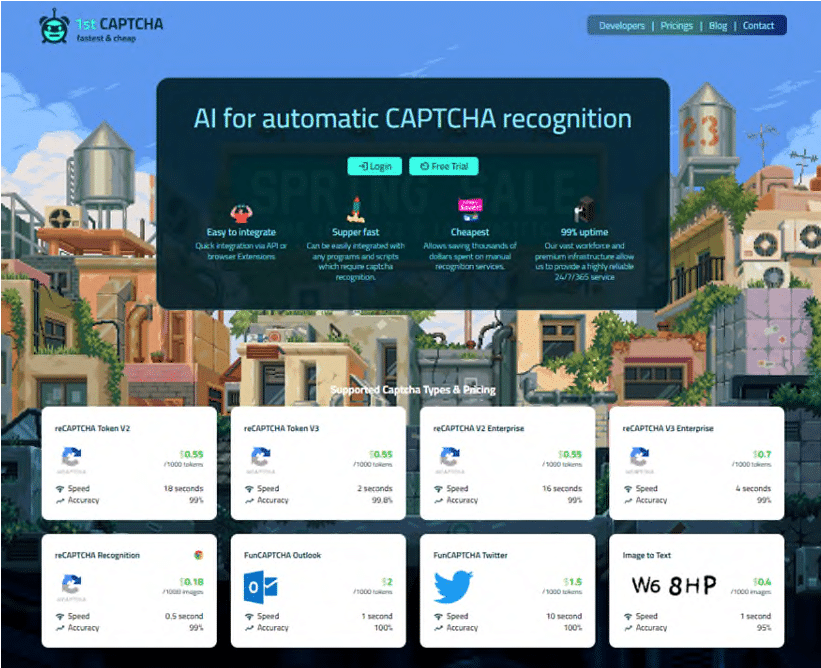
As shown in court documents, this is the 1stCAPTCHA site where Microsoft says the defendants sold CAPTCHA-solving tokens obtained by a fleet of bots. This is one of the domains seized by the company via court order. (Screenshot via U.S. District Court for the Southern District of New York.)
Microsoft secured a court order to seize and take down websites used by a group that it describes as the “number one seller and creator of fraudulent Microsoft accounts,” which deployed bots capable of tricking the CAPTCHA systems normally used to confirm that humans are creating accounts.
The group, which Microsoft calls Storm-1152, also routinely circumvented the authentication systems of other major technology companies, including Twitter (X) and Google, according to a Microsoft complaint unsealed Wednesday afternoon in the U.S. District Court for the Southern District of New York.
The group “represents a significant industry-wide problem,” the complaint says.
Bots deployed by Storm-1152 were responsible for about 750 million fraudulent Microsoft accounts, the company said. One reason they needed to create so many was that the company’s fraud detection systems identified and disabled the accounts quickly, often in a matter of hours after they were created.
“We are sending a strong message to those who seek to create, sell or distribute fraudulent Microsoft products for cybercrime: We are watching, taking notice and will act to protect our customers,” said Amy Hogan-Burney, Microsoft GM and associate general counsel for cybersecurity policy and protection, in a post.
The group has been engaged in the scheme to circumvent CAPTCHA since 2021, according to the complaint, which describes the group’s general approach without going into deep technical detail. CAPTCHA stands for “Completely Automated Public Turing test to tell Computers and Humans Apart.”
Cybercriminal groups used email accounts created by Storm-1152 to launch phishing campaigns, ransomware attacks, and other criminal activities, Microsoft said in the complaint.
One of the criminal groups, dubbed Octo Tempest, “recently committed massive ransomware attacks against flagship Microsoft customers that infected the computer systems of those customers with ransomware which disabled critical operational systems, resulting in service disruptions that inflicted hundreds of millions of dollars of damage,” according to the complaint.
The complaint named three residents of Vietnam as defendants: Duong Dinh Tu, Linh Van Nguyễn (also known as Nguyễn Van Linh), and Tai Van Nguyen.
Microsoft credited cybersecurity defense and bot management vendor Arkose Labs for providing “valuable threat intelligence insights” that led to the detection and disruption of the group. The company says it’s also working with Arkose to deploy a next-generation CAPTCHA defense solution.
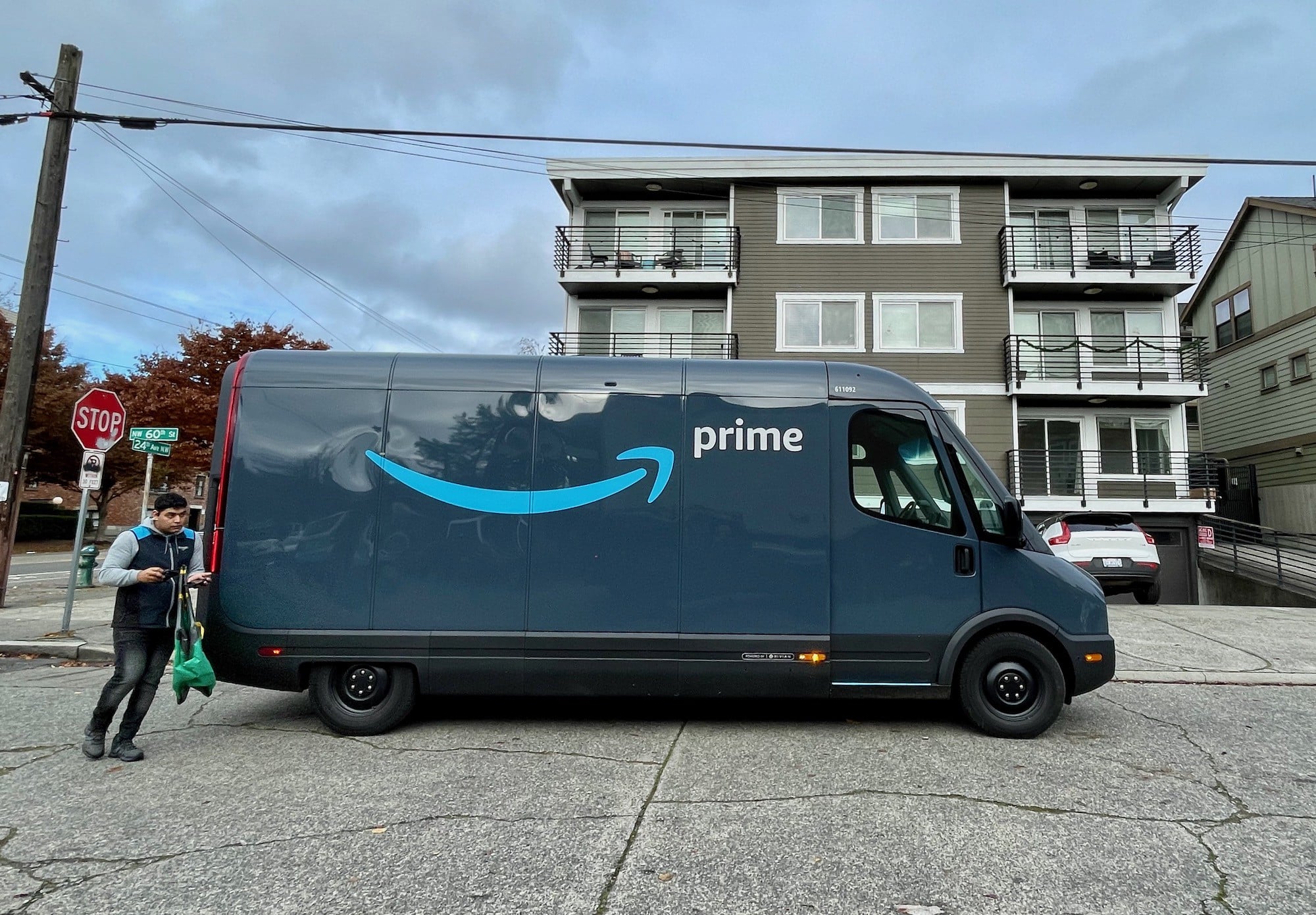
An Amazon delivery driver in Seattle. (GeekWire File Photo / Kurt Schlosser)
Next time an Amazon package hits your front step, don’t just shout thanks through the door or at the van driving off down your street — use Alexa. For a limited time, you’ll be spurring Amazon to also tip that driver $5.
The company announced this week that it’s bringing back a holiday promotion in which customers can show their appreciation for delivery drivers with the “Alexa, thank my driver” feature. U.S. customers can use an Alexa-enabled device (Echo, Echo Show), the Alexa app, on Amazon.com or in the Amazon mobile shopping app.
First rolled out during the 2022 holidays, the promotion works by sending a thank you to the driver who completed a customer’s most-recent delivery. The first two million thank yous will also send $5 to the driver, at no cost to the customer.
Last year, Amazon said that the feature exceeded company expectations. Since then, customers have thanked their delivery drivers over 22 million times. Drivers may not get a tip year round, but they are able to see the number of times they are thanked within their app.
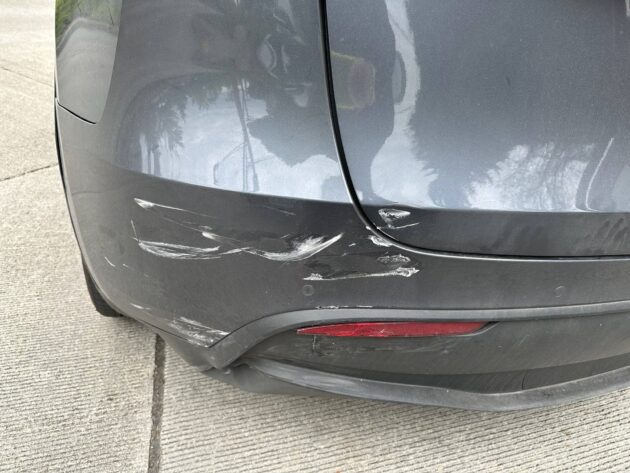
Tesla repairs are more costly, according to research. And anecdotally, even fixes for minor damage can take months in a repair shop. (GeekWire Photo / Lisa Stiffler)
When Kelly Campbell bought a metallic gray Tesla last year, the Seattle resident was delighted. The luxury features, the stellar safety ratings — it was the car she’d been waiting for.
About seven months later, she was rear-ended in a minor collision. The car’s damage looked “very superficial,” Campbell said. “It was completely drivable.”
But fixing it sent her on a journey stretching more than half a year and costing $14,000 in repairs and nearly $2,000 in car rental fees.
From online forums to casual conversations, Tesla owners are sharing stories of slow, frustrating, high-priced repairs. The experiences have some consumers wondering if they should tap the brakes on electric vehicle purchases, or if crash repair worries are overblown.
Unlike missives from Tesla founder Elon Musk, the answers here are nuanced, data show.
Tesla collision repairs do cost more on average than fixes for other vehicles, according to data.
EV repairs are not inherently more expensive. Repairs for EVs from non-Tesla automakers cost only slightly more than those for gas-powered vehicles, and the cost difference has decreased over time.
The cost of repairs for all vehicles has increased significantly for numerous reasons, and those increases are expected to continue as cars keep getting more high tech.
Certain factors make Teslas more expensive to repair, and those issues could potentially extend to other new car makers such as Rivian, Lucid and others.
While Tesla owners and insurers are getting hit with bigger repair bills, collision costs are up across the industry. They spiked 8% for the first half of this year compared to the same period last year, according to Mitchell, which provides collision data. The average collision repair bill is now more than $4,700.
The factors driving up costs include: a labor shortage and higher labor rates; parts shortages and higher shipping costs; the increased need to replace instead of repair parts; and a growing use of high-tech safety features.
It all adds up to expensive, tricky fixes.
“There are so many things that go into this repair,” said William Parkins, general manager of Metro Auto Rebuild of Seattle and Bellevue. “The technology you know and love takes so much time to diagnose and to fix.”
Data reveal higher Tesla collision costs
Teslas are still the most popular electric vehicles on the road. (GeekWire Photo / Kurt Schlosser)
While an expanding slate of automakers are introducing new models of EVs, one still reigns supreme. Almost 60% of the EVs registered in Washington are Teslas — that’s more than 63,000 vehicles.
“Teslas are still by and large the most popular EV on the road, so most of the repair stories we hear about are from Teslas,” said Liz Najman, content marketing manager for Recurrent, a clearinghouse of information on used EVs.
A 2023 Mitchell report found that the average bill for collision repairs for all EVs except Teslas was $269 more than repairs for petrol-powered vehicles. When the comparison included Tesla repairs, the difference spiked to $950.
The Highway Loss Data Institute took a snapshot approach, matching up 2018-’19 Tesla Model 3s with their gas-powered counterparts, namely midsize, luxury four-door vehicles of the same year. The organization examined insurance losses from collisions, which includes how much insurers paid out for repairable and non-repairable vehicles. It found the losses were nearly 10% higher for Teslas compared to similar cars.
GeekWire repeatedly contacted Tesla for a comment on this issue, but received no response.
Experts attribute the higher costs to multiple factors, some of which also apply to other luxury vehicles. They include requirements for:
repairs that follow precise step-by-step procedures (directions will specify, for example, the exact number of welds for a damaged area as too few would create weakness, and too many could make a section too rigid in a collision);
Tesla-made parts, rather than cheaper alternatives;
Tesla-specific tools for repairs;
and specially trained Tesla technicians.
“Every Tesla body shop I know charges a higher labor rate,” Parkins said.
One upside for Tesla drivers: data suggest their cars are less likely to be involved in wrecks in the first place.
The Highway Loss Data Institute found there were 5% fewer collision claims for Tesla Model 3 vehicles, and much greater reductions in the likelihood of injury-related claims, compared to their luxury vehicle counterparts.
However, safety concerns regarding Tesla’s Autopilot function forced the company on Wednesday to issue a recall of nearly all of the 2 million cars it has sold in the U.S. The recall involves a software update to address a defect that allows drivers to misuse the automated driving system.
‘It’s not ‘replace the bumper and call it good’’
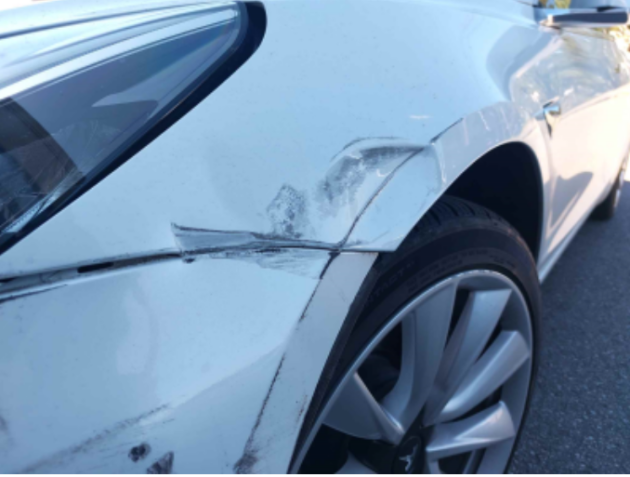
Kelly Campbell’s Tesla experienced seemingly minor damage when it was rear-ended in May. But the fix cost $14,000. (Photo courtesy of Kelly Campbell)
From the outset, Campbell’s pursuit of repairs was agonizingly slow. Her car was hit in May, but she couldn’t even get an estimate for repairs until August.
While there doesn’t appear to be data available calculating the time it takes from a collision to getting a fixed Tesla returned to its driver, multiple factors can lengthen the process for the vehicles.
Washington has one Tesla-owned collision shop and seven Tesla-approved shops, mostly in the Seattle area. To boost the number of technicians in the state, Tesla has a training partnership with Shoreline Community College that launched in 2018. Rivian and Renton Technical College are starting a similar program this month.
The Tesla collision center didn’t have availability, so Campbell went with a certified shop. An initial estimate was from $6,000 to $7,000, but once mechanics disassembled the damaged area to get a better look, the price doubled due to issues with sensors.
“It’s not ‘replace the bumper and call it good,’” Campbell said.
After the second estimate, the car sat waiting for parts.
While most automakers have commonly used parts distributed to dealerships and available to nearby repair shops, Tesla parts are shipped from California, Parkins said. Tesla is establishing a parts and assembly facility in Marysville, Wash., according to the Puget Sound Business Journal, bringing supplies closer to shops.
Another issue slowing the workflow are the negotiations between insurance companies and repair facilities regarding repairs and costs. Once work starts, the need for unanticipated, additional parts can trigger more negotiations and parts shipments.
“The biggest delay in my industry,” said Parkins, “is the insurance industry.”
Janet Ruiz, communications director for the Insurance Information Institute, rejected that characterization and noted parts and labor shortages are adding time to repairs for all vehicles.
“The claims process is no different for Tesla cars than any other brands,” she said via email. “Each claim after an auto loss is evaluated on its own merit. Labor costs and parts costs are evaluated and there may be back and forth.”
For Campbell, however, insurance delays were the final insult. “I had to wait a week to get the car after it was already repaired while the Tesla insurance assessor at Allstate signed off on it,” she said.
Finally, just after Thanksgiving, Campbell got her car back.
Electric vs. combustion engine vehicles
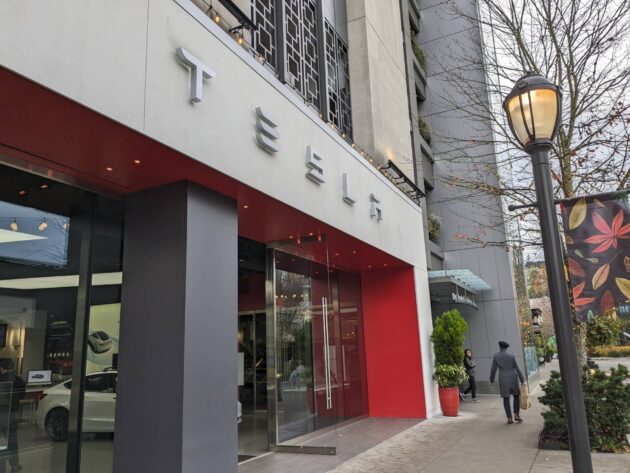
The Tesla showroom at University Village in Seattle. (GeekWire Photo / Lisa Stiffler)
There are now more than 40 EV models on the market in the U.S., and EV sales are on pace to increase 50% this year, according to BloombergNEF. And data suggest those shoppers won’t be paying significantly more to fix their electric cars than drivers of internal combustion engine vehicles.
The Highway Loss Data Institute analyzed cars that are sold in both electric and combustion engine configurations and compared their repair costs. The analysis covered 11 manufacturers, excluding Tesla, Rivian and other companies that make only electric vehicles.
Looking at insurance losses, the costs were a mere 2% higher for EV collisions than for conventional autos. The research also showed that the difference in repair costs between EVs and internal combustion vehicles has been decreasing over time.
There are additional factors that help even out the costs of electric vehicle ownership:
Because EVs don’t require regular oil, filter and fluid changes, routine maintenance costs are lower, said Consumer Reports.
Contrary to some perceptions, EVs are less likely to be written off as totaled. For 2020 and newer vehicles, the total loss rate was 7.3% for EVs, compared to 8.5% for fossil fuel vehicles, according to Mitchell data.
As with Teslas, the Highway Loss Data Institute found there were fewer accidents with the EVs from other automakers, a drop of 20% compared to their combustion engine counterparts.
Bubble wrap
Rebecca Kavoussi’s Tesla was damaged in July, but she wasn’t able to get it in for a repair in Seattle until November. (Photo courtesy of Rebecca Kavoussi)
Up until a month ago, Campbell was still team Tesla — admittedly with reservations. But after the final hoops in the repair process, she’s over the brand.
“I would not buy a Tesla next time had I known it would take over two months and $14,000 for what amounts to a minor, cosmetic issue,” she said. “It has been so frustrating along the entire ordeal.”
Other drivers are likewise unhappy with the repair process.
Rebecca Kavoussi had her Tesla clipped while parked in a lot north of Seattle. The damage from the July collision was limited, but Kavoussi couldn’t get it in for a repair until November. It appears her fix might take only a month, but she’s still spooked by the specter of costly, drawn out repairs.
So when her family’s name came up on a Rivian waiting list, Kavoussi declined the purchase given the repair risks.
Matt Moore, senior vice president of the Highway Loss Data Institute, agreed there can be challenges with new manufacturers — but emphasized that the problem doesn’t stem from the vehicles’ mode of power.
“Startup and or niche automakers may have smaller repair networks or more expensive parts, regardless of whether they’re selling electric or conventional vehicles,” Moore said via email.
Campbell just wishes she could bubble wrap her Tesla.
“I’m afraid to drive my car now for fear of getting hit,” she said, “and having to deal with it all over again.”
— Joseph Williamsis returning to the Washington state Department of Commerce to lead information and communication technology (ICT) sector development, after serving as the Seattle director of the Pacific Northwest National Laboratory from 2019 to 2022.
Williams, a mainstay of the Seattle tech community, previously led ICT sector development for the department, from 2016 to 2019. His areas of focus in his return will include quantum computing, cybersecurity, and artificial intelligence, working with industry leaders and others to strengthen the state’s position, according to an announcement from the department.
Among other priorities, Williams will report to the Washington state Legislature on 2022’s Blockchain Work Group bill (SB5544); and help the state secure federal funding made possible by the $280 billion CHIPS and Science Act passed in 2022, the department said.
“We are delighted to have Joseph back on board and put his deep knowledge, expertise and relationships to work developing new partnerships and avenues to secure historic federal funding opportunities that will benefit communities throughout the state,” said Commerce Director Mike Fong, in a statement announcing Williams’ return to the role.
Bill Hankes, founder of Sqoop, at the 2015 GeekWire Summit.
— Longtime Seattle-area communications exec and startup founder Bill Hankes, a fixture in the Seattle tech community, is leaving his role as Forbes’ chief communications officer at the end of the year, he posted on LinkedIn, describing his experience there as “the honor of a lifetime.”
It was “the wildest ride of my career: a public offering via SPAC that was ultimately canceled, followed by nationally-publicized controversies surrounding two subsequent acquisition attempts, all while promoting our world-class journalism and events around the world.”
Hankes founded Sqoop, a startup that provided real-time data alerts to journalists, and served as director of PR for Microsoft’s Bing and a VP of communications at RealNetworks.
— Arka Majumdar, an associate professor in Electrical & Computer Engineering and Physics at the University of Washington, has been named a 2024 Optica Fellow. The fellowship recognizes his work in optics, particularly in low-power optical information science and imaging, enabled by low-dimensional materials, nanophotonics, and meta-optics, which consist of “millions of nanostructures that are smaller than the wavelength of light,” according to a UW article.
Majumdar is also co-founder and technical adviser at Tunoptix, a Seattle startup developing broadband meta-optics imaging to enable thin, lightweight computational vision systems.
— Former Amazon principal software engineer Andrew Hoffman is now chief technologist at Gather AI in Pittsburgh. Hoffman was a founding engineer at two robotics companies that Amazon acquired: Kiva Systems, which is now Amazon Robotics, and Canvas Technology.
— Sean Cassidy, Amazon Prime Air’s director of safety, flight operations and regulatory affairs, has left the company, according to an internal memo reported by CNBC. He was a key figure for Amazon’s drone delivery operations in its relations with the Federal Aviation Administration.
— Deako, a Seattle-based company that makes modular smart lighting systems, expanded its executive team with the hiring of Chris Miller as chief financial officer and David Cathey as chief revenue officer. The company says it has sold more than 15 million products to date, and posted a 55% increase in gross revenue year-over-year.
Editor’s note: William Canestaro is managing director at Seattle venture capital firm WRF Capital and leads the biotechnology investment team.
Seagen’s sale to Pfizer would have seemed unthinkable a few years ago. The former CEO was rumored to be opposed to the idea of an acquisition. He worked to grow the Bothell, Wash.-based company to a size that was thought to be too big to acquire and grew Seagen via acquisition himself, acquiring Cascadian Therapeutics in 2018.
Seagen has a huge pipeline for early programs and is undisputedly the anchor tenant in Pacific Northwest biotech. It is one of the very few Seattle biotechs that grew to global scale while remaining independent.
As we look to the pending acquisition, set to clear this week after regulatory approval, I will be keeping my eyes on a few key points.
What Pfizer keeps in the PNW
With every acquisition there’s a push to find efficiency. What have we gotten so good at here in Seattle that can’t be moved or consolidated? Many believe that our resident expertise in antibody drug conjugates (ADCs) makes it unlikely that Pfizer can pull Seagen and its expertise back to the East Coast. This is especially given Pfizer’s previous stumblings to develop their own ADCs; it seems most likely that they’ll trust Seagen to continue doing what it has shown it can do.
COVID also fundamentally changed how much of biotech works: Seagen already employs people across the U.S. with two main offices in Bothell and South San Francisco. This company already functions well across time zones. I’d expect that Pfizer will want to take a cautious approach to any major changes to the current Seagen workflow, and would be surprised if there were immediate mandates to move employees.
As Pfizer CEO Albert Bourla said about the acquisition “We are not buying the golden eggs. We are acquiring the goose that is laying the golden eggs.”
Positive signs for the market
With a historically tough market, a $43 billion acquisition is a great reminder to investors that biotech can be a great place to invest if the fundamentals of the business are strong. People have been hypothesizing for the past few years that pharma would be making acquisitions due to strong cash balances and many products coming off patent. I am hopeful that this is just the first of many acquisitions.
More early stage investors
Seagen is famous for how long it keeps employees. There are hundreds of employees with over a decade at the company. This means that there are likely many folks who will do quite well from this acquisition. Many in the community are hopeful that some of them will become active angel investors and support the next generation of great companies here in the Pacific Northwest. If you’re reading this and in this category, please reach out. I’ve got some ideas for you!
Pfizer might help streamline Seagen’s growth
Seagen grew to be a mid-sized biotech rapidly. With so many emerging programs and stakeholders in such a short timespan, scaling infrastructure to match can be difficult. It will be interesting to see if Pfizer can provide some “big company structure” to Seagen without crushing the dynamic and nimble approach that made Seagen so special in the first place.
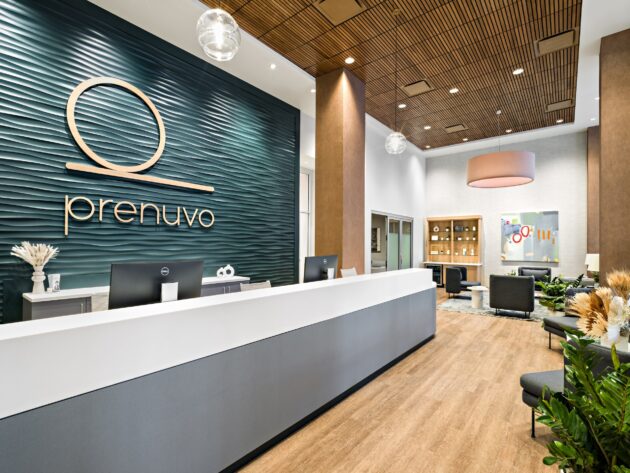
Prenuvo, the celebrity-endorsed company offering $2,500 full-body MRI scans designed to detect cancer and other diseases early, is planning to open one of its clinics in Seattle in 2024.
Silicon Valley-based Prenuvo currently has eight locations in the U.S. and one in Vancouver, B.C. It has plans to open 11 more in the coming months, including in the third or fourth quarter of next year in Seattle.
The company has been generating buzz thanks to some of its high-profile clientele, including Kim Kardashian, who told her 3.6 million Instagram followers about the “life-saving machine” in an August post.
The company’s backers include model Cindy Crawford; 23andMe co-founder Anne Wojcicki; Nest Labs founder Tony Fadell; and Felicis Ventures, investors in Shopify, Fitbit, Ring and more.
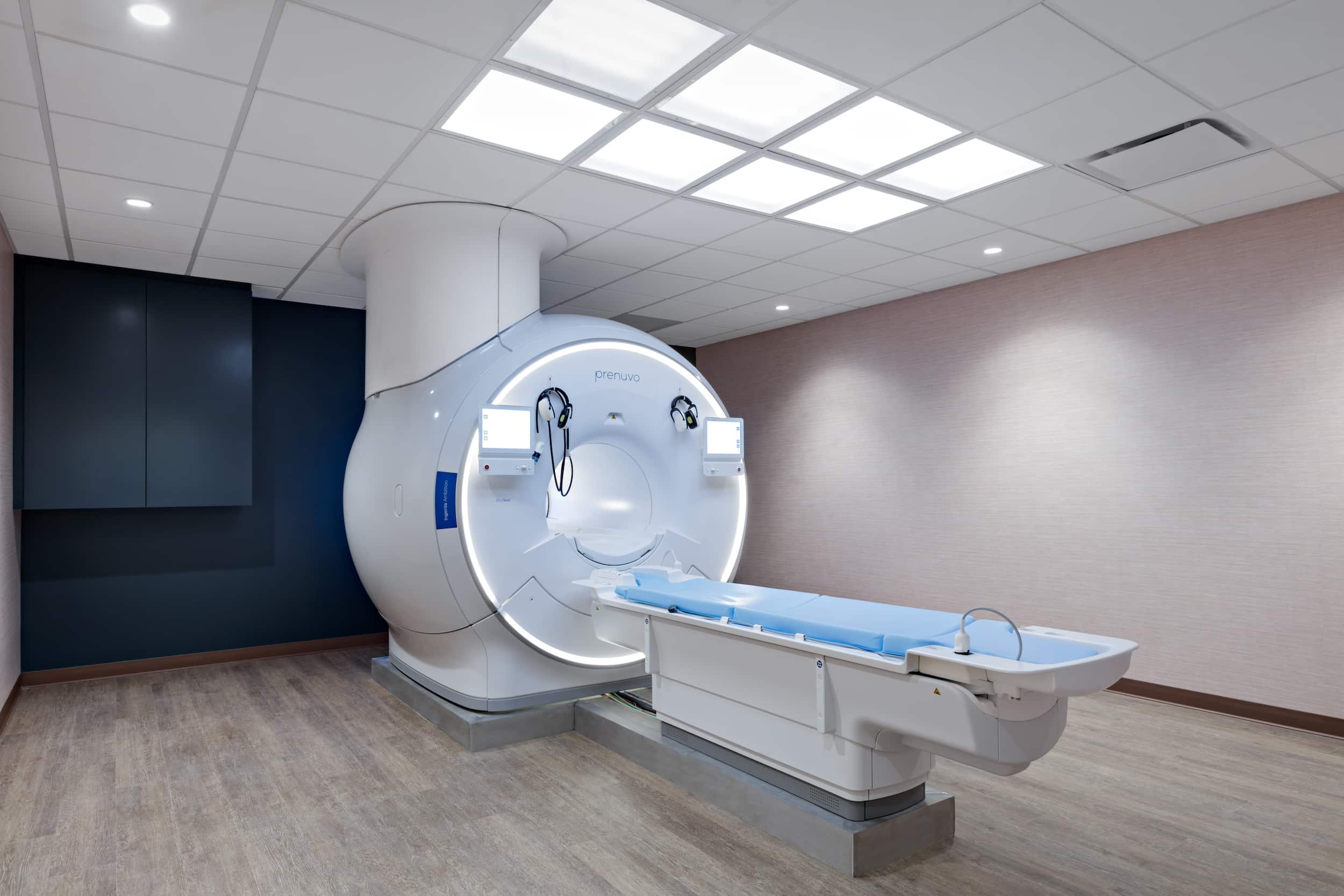
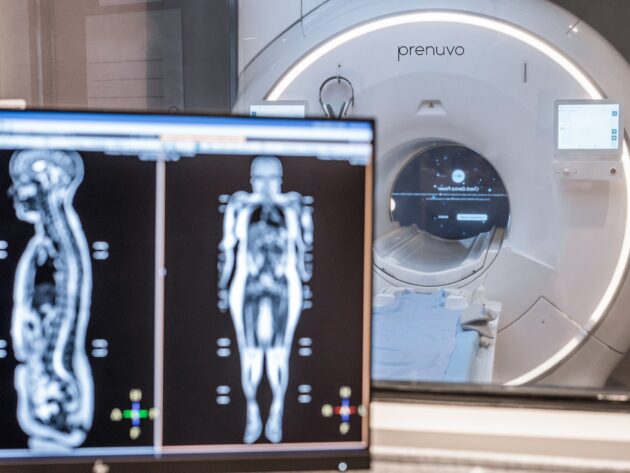
Prenuvo conducts a full-body scan in under an hour. (Prenuvo Photo)
Founded in 2018 by CEO Andrew Lacy and founding radiologist Dr. Raj Attariwala, Prenuvo says its mission is to “shift healthcare from reactive to proactive” and “empower people to determine their own health roadmap.”
Prenuvo says it can conduct a whole-body MRI — magnetic resonance imaging — scan in under one hour and identify conditions not easily found in other proactive scans, without contrast or radiation. These conditions include:
solid tumors as small as 1.5cm in the organs of the chest, abdomen, and pelvis.
cancer from benign conditions such as cysts, hematoma, hemangiomas, and abscesses.
disc herniation, spinal cord abnormalities, and spinal degeneration
prostate, cervical, uterine, and ovarian cancers in the pelvis.
brain aneurysms, small vessel ischemia (stroke risk factor), previous strokes, and sinus issues.
The company explains what sets its scans apart from other MRIs and CT scans here.
Prenuvo’s machine is called an open bore MRI scanner, which permits the head to be outside of the magnet for portions of the scans. After a scan, images are reviewed by one of the company’s 30 licensed radiologists. Patient results are typically ready in about 10-to-15 days.
Every report includes both patient-friendly explanations and insights into the risk level and actions recommended, as well as a physician-focused, shareable PDF report, according to Prenuvo.
A Prenuvo clinic in New York. (Prenuvo Photo)
The pricey procedure is not covered by insurance, which makes for a steep out-of-pocket expense. The New York Times wrote in September that while Prenuvo does not pay anyone to promote its products, it has sought a high-profile and “glamorous” crowd to use its machine — and then post about it on social media.
TV personality Maria Menounos told People magazine in May that a Prenuvo scan alerted her to a mass that turned out to be Stage 2 pancreatic cancer.
But experts who spoke to The New York Times cautioned that healthy people undergoing such scans can do more harm than good, as nonspecific findings could require extensive, expensive follow-up.
Regardless, Prenuvo’s waitlists are long, CNBC reported last month. Lacy said the business has spiked as awareness in the past 12 months has grown “incredibly.”
The locations section on Prenuvo’s website offers the ability the join a waitlist for the future Seattle location.
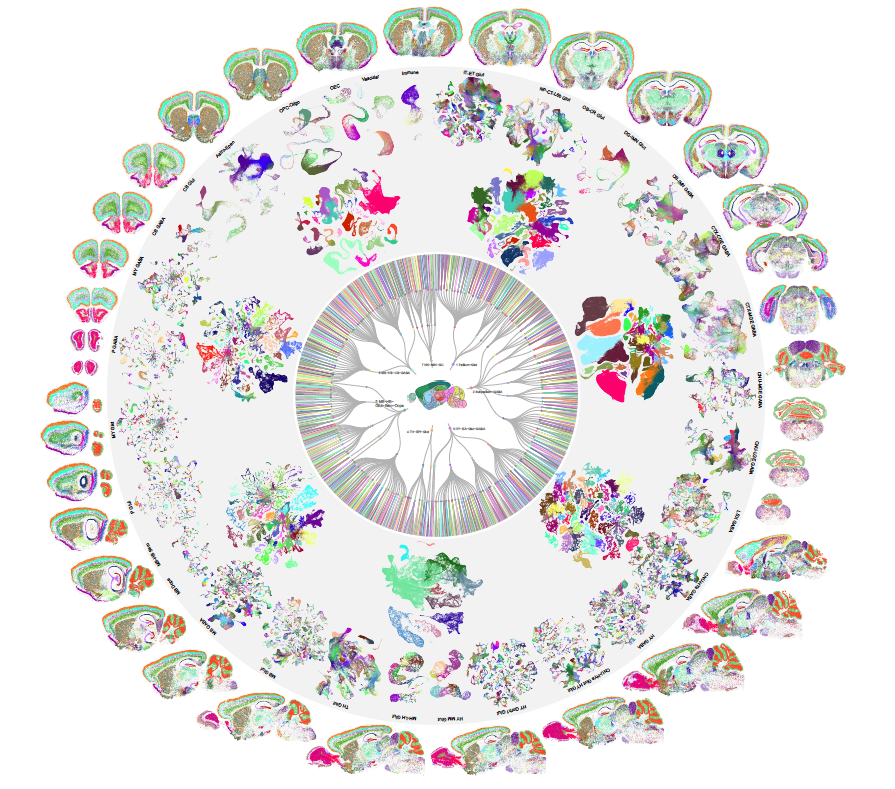
This mandala combines visualizations of cell types in the mouse brain. (Illustration via Allen Institute)
Neuroscientists have unveiled their most comprehensive and detailed map of cell types across the entire mouse brain, delivering the latest results of a six-year-long scientific effort in which Seattle’s Allen Institute has played a leading role.
Nine studies published today in the journal Nature document the identification of 5,322 different types of brain cells, and trace the similarities and differences found in a variety of mammalian species — including humans.
The work expands upon previous studies from the BRAIN Initiative Cell Census Network, including earlier surveys of cells in various regions of the mouse brain, as well as cross-species comparisons of cell functions. Researchers from the Allen Institute joined forces with colleagues from the Broad Institute, Harvard, the Salk Institute for Biological Studies, the University of California at San Diego, UC-Berkeley and other institutions to add to their “parts list” for the brain.
“Now we have the cell-type atlas of all the cells in the brain,” Hongkui Zeng, executive vice president and director of the Allen Institute for Brain Science, said in an explanatory video. “This is really a landmark achievement. … It marks the completion of a kind of work that strives for completeness. But it also marks the beginning of the next phase of the journey. It just opens up the door for the next generation of investigations.”
Zeng, who is the senior author of one of the papers in Nature and a co-author of five others, said the next step will be to figure out exactly what all those different cell types do, how their functions are affected by disease, and whether there might be yet-to-be-discovered ways to restore those proper functions.
“It’s not just about a catalog, a list of cell types and where they are — reference information which by itself is already important — but we begin to see how a brain is organized,” Zeng said.
The studies relied on genetic sequencing data plus spatial maps of gene expression, gathered from millions of cells.
Researchers found a strong correlation between the characteristic gene expression patterns for cell types and their location in the brain. In the upper regions of the brain, also known as the dorsal regions, there was a small number of widely diverse cell types. In contrast, the brain’s lower or ventral regions contain a large number of distinct cell types that are more closely related to each other.
“Our hypothesis is an evolution-based explanation,” Zeng told GeekWire in an email. “The evolutionally more ancient, ventral part of the brain (especially the hypothalamus / midbrain / hindbrain) is mainly involved in the survival function of the animal (including feeding, reproduction, metabolism, etc.), and thus it is subject to more evolutionary constraints, and its cell types are more numerous but haven’t diverged much.”
In contrast, the dorsal part of the brain — including the cortex, thalamus and cerebellum — is mainly involved in fast-changing adaptive functions, such as sensory-motor specialization and cognition. “Thus it has expanded and diversified faster, even with fewer millions of years of evolution,” Zeng said.
Another study compared gene regulation in the primary motor cortex of humans, macaques, monkeys and mice. Researchers found that patterns of gene expression that were specific to particular cell types seem to have evolved much more rapidly than patterns that are shared across different cell types.
They said nearly 80 percent of the regulatory elements that are unique to humans are transposable elements — that is, small sections of DNA that can easily change position within the genome.
The analysis also pointed to features that are highly conserved across species in genetic variants that have been linked to multiple sclerosis, anorexia nervosa and tobacco addiction. The researchers said their results demonstrate the value of brain maps for identifying genetic factors that play a part in neurological conditions.
“Humans have evolved over millions of years, and much of that evolutionary history is shared with other animals,” Joseph Ecker, a professor at the Salk Institute who helped lead the cross-species study, explained in a news release. “Data from humans alone is never going to be enough to tell us everything we want to know about how the brain works. By filling in these gaps with other mammalian species, we can continue to answer those questions and improve the machine learning models we use by providing them more data.”
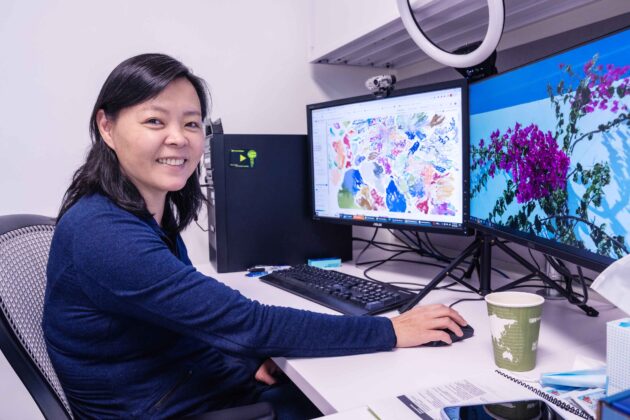
Hongkui Zeng, the executive vice president and director of the Allen Institute for Brain Science, is one of the leading researchers participating in the BRAIN Initiative Cell Census Network . (Allen Institute Photo)
Now that researchers have filled out the parts list for the mouse brain, they’ll be devoting even more attention to the human brain. The Allen Institute is spearheading a five-year effort to create a human cell-type atlas with $173 million in funding from the BRAIN Initiative.
Zeng said cell-type maps are likely to point to new strategies for treating diseases. In that sense, having an accurate map could be the first step toward putting a wayward brain back on the right track.
“We know that many of the diseases originated actually in specific parts of the brain, and probably in specific cell types in those parts of the brain,” she said. “With the map in hand, now we can find out exactly how genes changed in those cell types, in those parts of the brain. … We can then create genetic tools or other kinds of tools, like pharmacological tools, to target those specific cell types.”
John Ngai, director of the BRAIN Initiative, suggested that the best is yet to come.
“Where we previously stood in darkness, this milestone achievement shines a bright light, giving researchers access to the location, function, and pathways between cell types and cell groups in a way we couldn’t imagine previously,” Ngai said. “This product is a testament to the power of this unprecedented, cross-cutting collaboration and paves our path for more precision brain treatments.”
A special section on Nature’s website highlights research from the BRAIN Initiative Cell Census Network relating to the mouse brain-cell atlas, including the nine papers published today as well as a paper that was published in September.
Zuper, a Seattle startup that sells software to help companies with field workers, raised a $32 million Series B round led by FUSE.
Founded in 2018, the company serves industries including residential and commercial cleaning, HVAC, electrical, internet service providers, property maintenance, plumbing, landscaping, and more.
Zuper is led by CEO Anand Subbaraj, a former Microsoft leader who joined in 2020. The 180-person company has offices in Seattle and India.
Bellevue, Wash.-based venture capital firm FUSE also led the company’s Series A round in 2021. Prime Venture Partners, another previous backer, invested again in the new round, along with Kin Ventures, Peak XV Partners, and Zendesk. Other early investors include Sequoia Capital India and HubSpot Ventures. Total funding to date is $46.1 million.
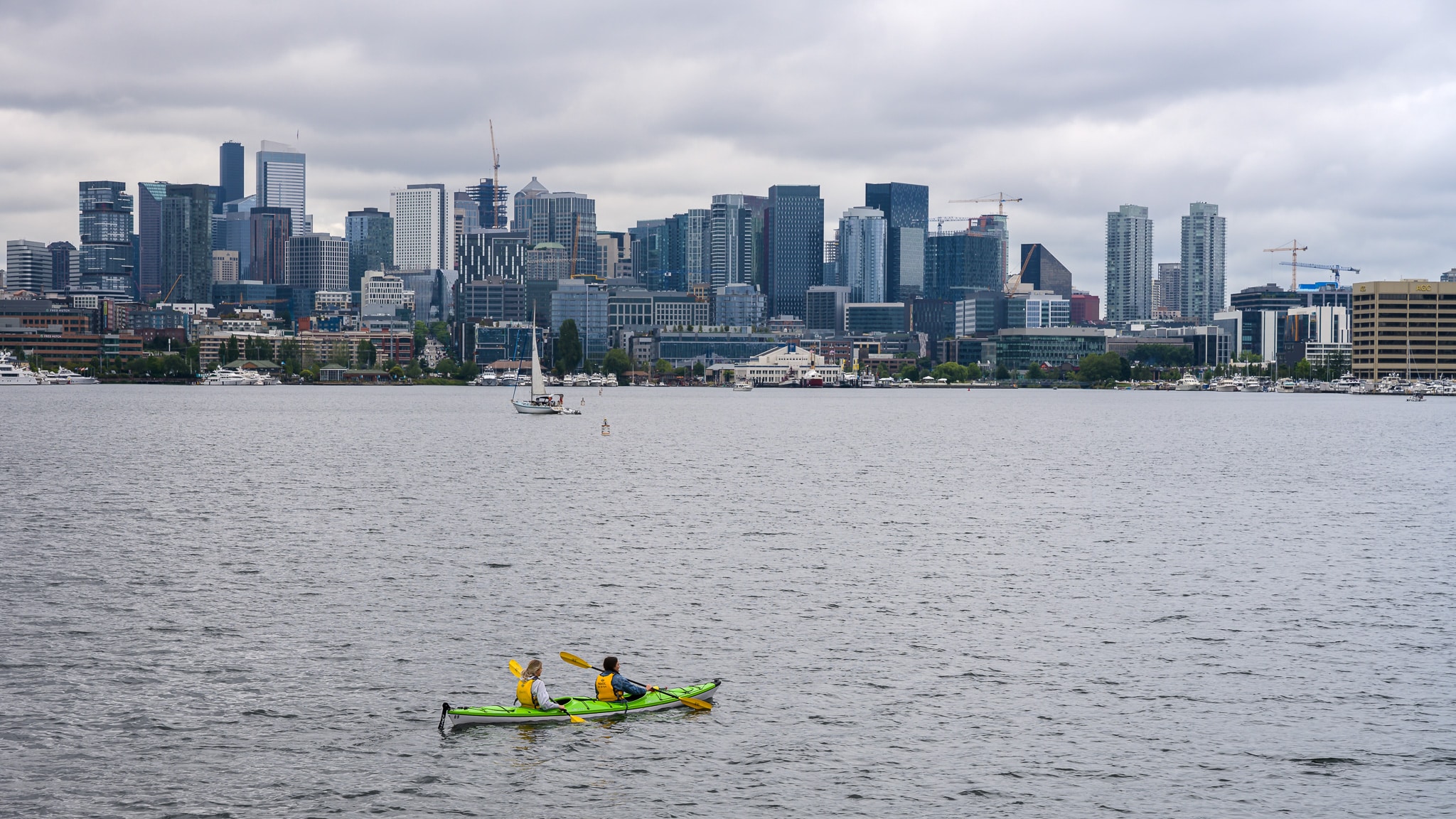
The Seattle skyline from Lake Union. (GeekWire Photo / Kurt Schlosser)
The Seattle City Council on Tuesday unanimously approved rules requiring roughly 4,100 existing buildings of more than 20,000 square feet to slash their greenhouse gas emissions to zero by 2050. Mayor Bruce Harrell is scheduled to sign the bill into law on Wednesday.
The Seattle Building Emissions Performance Standard would apply to structures including skyscrapers, low- to high-rise buildings, multifamily residences, retail spaces, restaurants, churches, schools and universities, and community centers.
“Future generations will look back to this moment and judge us for what we did today to address our climate crisis,” said Seattle City Councilmember Lisa Herbold at Tuesday’s council meeting.
“It’s time for us to take big swings and make sure that we’re doing everything we can for ourselves and for future generations of Seattleites.”
– Seattle City Councilmember Lisa Herbold
The region is experiencing the negative impacts of climate change, including extreme heat, drought and smoke from wildfires, she added. “It’s time for us to take big swings and make sure that we’re doing everything we can for ourselves and for future generations of Seattleites,” she said.
Buildings account for 37% of Seattle’s carbon emissions, behind transportation’s 61% contribution, according to data from the city. The greenhouse gas sources in buildings are primarily oil and natural gas, including fossil fuel-powered furnaces and water heaters, gas stoves, and fuel leaks from pipes and storage tanks. The new rules are expected to cut emissions from the city’s buildings by 27% by mid-century.
City leaders held more than 125 stakeholder meetings over multiple years to get input on the rules. The measure won support from environmental and climate organizations, organized labor, building professionals and affordable housing providers.
The standards roll out gradually over time, requiring property owners to measure a building’s energy use and greenhouse gas emissions, document its existing performance and equipment, and then make plans and take steps to reduce a building’s energy and carbon footprints.
The policy includes support to help building owners achieve the goals, and penalties for those who fail to report or meet targets.
Seattle Mayor Bruce Harrell requested the rules, and the measure was co-sponsored by city councilmembers Herbold, Teresa Mosqueda and Dan Strauss.
There are swaths of buildings not covered by the building performance standards that also need to cut their carbon impacts. That includes structures under 20,000 square feet and single-family homes.
“Many of the people who testified in support of the legislation have noted that there’s much more to do to advance climate justice,” Mosqueda said. “Today, though, is a moment for celebration as we pass this landmark policy, as we lead by example.”
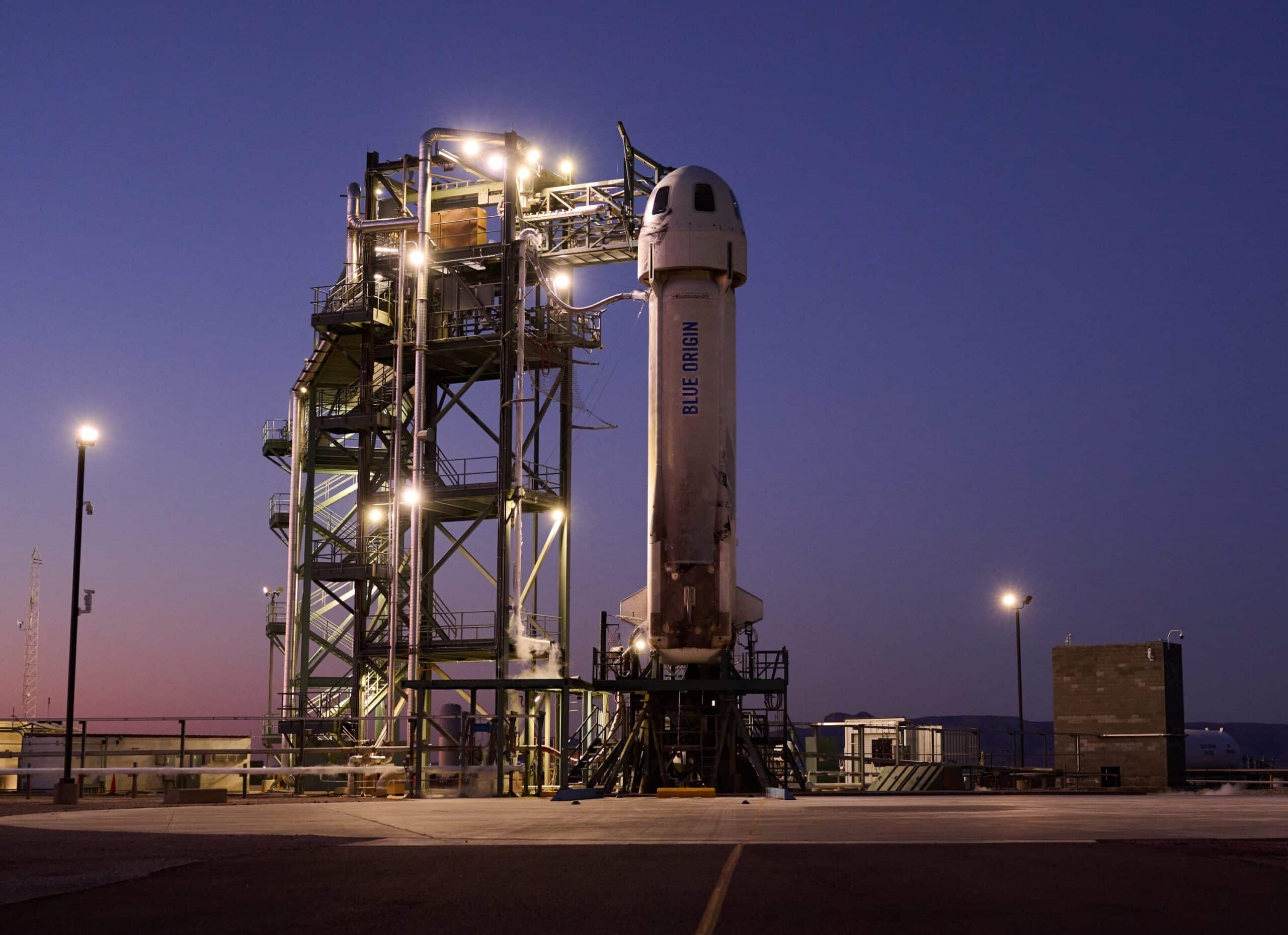
Blue Origin’s New Shepard spaceship was grounded after a failed mission in 2022. (Blue Origin Photo)
Jeff Bezos’ Blue Origin space venture plans to send its New Shepard suborbital spaceship on an uncrewed research mission as early as Dec. 18, marking the company’s first launch since a rocket engine malfunction spoiled a similar uncrewed mission more than a year ago.
In an update posted to X / Twitter, Blue Origin said the upcoming mission, known as NS24, would carry 33 science and research payloads — plus 38,000 postcards sent in by students as part of a program organized by the Club for the Future, Blue Origin’s educational nonprofit.
No further details were available, but it’s possible that at least some of the payloads (and postcards) have been carried over from the mission that went awry in September 2022. New Shepard’s launch escape system worked as planned for that NS23 mission, and the capsule was unharmed even though the booster was destroyed.
A successful uncrewed mission could smooth the way for the resumption of crewed flights soon afterward.
An investigation overseen by the Federal Aviation Administration determined that the booster’s BE-3 rocket engine malfunctioned when its nozzle suffered a structural failure, due to engine operating temperatures that were higher than expected. The FAA required Blue Origin to take 21 corrective actions, including design changes for the engine as well as organizational changes.
The fact that Blue Origin is gearing up for a return to flight next week might seem to imply that the company has fully addressed the corrective actions. However, the FAA said there’s still some work to do. “The FAA and Blue Origin are continuing to work on outstanding items related to the license modification application,” the regulatory agency said in an emailed statement.
Thirty-one people — including Bezos himself — have taken suborbital trips to the edge of space and back from Blue Origin’s Launch Site One in West Texas since mid-2021. Bezos’ fiancée, Lauren Sanchez, has said she would lead one of the upcoming crewed flights and take five other women with her.
In addition to the New Shepard suborbital space program in Texas, Blue Origin is gearing up for orbital New Glenn launches from Florida, working on its Blue Moon lunar lander for NASA’s eventual use, and continuing development of the Orbital Reef commercial space station. All this is taking place amid a transition that is shifting CEO responsibilities from veteran aerospace executive Bob Smith to former Amazon executive Dave Limp.
We’ve updated this report with a statement from the FAA.
Despite the success of this summer’s Baldur’s Gate 3, Wizards of the Coast’s parent company Hasbro faced a significant revenue shortfall. (Larian Studios Image)
Employees at Renton, Wash.-based gaming giant Wizards of the Coast were affected by a new round of layoffs at its parent company, Hasbro.
Hasbro announced “additional headcount reductions” in an internal memo by CEO Chris Cocks on Monday, which are projected to impact 1,100 workers across its global operations.
Affected employees at Wizards posted on LinkedIn that they had been laid off. Other reports indicated that IT-related workers were cut. Update: Multiple departments have since been confirmed to be affected by the layoffs, including an art director and a game designer for Dungeons & Dragons.
We reached out to Wizards for more details about the layoffs. A representative pointed us to Cocks’ internal memo and declined to comment on workforce impact at Wizards.
The latest round of cuts comes after Hasbro said in January that it would eliminate 900 positions over the course of the following 18 to 24 months. The new layoffs appear to be additional cuts; Hasbro’s total cuts are close to 2,000.
The layoffs are part of an overall restructuring at the company under Cocks, who moved to Hasbro from Wizards in February 2022. As per its October earnings report, Hasbro’s overall revenue has been on a decline, despite Wizards of the Coast’s continued growth.
That report cites the sales success of Baldur’s Gate III and Monopoly Go as major successes for Wizards, which drove “$63 million of incremental revenue” between them in Q3. Conversely, soft toy sales, several expired licenses, and this summer’s Writers’ and Screen Actors’ Guild strikes contributed to significant shortfalls in Hasbro’s Consumer Products and Entertainment segments.
This week’s layoffs can be seen as the latest chapter in an ongoing story. For all its recent controversies, Wizards of the Coast has had a very successful year, but it appears to be the only department at Hasbro that’s doing well. While Hasbro isn’t exiting the toy space entirely, it’s refocusing its efforts on, to quote Cocks, “fewer, bigger, better brands.”
As part of that, Hasbro plans to sell its interest in Canadian entertainment company Entertainment One, which produced its recent licensed films such as Snake Eyes and Dungeons & Dragons: Honor Among Thieves. In 2024, its earnings report says the plan is “refocusing our company on what has traditionally made us great, the business of play.”
Wizards’ upcoming releases for 2024 include the celebration of Dungeons & Dragons’ 50th anniversary. This includes the long-anticipated rules update, which will see new editions of D&D’s core 3 rulebooks.
At this year’s PAX Unplugged, Wizards announced a number of other new publications, which included a new non-fiction book about the development process on the original 1974 edition of D&D; a sequel to Gary Gygax’s 1982 adventure The Lost Caverns of Tsojcanth; and Vecna: Eve of Ruin, an entire campaign based around Vecna, a wizard turned god and one of D&D’s classic villains.
Hasbro also plans to reduce its real estate holdings, and will exit its Providence, R.I. office space at the end of its lease in January 2025. It will continue to do business out of its offices in Pawtucket, R.I.
Read Cocks’ full memo below.
Team,
A year ago, we laid out our strategy to focus on building fewer, bigger, better brands and began the process of transforming Hasbro. Since then, we’ve had some important wins, like retooling our supply chain, improving our inventory position, lowering costs, and reinvesting over $200M back into the business while growing share across many of our categories. But the market headwinds we anticipated have proven to be stronger and more persistent than planned. While we’re confident in the future of Hasbro, the current environment demands that we do more, even if these choices are some of the hardest we have to make.
Today we’re announcing additional headcount reductions as part of our previously communicated strategic transformation, affecting approximately 1,100 colleagues globally in addition to the roughly 800 reductions already taken.
Our leadership team came to this difficult decision after much deliberation. We recognize this is heavy news that affects the livelihoods of our friends and colleagues. Our focus is communicating with each of you transparently and supporting you through this period of change. I want to start by addressing why we are doing this now, and what’s next.
Why now?
We entered 2023 expecting a year of change including significant updates to our leadership team, structure, and scope of operations. We anticipated the first three quarters to be challenging, particularly in Toys, where the market is coming off historic, pandemic-driven highs. While we have made some important progress across our organization, the headwinds we saw through the first nine months of the year have continued into Holiday and are likely to persist into 2024.
To position Hasbro for growth, we must first make sure our foundation is solid and profitable. To do that, we need to modernize our organization and get even leaner. While we see workforce reductions as a last resort, given the state of our business, it’s a lever we must pull to keep Hasbro healthy.
What happens next?
While we’re making changes across the entire organization, some functional areas will be affected more than others. Many of those whose roles are affected have been or will be informed in the next 24 hours, although the timings will vary by country, in line with local rules and subject to employee consultations where required. This includes team members who have raised their hands to step down from their roles at the end of the year as part of our Voluntary Early Retirement Program (VRP) in the U.S. We’re immensely grateful to these colleagues for their many years of dedication, and we wish them all the best.
The majority of the notifications will happen over the next six months, with the balance occurring over the next year as we tackle the remaining work on our organizational model. This includes standardizing processes within Finance, HR, IT and Consumer Care as part of our Global Business Enablement project, but it also means doing more work across the entire business to minimize management layers and create a nimbler organization.
What else are we doing?
I know this news is especially difficult during the holiday season. We value each of our team members – they aren’t just employees, they’re friends and colleagues. We decided to communicate now so people have time to plan and process the changes. For those employees affected we are offering comprehensive packages including job placement support to assist in their transition.
We’ve also done what we can to minimize the scale of impact, like launching the VRP and exploring options to reduce our global real estate footprint. On that note, our Providence, Rhode Island office is currently not being used to its full capacity and we’ve decided to exit the space at the end of the lease term in January 2025. Over the next year, we’ll welcome teams from our Providence office to our headquarters down the road in Pawtucket, Rhode Island. It’s an opportunity to reshape how we work and ensure our workspace is vibrant and productive, while reflecting our more flexible in-person cadence since the pandemic.
Looking ahead
As Gina often says, cost-cutting is not a strategy. We know this, and that’s why we’ll continue to grow and invest in several areas in 2024.
As we uncover more cost savings, we’ll invest in new systems, insights and analytics, product development and digital – all while strengthening our leading franchises and ensuring our brands have the essential marketing they need to thrive well into the future.
We’ll also tap into unlocked potential across our business, like our new supply chain efficiency, our direct-to-consumer capabilities, and key partnerships to maximize licensing opportunities, scale entertainment, and free up our own content dollars to drive new brand development.
I know there is no sugar-coating how hard this is, particularly for the employees directly affected. We’re grateful to them for their contributions, and we wish them all the best. In the coming weeks, let’s support each other, and lean in to drive through these necessary changes, so we can return our business to growth and carry out Hasbro’s mission.
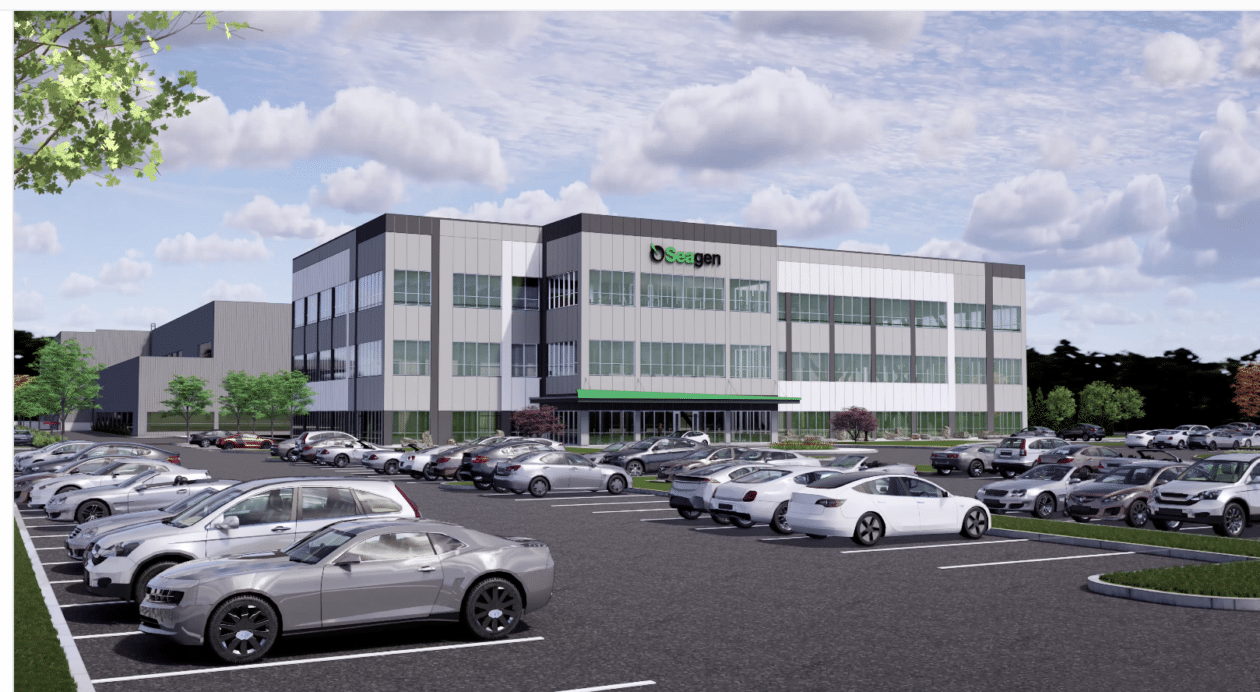
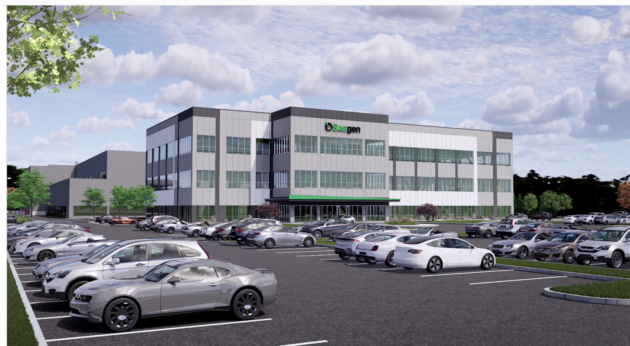
Rendering of Seagen’s new planned manufacturing facility north of Seattle. (Seagen Image)
Pfizer’s plan to acquire Seagen for $43 billion has cleared the necessary regulatory hurdles, the pharma titan announced Tuesday. The deal will close on Thursday.
Seagen is the largest biotech company in the Seattle area and an anchor for the biopharma industry in the Pacific Northwest. The 3,300-person company announced plans last year to build a 270,000 square foot manufacturing facility north of Seattle.
Seagen launched as Seattle Genetics in 1998. It went public in 2001, pricing its IPO at $7 per share. The terms of the acquisition put Seagen’s value at approximately $229 per share.
The company had been in merger-and-acquisition negotiations with multiple potential buyers before the agreement with Pfizer came together.
To win Federal Trade Commission approval for the deal, Pfizer is giving up its royalties from the U.S. sales of a cancer-treatment drug called Bavencio. Those royalties will go to the American Association for Cancer Research in support of its mission.
Pfizer said Tuesday it will restructure its operations to incorporate Seagen. The company is creating an end-to-end business organization called the Pfizer Oncology Division that will include certain commercial oncology work and R&D operations from both companies. The division will be led by Pfizer’s Dr. Chris Boshoff.
When Pfizer announced the planned acquisition in March, company CEO Dr. Albert Bourla said it would maintain Seagen’s Seattle area and San Francisco locations, and “will try if possible to enhance their resources rather than taking them away.”
“We are not buying the golden eggs. We are acquiring a goose that is laying the golden eggs,” Bourla said on a call with investors.
Seagen has several offices globally and employs about 1,800 in the Seattle area. It is based in the city of Bothell, located north of Seattle.
Seagen was founded by Clay Siegall and H. Perry Fell, who served as CEO until Siegall took over in 2002. Siegall resigned from the company in May 2022 following domestic violence allegations and an arrest at his house after an incident involving his wife. He ultimately did not face charges.
Bellevue, Wash.-based workflow automation company Nintex has acquired Skuid, a Chattanooga, Tenn.,-based low-code application development platform.
Terms of the deal were not disclosed. Nintex has made a string of acquisitions over the past few years, including Kryon in February 2022; AssureSign in June 2021; K2 Software in October 2020; and EnableSoft in March 2019.
Skuid helps more than 600 companies design, build and deploy business applications that bring together data and workflows across organizations.
Private equity giant TPG Capital bought a majority stake in Nintex in 2021. Amit Mathradas, a longtime tech leader and former Avalara president, joined Nintex as CEO in March.
Seattle-based Icosavax, a spin-out from the University of Washington’s Institute for Protein Design, will be acquired by biotech giant AstraZeneca for up to $1.1 billion.
The pending acquisition, announced Tuesday, values Icosavax at about $838 million, a 43% premium to its closing price on Monday.
Founded in 2017, Icosavax is developing vaccines that resemble naturally occurring viruses. Its lead product targets respiratory viruses.
The company raised more than $150 million from private investors before going public in 2021. Its stock has fallen more than 30% since then, though it has nearly doubled in 2023.
Icosavax shares were up more than 40% on Tuesday following the news.
“We are pleased to announce the proposed acquisition of Icosavax by AstraZeneca as we believe it offers the opportunity to accelerate, and expand access to, our potential first-in-class combination vaccine for older adults at risk from RSV and hMPV,” Icosavax CEO and co-founder Adam Simpson said in a statement. “We look forward to combining our skills and expertise in advancing the development of IVX-A12, with AstraZeneca’s decades of experience in RSV, resources, and capabilities in late-stage development.”
The company’s virus-like particle technology was invented at the Institute for Protein Design by Neil King, a scientific co-founder of Icosavax along with IPD head David Baker.
Simpson formerly led another IPD spinout, PvP Biologics, which sold to the pharmaceutical company Takeda.
Zulily’s complaint is based in part on the FTC’s antirust suit against Amazon. (GeekWire File Photos)
Updated with Amazon statement.
Less than a week after cutting hundreds of jobs and signaling its intent to go out of business, online retailer Zulily filed suit against Amazon on Monday — alleging that the e-commerce giant’s tactics made it impossible to compete on price without jeopardizing its relationships with key suppliers.
The lawsuit, filed in U.S. District Court in Seattle, is based in part on allegations in the Federal Trade Commission’s separate antitrust lawsuit against Amazon.
An unredacted version of the FTC complaint, made public last month, includes a section that details what the FTC describes as Amazon’s anticompetitive tactics against Zulily and its suppliers.
Zulily, which is also based in Seattle, does not explicitly connect Amazon’s alleged tactics to the specific turmoil it has experienced over the past week.
However, the suit says Amazon’s conduct “has caused Zulily substantial revenue losses and reduced traffic to Zulily’s website,” and “denies Zulily the scale necessary to compete in the market” by discouraging price competition.
The suit, quoting in part from the earlier FTC complaint, says Amazon’s specific campaign against Zulily began around 2019, when Zulily started displaying Amazon’s prices next to its own to show shoppers than its prices were lower.
“But rather than compete on the merits, Amazon set out to ‘destroy’ Zulily instead, by coercing third-party retailers and wholesale suppliers to agree to ‘price parity,’ i.e., to artificially raise Zulily prices at or above Amazon’s, and to punish any sellers who cheated,” the Zulily suit says.
According to the suit, those punishments “ranged from disqualifying a seller from the ‘Buy Box’— the mechanism most consumers use to buy an item or add it to their cart — to ‘total banishment from Amazon’s Marketplace.’ “
Update, Tuesday Dec. 12: Amazon issued this statement from spokesperson Tim Doyle.
“The allegations made in this lawsuit are false. The retail industry is dynamic and strong with many retailers succeeding, including small and medium size businesses who are thriving, growing and innovating. That includes many in our store, and they now make up more than 60% of sales on Amazon. We’re proud of the substantial investments we make to provide entrepreneurs with tools and resources to establish and build their brands, connect with more customers, and create jobs in their communities.”
Zulily last week filed notices indicating that it’s shutting down three offices, including its Seattle headquarters, and laying off more than 800 people. The company referenced a “going-out-of-business” sale on an FAQ page this weekend but removed the language after GeekWire published a report about it.
GeekWire has contacted Zulily’s parent company, Regent, a Los Angeles-based private equity firm, for comment. Regent is not mentioned in the lawsuit.
In its motion to dismiss the FTC case, filed Friday, Amazon described its efforts to offer low prices as good for competition and consumers, asserting that the FTC’s suit “implausibly, and illogically, assumes that Amazon’s efforts to keep featured prices low on Amazon somehow raised consumer prices across the whole economy.”
Amazon added in the filing, “At most, the Complaint contains vague allegations that a handful of sellers have responded, not by lowering their prices in Amazon’s store, but by raising them elsewhere. But anecdotes are insufficient to plead a claim under antitrust law’s rule of reason.”
Founded in 2009 in Seattle by former Blue Nile executives Mark Vadon and Darrell Cavens, Zulily initially specialized in items for moms and kids before expanding to other product categories. Zulily was sold for $2.4 billion in 2014 to QVC parent Qurate (then known as Liberty Interactive), and acquired by Regent in May.
Read Zulily’s complaint against Amazon, and Amazon’s response to the FTC suit.
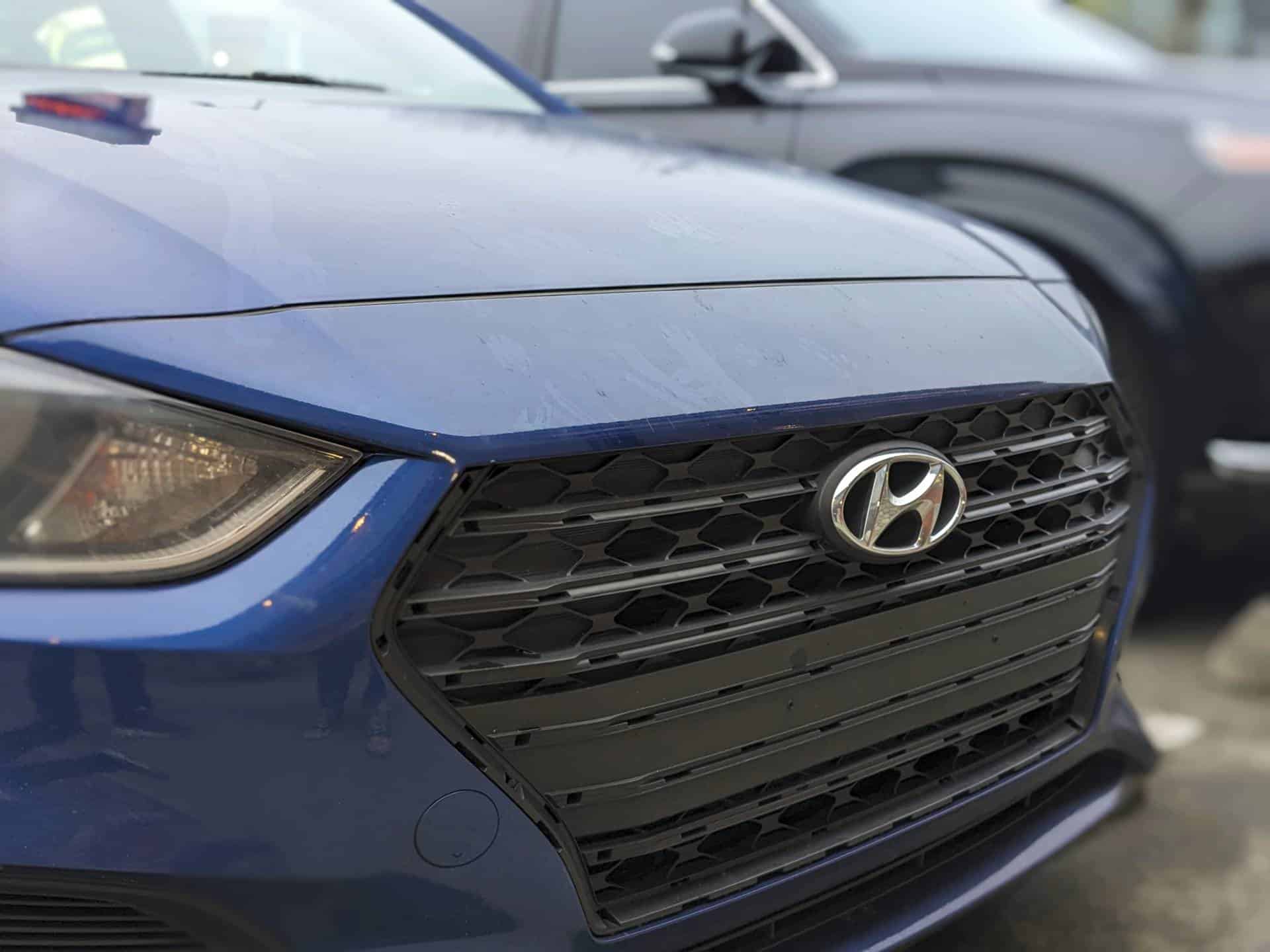
Vehicles by the automaker Hyundai are part of a proposed Seattle City Council resolution calling for their recall. (GeekWire Photo / Lisa Stiffler)
On Tuesday the Seattle City Council will vote on a resolution asking the National Highway Traffic Safety Administration to recall Kia and Hyundai models that lack engine immobilizing, anti-theft technology.
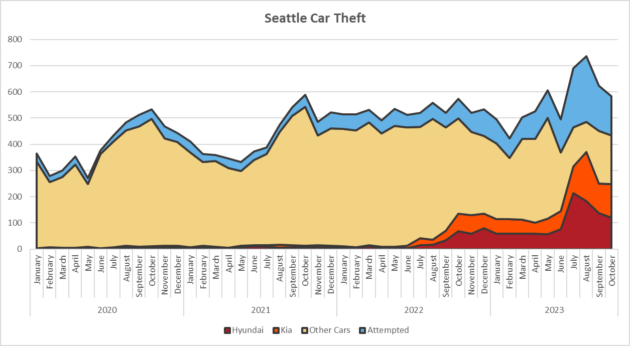
There was a 363% increase in reports of stolen Kias and a 503% increase in Hyundai thefts from 2021 to 2022, according to the Seattle Police Department. Through October of this year, Seattle reported 868 stolen Kias and 1,021 stolen Hyundais.
The surge in thefts has hit cities around the U.S., as documented in a recent story from Vice. If Seattle approves the resolution, which it appears likely to do, it will join Baltimore and Philadelphia in making a recall request.
Headlines from the Seattle area connect the stolen cars to crimes including “crash and grabs” in which criminals smash the cars into storefronts and rob the businesses. A Kia was used to crash into a window of the Nordstrom flagship store in downtown Seattle in July, though reports didn’t specify if it was a stolen vehicle. This fall, Kias and Hyundais were listed by police as potentially involved in a string of after-school robberies of Seattle high schools students, according to KUOW.
In January, Seattle became the first U.S. city to file a lawsuit against the automakers, alleging the companies failed to install standard anti-theft technology in many of their vehicles, leading to thefts and the harm of public safety. Sixteen other cities have now also pursued legal action. Seattle’s suit is still pending.
Reported thefts of Kia and Hyundai vehicles have continued rising in Seattle. Click to enlarge. (Seattle Police Department data shared by the Seattle City Council)
The suit filed in U.S. District Court in Seattle asserts that between 2011 and 2021, the two companies opted to forgo installation of an engine immobilizer that prevents cars from starting without their keys, while 96% of car manufacturers overall included the theft prevention device. The vehicles lacking the technology were lower-priced, entry-level models.
“This is really hitting people of limited means the most,” said Seattle City Councilmember Lisa Herbold in a Monday call with reporters addressing the recall.
In addition to the cars being stolen and sometimes involved in additional crimes, it can be hard to get the unprotected cars insured, Herbold added. “There are a lot of insurance companies that are rightfully identifying the ownership of these vehicles as too high risk,” she said.
“This is really hitting people of limited means the most.”
– Seattle City Council Councilmember Lisa Herbold
The spike in thefts began after teenagers posting videos on social media in late 2020 describing how to steal the cars simply by removing a plastic piece under the steering wheel and using a USB cord. The thefts ultimately became a viral TikTok trend.
Kia and Hyundai earlier this year released a software fix meant to address the vulnerability. A review of data from seven U.S. cities collected by the AP found the thefts were still on the rise three months after the software release.
Representatives of the companies said they’re working to reverse the trend.
“Our dealers across the country are maximizing the number of anti-theft software installations that can be performed on a daily basis, contributing to steadily increasing completion rates,” said Ira Gabriel, a senior manager in Hyundai Motor America’s corporate and marketing PR, via an emailed statement.
“Hyundai recently set-up multi-day service centers in Washington, D.C., St. Louis County, New York, Chicago, the Twin Cities and upstate New York with plans to replicate in additional markets to further scale and speed installation of the software upgrade,” he added.
Hyundai and Kia say their vehicles comply with federal theft protection regulations.
“The National Highway Traffic Safety Administration has publicly stated that it has not determined that this issue constitutes either a safety defect or non-compliance requiring a recall under the National Traffic and Motor Vehicle Safety Act,” James Bell, Kia America’s head of corporate communications and public relation, said via email. He cited a story from NBC News that referenced a letter from the administration addressed to attorneys general of multiple states.
Prior to the software update, the companies began offering free steering wheel locks for car owners through law enforcement agencies.
In its suit, the Seattle calls on Kia and Hyundai to take multiple steps to resolve the issue, including:
taking action to stop the thefts;
providing funding for auto theft prevention;
and providing funding to cover damages caused by the absence of the engine immobilization devices.
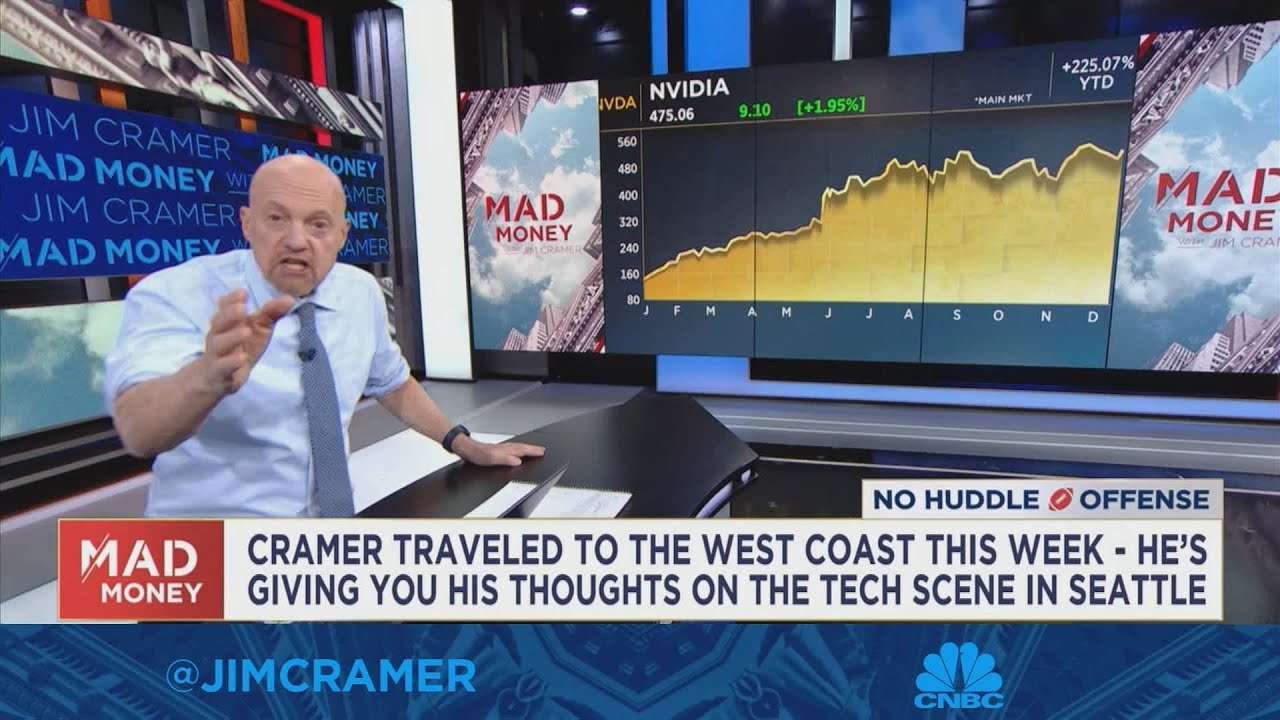
Just a few months after it looked like Seattle was being left out of the national conversation about artificial intelligence and the new tech economy, CNBC’s “Mad Money” host Jim Cramer put the spotlight on the region.
In a segment (above) titled “Tales from the Emerald City,” Cramer waxed about a recent West Coast trip where he spent a few days “at the epicenter of AI.”
“It’s not in Silicon Valley,” Cramer said. “It’s actually in the Seattle area, where Amazon and Microsoft are headquartered.”
Cramer called Microsoft the “real leader” in AI because it owns just under half of OpenAI, creators of ChatGPT, and he said that while other companies talk about how they’re going to make a killing in generative AI, Microsoft’s already doing it.
The former hedge fund manager talked about Microsoft Copilot, the “AI companion” that brings the company’s AI capabilities together into a combined experience. Cramer said people behind the scenes at Microsoft indicate that Copilot “has a shockingly strong level of absorption, very quickly.”
Cramer also complimented Amazon, which he said is using AI technology “to figure out what you want before you know you want it.”
The love for Seattle was in stark contrast to the mood in September, when it looked like the national media was keen to forget the region’s potential as an AI hub.
Seattle should be “viewed as one of the very best centers of excellence for AI,” Matt McIlwain, managing director at Seattle VC firm Madrona, said during an episode of the Shift AI Podcast. But, he told GeekWire in September: “sometimes we are too understated.”
Cramer has been called a lot of things. Understated is probably not one of them, and in his stated quest to make money for his viewers, he said AI stocks have room to run.
“Cynics say that the AI move is just too big already,” Cramer said. “I can tell you from my face-to-face talks with people in Seattle, this move’s just getting started.”
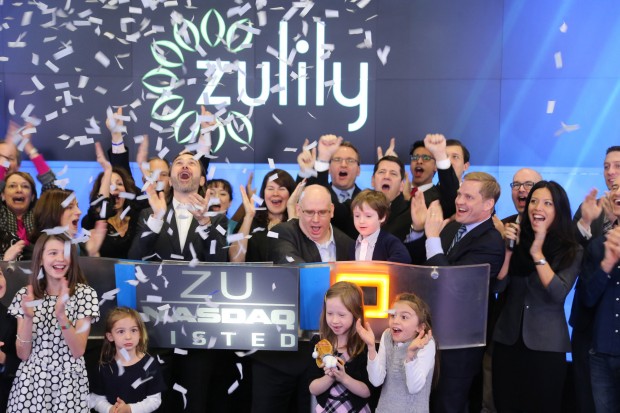
Seattle-based online retailer Zulily went public in 2013. Co-founder and former CEO Darrell Cavens is at center, with his son. Mark Vadon, the company’s co-founder, is left of Cavens, looking upwards to the confetti. (File Photo)
It’s been a wild past several days for Zulily. As we’ve reported, the online retailer is shutting down three offices, including its Seattle headquarters, and laying off more than 800 people. The company, owned by private equity firm Regent, announced a “going-out-of-business” sale this past weekend.
The collapse has shocked and saddened longtime employees, many of whom describe their time at Zulily as formative periods in their careers. It’s a stunning turn of events for a business that was once a cornerstone of Seattle’s tech industry, valued at more than $7 billion.
Over the weekend, we caught up with Mark Vadon, the veteran tech entrepreneur and executive who helped launch Zulily in 2009 with Darrell Cavens, his former colleague at jewelry retailer Blue Nile.
Vadon left his day-to-day work at Zulily following its $2.4 billion sale in 2014 to QVC parent Qurate (then known as Liberty Interactive). He sat on Qurate’s board until June 2022. Regent acquired Zulily in May of this year.
Vadon, a former chairman at Chewy, declined to comment on Zulily’s current state or theorize about what may have led to its recent downfall. But he expressed disappointment.
“More than anything, I just feel bad for the people who worked so hard to build something that I think was truly special,” Vadon said.
Asked if he would consider buying back the Zulily brand, Vadon said he’s “happily retired.”
“I’ve got four daughters and I’ve kind of moved into a different life stage,” said Vadon, who is on the board of Rad Power Bikes and AG1. “Building businesses is not my future.”
Here are some other takeaways from our conversation.
How it all started
Vadon recalled meeting Cavens for a beer at a Seattle pub in 2009. The tech vets wanted to build something together again after their experience at Blue Nile. Both brought pieces of paper with lists of 10 people they wanted to work with.
“We compared lists,” Vadon said. “The people that overlapped, we circled them, and we went out and got them.”
Most of that initial group had already worked together. “That let us move very fast,” Vadon said.
Mark Vadon speaks at the 2014 GeekWire Summit. (GeekWire File Photo)
The company’s timing — just after the 2008 recession — also made recruiting a little easier.
And as co-founders, Vadon and Cavens complemented each other well.
“Darrell was tech and ops, and I was finance and strategy, and good at fundraising,” Vadon said. “And there was no ego. We worked seamlessly together.”
We got in touch with Cavens, but he didn’t want to comment, beyond saying that it’s “certainly a sad day” for Zulily in light of the events of the past week.
Zulily’s secret sauce
There were a number of factors that led to Zulily’s success in a highly competitive retail environment, Vadon said.
Target market: Zulily initially focused on selling clothes, toys and accessories for babies, kids, and moms. “Young moms, they’re learning new things, they’re trying to do a good job, they’re highly social, and they’re trying to help each other out,” he said. “We tapped into a good market.”
Differentiation: Zulily didn’t want to compete with Amazon and other online retailers on shipping speed or selection. Instead it offered a limited number of daily deals and flash sales. Customers loved that shopping experience, and came back every day to discover new products. “They were getting entertainment out of the act of shopping itself,” Vadon said. “Not many companies were doing that.”
Business model: The company used an unusual fulfillment strategy by selling merchandise on its site before ordering products from vendors. This gave Zulily more control over its supply chain and fulfillment. The company also found a way to allow smaller vendors to surface their products for a large audience, giving Zulily another edge compared to the Amazons and Nordstroms of the world.
The long hallways at Zulily’s former downtown waterfront headquarters in Seattle were packed with merchandise from vendors. (GeekWire File Photo / Nat Levy)
“Zulily Mafia”
There was something about Zulily’s culture and business that created a breeding ground for future entrepreneurs.
“It was like grad school for entrepreneurship,” said Vadon.
The company’s revenue skyrocketed from $18 million in 2010 to $143 million in 2011 and then to $331 million in 2012 — just three years after it launched.
Zulily’s revenue ballooned after it launched in 2009. (Company filings)
At the time, Zulily was large enough to expose employees to the inherent challenges of running a big enterprise — but it was still small enough to give them an expansive view across the business, Vadon said.
“It was this place where you taught people to make decisions with data and move really fast, but then be willing to call out mistakes and change direction,” he added.
Many former Zulily employees went on to launch their own startups or take leadership roles at early stage companies in the Seattle area, including:
Zulily’s alumni, Vadon said, will “be impacting Seattle for a very long time.”